

Why in news?
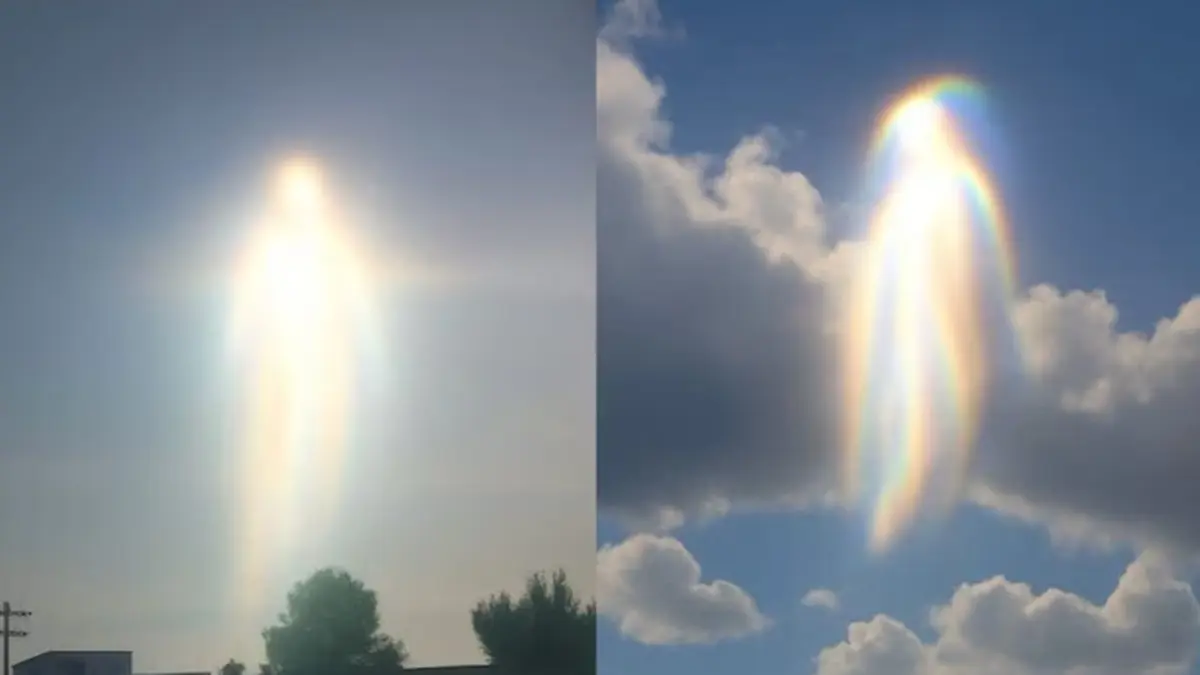
After a moderate earthquake of magnitude 4.2 struck the Aegean region between Turkey and Greece on 2 April 2026, residents filmed glowing orbs and streaks of light in the night sky. These so‑called earthquake lights once again captured public attention, prompting scientists to explain the phenomenon and caution against linking it to supernatural causes.
Background
Earthquake lights (EQL) are rare luminous phenomena observed before or during seismic events. Records of such lights date back to ancient China and 17th‑century Europe, but only in recent decades have researchers begun to study them systematically. EQL typically appear as brief flashes, glowing clouds, or floating balls of light near the ground or along fault lines. They have been reported in association with major earthquakes such as the 1965 Matsushiro swarm in Japan, the 2008 Wenchuan quake in China and the 2010 L’Aquila earthquake in Italy. Because the lights are unpredictable and short‑lived, reliable photographs are uncommon, which has fuelled speculation and folklore.
Scientific explanations
- Charged particles from stressed rocks: When tectonic stresses build up in the Earth’s crust, certain types of rocks, especially those containing quartz, can release electrons and positive holes. Laboratory experiments show that squeezing or fracturing rocks creates electric charges that travel along fractures to the surface. As these charges reach the air, they ionise atmospheric gases, producing faint glows or sparks.
- Rift zones and vertical faults: Studies published in the journal Seismological Research Letters and presented at the European Geosciences Union conference found that about 97 percent of documented earthquake lights occur near rift valleys or subvertical faults where tectonic plates pull apart. Such geological settings allow electrical charges to move rapidly upward along open fractures.
- Characteristics: Earthquake lights can take various forms—blue or white flames, luminous clouds, lightning‑like streaks or floating luminous spheres. They may last from fractions of a second to several minutes and are generally seen within a radius of a few kilometres from the epicentre.
- Monitoring efforts: Space agencies like NASA have begun using satellites to look for infrared anomalies and atmospheric ionisation before earthquakes. While there is hope that these observations might contribute to short‑term forecasting, scientists caution that earthquake lights remain unreliable indicators and should not replace established seismological methods.
Significance
- Public awareness: Understanding that earthquake lights are natural electromagnetic phenomena helps dispel myths of omens or supernatural warnings.
- Insights into stress processes: Studying EQL offers clues about how rocks fracture and how charges move through the crust, contributing to broader geophysical knowledge.
- Potential early warning research: While not yet reliable as a forecasting tool, monitoring electromagnetic anomalies could complement traditional seismology in the future.
Conclusion
The unusual lights seen after the Aegean earthquake remind us that the Earth’s crust is an active and sometimes electrifying place. Far from being mystical, these glows arise from natural electrical processes in stressed rocks. Continued research may one day harness such phenomena to better understand and perhaps anticipate seismic events.
Source: India Today