

Why in news?
In June 2026 wildlife experts reported that Egyptian vultures are disappearing from the Rayalaseema region of Andhra Pradesh. Once common in the rocky landscape, the birds are now rarely seen due to habitat loss, electrocution and poisoning.
Background
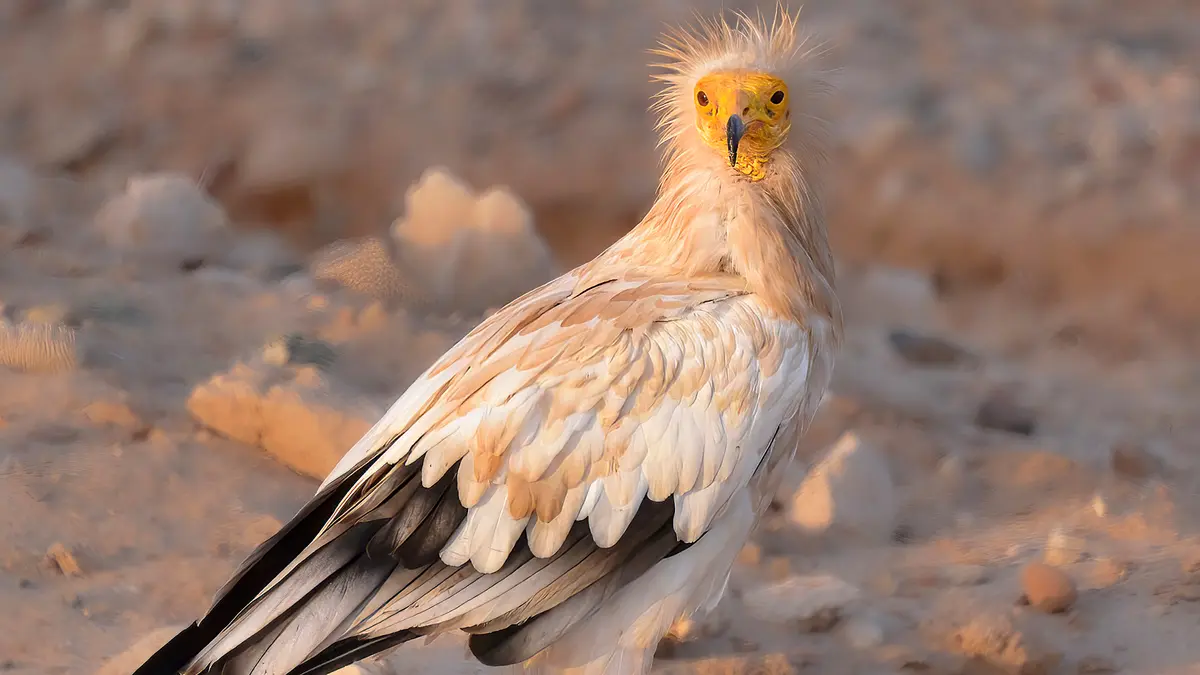
The Egyptian vulture (Neophron percnopterus) is a small, long‑distance migratory vulture found across southern Europe, northern Africa and parts of Asia. In India it is largely resident in arid and semi‑arid regions. Adults have white plumage with black flight feathers and a bare yellow face. With a body length of 55–65 cm and a wingspan of 1.5–1.7 m, it is among the smallest vultures. The species is known for using tools such as stones to break eggs, a rare behaviour among birds of prey. The International Union for Conservation of Nature (IUCN) lists it as “Endangered”, and it enjoys the highest level of protection under India’s Wildlife Protection Act.
Threats and conservation issues
- Habitat loss: Quarrying and urbanisation have reduced nesting sites on cliffs and rocky outcrops in Rayalaseema. Deforestation and disturbance near breeding colonies also contribute to the decline.
- Poisoning: Vultures often feed on livestock carcasses laced with pesticides or veterinary drugs. Diclofenac, a painkiller used on cattle, causes kidney failure in vultures when they consume treated carcasses.
- Electrocution: High‑tension power lines cross vulture habitats. Birds with large wingspans can be electrocuted when landing on poorly insulated poles.
- Small population size: Scientists note that the remaining birds are scattered. Without coordinated conservation measures, the species could become locally extinct in some areas. Researchers call for creating “vulture restaurants” — safe feeding zones with uncontaminated carcasses — and for monitoring populations through regular surveys.
Importance of vultures
Vultures are nature’s clean‑up crew. By consuming dead animals, they prevent the spread of diseases such as anthrax and rabies. Their decline can lead to increases in feral dogs and rats, which pose new health risks to humans.
Conclusion
The plight of the Egyptian vulture in Rayalaseema is part of a wider crisis facing Asia’s vultures. Protecting these birds will require banning harmful veterinary drugs, insulating power lines, safeguarding nesting cliffs and supporting community awareness.