

Why in news?
French and British teams rescued 157 people from a burning small boat. The engine failed near British waters within France's search-and-rescue zone. The overloaded vessel then caught fire and rapidly broke apart. Every person remaining aboard was rescued on 4 August 2026.
Background
The boat left Normandy on 3 August, and five people accepted help during the night before returning ashore. Others reportedly declined assistance before the situation became immediately dangerous.
On the following morning, the engine caught fire near the boundary of rescue zones. French vessels, a naval helicopter and medical personnel responded alongside British lifeboat and Border Force crews.
French teams rescued 103 people, while British teams recovered fifty-four and brought all survivors to Boulogne-sur-Mer. The operation reported no deaths among those rescued.
The Channel's geography
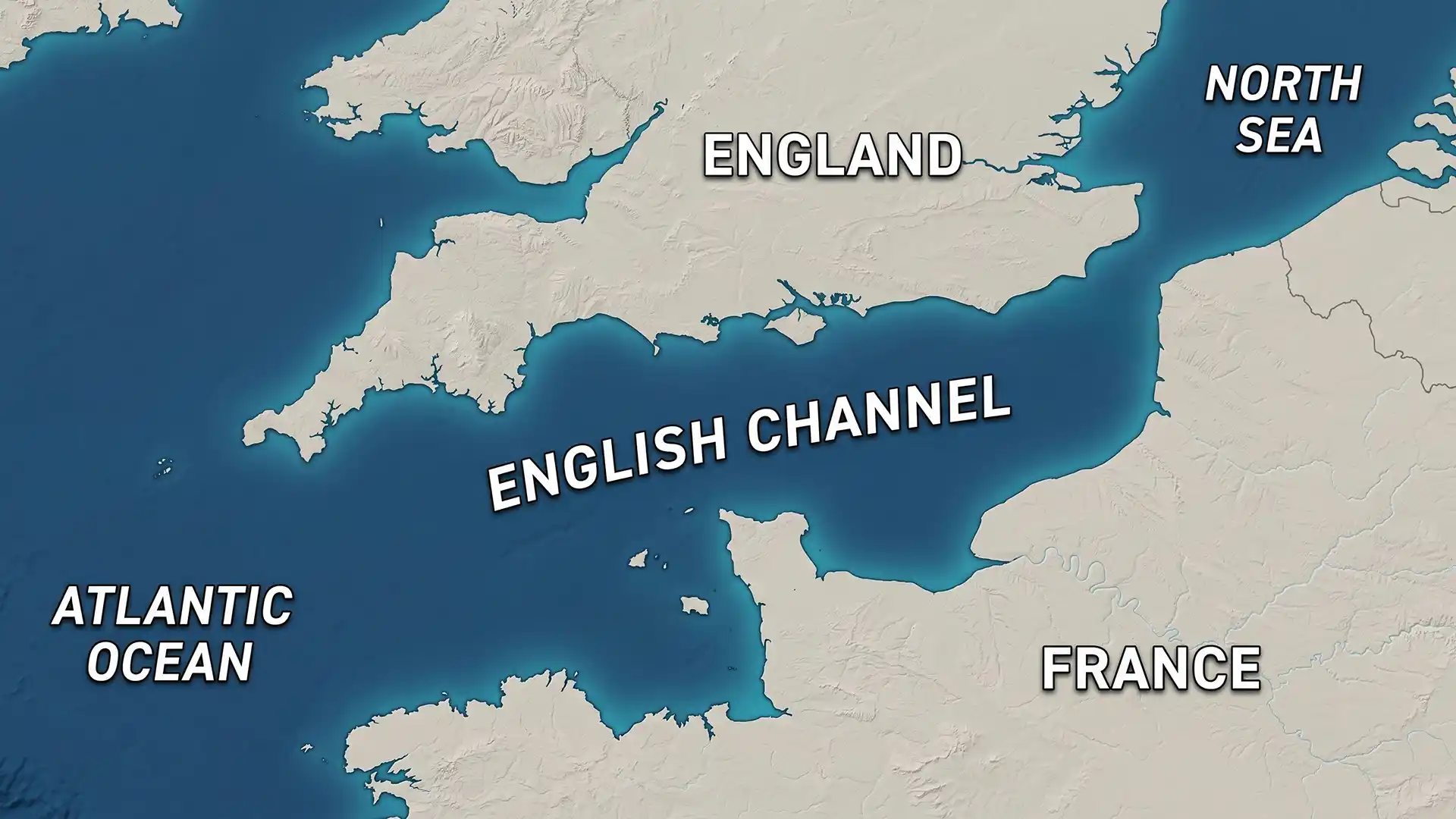
The English Channel separates southern England from northern France, which commonly calls it La Manche, meaning “the sleeve”. It connects the Atlantic Ocean with the North Sea.
The waterway extends roughly 560 kilometres and narrows towards the Strait of Dover between Dover and Calais. At its narrowest, the separation is about thirty-four kilometres.
The Channel Tunnel runs between Folkestone and Coquelles. Its three parallel tunnels extend about fifty kilometres, including thirty-seven kilometres below the sea. Trains and vehicle-carrying shuttles use this fixed link.
Strong tides, cold water and changing weather make small-boat crossings dangerous, while commercial shipping creates further collision risks. The shortest geographic distance is therefore not a safe informal route.
How maritime rescue responsibility works
Countries divide surrounding waters into search-and-rescue regions for operational coordination. A regional boundary does not remove the basic duty to help people in distress. Nearby services can cooperate when speed or capacity requires it.
The boat remained within France's rescue region, but proximity to British waters justified a joint response. The allocation concerned rescue leadership, not ownership of the sea.
International maritime law requires shipmasters to assist people facing serious danger when reasonably possible. Coastal states must maintain adequate rescue arrangements regardless of nationality or migration status.
Rescue does not decide asylum or criminal responsibility, which follow separate legal procedures after safe disembarkation. Combining them can delay assistance and endanger life.
Why small-boat crossings continue
People attempting the journey have varied nationalities and personal circumstances. Some seek asylum, while others move for family or economic reasons requiring individual legal assessment.
Smuggling networks charge for dangerous passages and provide unsuitable craft, while overloading leaves little freeboard above the water. Fuel, engines and poor construction can cause fires or rapid collapse.
Stronger enforcement can disrupt individual departures without removing underlying demand. Safe legal routes, timely asylum decisions and cooperation against smugglers address different parts of the problem. No single measure resolves every cause.
Operational lessons
People sometimes refuse early help because they fear return or misunderstand rescuers. Authorities still monitor a boat when conditions indicate growing danger. Clear multilingual communication can improve cooperation before an emergency escalates.
Fire on an overcrowded inflatable or lightly built vessel spreads exceptionally fast. Responders need medical readiness and joint exercises for incidents crossing operational boundaries.
Public accounts should use careful language because everyone aboard remains a person in danger. Labelling every passenger “illegal” prejudges legal status. It can also obscure obligations that apply before status assessment.
Conclusion
The rescue succeeded because French and British services cooperated quickly. Preventing repetition requires safer legal processes, smuggling enforcement and sustained maritime readiness.