

Why in news?
A rain-triggered landslide struck a monastery in Ethiopia's Amhara region. At least fourteen people died in the initial accounting. Seven others were injured, while searches continued for missing visitors. The incident occurred on 3 August 2026.
Background
The landslide struck Tsadqane Debre Mitmaq Saint Mary Monastery around seven in the morning, during a large religious gathering. Rocks and saturated earth fell from the mountain above the site.
Initial reports recorded fourteen deaths and seven injuries, with five seriously injured people transferred to Debre Birhan. Search teams continued because the number of missing visitors was unknown.
The early death count remained provisional because difficult terrain and damaged access delayed recovery and identification. A dated figure should not be treated as the final toll.
Why the slope failed
Heavy seasonal rain saturates soil, increases its weight and reduces friction against underlying rock. A steep slope may then fail suddenly under gravity.
Northern Ethiopian highlands contain sharp relief, deeply cut valleys and weathered material. Roads, farming and vegetation loss can alter natural drainage. However, the exact causes require a site investigation rather than general assumptions.
People below steep slopes face concentrated exposure, while rapid failure makes early warning difficult. Mapping unstable slopes and controlling drainage can reduce risk around busy religious sites.
Ethiopia's physical setting
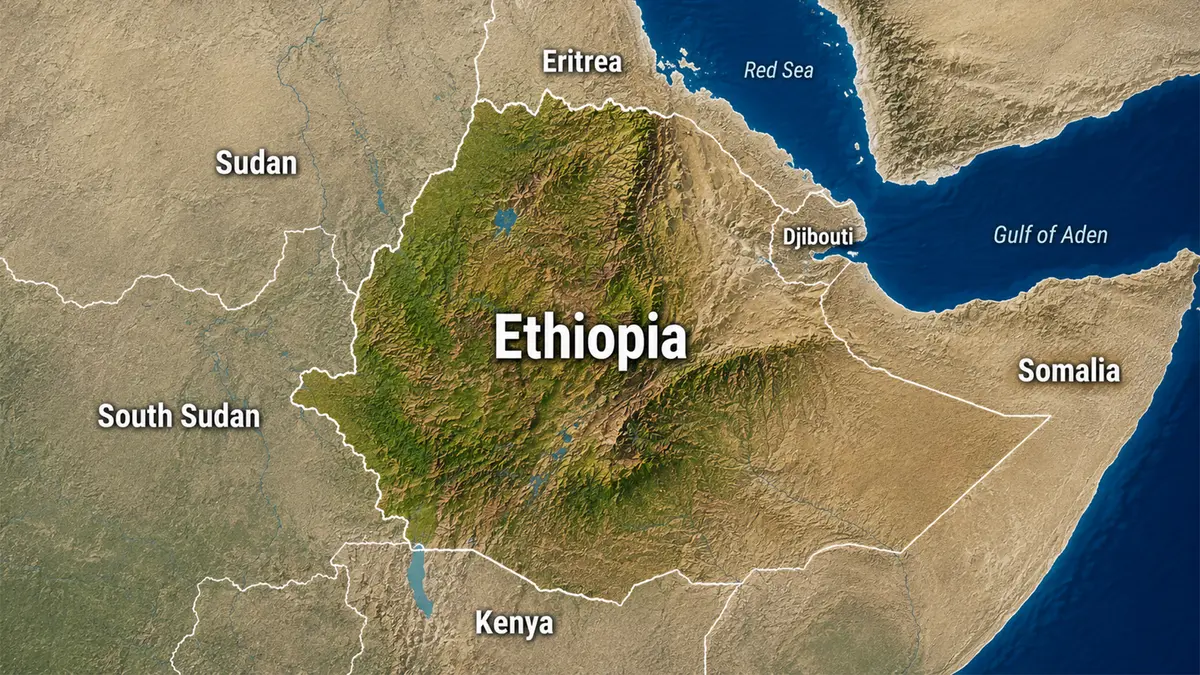
Ethiopia is a landlocked Horn of Africa country, with Eritrea north and Djibouti and Somalia east. Kenya, South Sudan and Sudan form its southern and western borders.
The capital, Addis Ababa, occupies the central highlands. The Great Rift Valley separates much of the western and northern highlands from eastern and southern uplands. Elevation creates major differences in temperature, rainfall and vegetation.
Ras Dashen is the country's highest mountain at roughly 4,550 metres. Published measurements vary slightly, so excessive precision can mislead. The Danakil Depression contains areas below sea level and extreme heat.
Lake Tana feeds the Blue Nile, which flows towards Sudan. The Awash River ends within the dry Afar region rather than reaching the sea. The Omo flows southwards into Lake Turkana.
Rainfall, conflict and vulnerability
The main highland rains generally occur from June to September. Prolonged rainfall raises flood and landslide risks, particularly where slopes are disturbed. Climate variability can intensify both drought and extreme rain.
Amhara has faced conflict and displacement, which can damage roads, health services and communications. These conditions complicate rescue and weaken local capacity before any natural hazard occurs.
Ethiopia experienced deadly landslides in Gofa during 2024 and again in southern areas during 2026. Those were separate disasters. Their casualty totals should not be merged with the Amhara monastery event.
Risk reduction
- Slope maps can identify settlements and gathering places needing urgent assessment.
- Drainage maintenance reduces uncontrolled water infiltration during heavy rainfall.
- Local warnings should use trusted religious and community communication networks.
- Emergency plans need safe assembly areas away from unstable slopes.
Relocation may become necessary at the highest-risk locations, but it requires consultation and livelihood support. Engineering measures cannot stabilise every mountain. Monitoring should combine rainfall thresholds with visible cracks and local observations.
Conclusion
The monastery disaster reflects both intense rainfall and dangerous exposure below steep terrain. Reliable mapping, warnings and resilient local services can reduce future losses.