

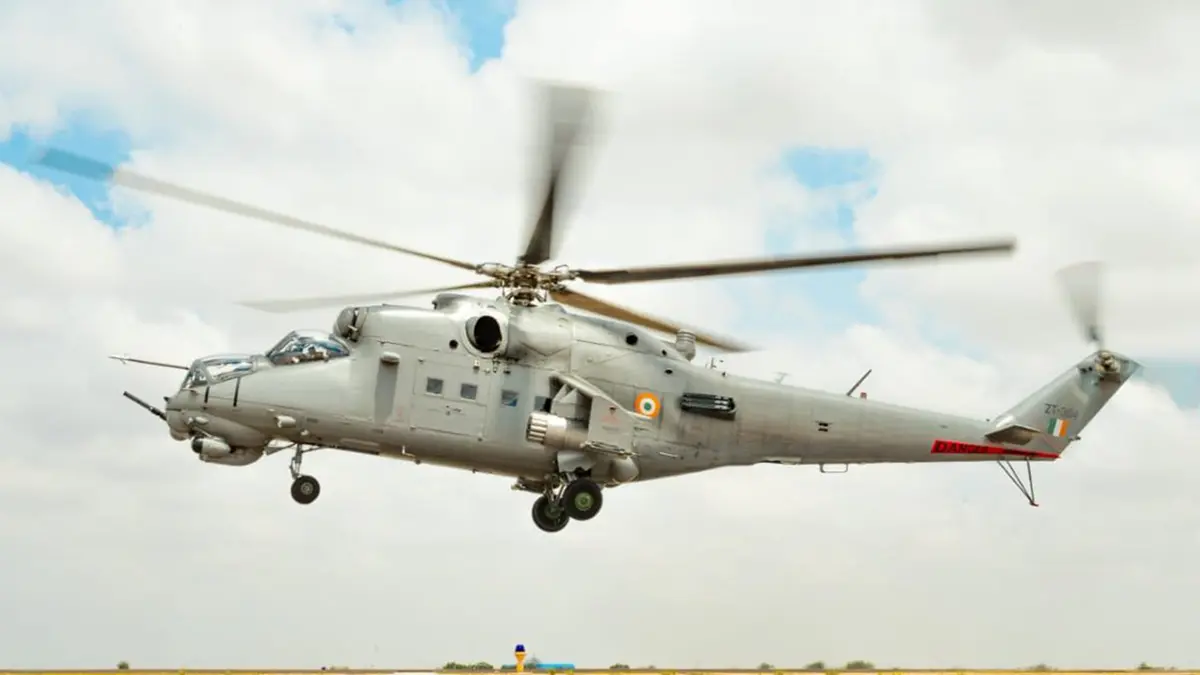
Why in news?
The Indian Air Force conducted Exercise ROTOR CLAP III in Rajasthan.
The week-long helicopter exercise concluded on 2 August 2026.
Its central theme involved countering hostile unmanned aerial systems.
Multiple helicopter types rehearsed coordinated operational responses.
Background
ROTOR CLAP III was the third exercise in a rotary-wing operational series. The Indian Air Force is commonly abbreviated as IAF; it organised the activity at Pokhran Field Firing Range. The range lies within Jaisalmer district of western Rajasthan.
Open desert terrain supports live firing, observation and realistic tactical training.
What is an unmanned aerial system?
An Unmanned Aerial System is commonly abbreviated as UAS. It includes the aircraft, control station, communication links and supporting equipment. A drone is therefore only one physical part of the wider system.
Military drones range from tiny quadcopters to long-endurance combat aircraft. Small systems can conduct surveillance, deliver explosives or guide artillery fire.
Counter-UAS operations
Counter-UAS means detecting, identifying, tracking and defeating hostile unmanned systems; the process normally combines several sensors and response options.
| Stage | Purpose | Possible means |
|---|---|---|
| Detection | Notice a possible airborne object | Radar, radio-frequency sensors or observers |
| Identification | Separate threats from birds or friendly aircraft | Electro-optical cameras and data fusion |
| Tracking | Maintain location, direction and speed | Networked sensors and command systems |
| Soft kill | Disrupt control or navigation without impact | Jamming, spoofing or cyber measures |
| Hard kill | Physically destroy or capture the target | Guns, missiles, interceptors or nets |
No single countermeasure works equally well against every drone; autonomous aircraft may continue flying after command links are jammed. Urban locations also limit weapons because falling debris can injure civilians. Layered defence therefore combines early warning with proportionate defeat options.
What did the exercise test?
- Crews practised detecting and engaging simulated low-altitude threats; gunships rehearsed precision strikes under demanding operational conditions.
- Transport helicopters moved troops and equipment between dispersed locations; utility helicopters supported reconnaissance and battlefield coordination.
- Teams practised casualty evacuation under a contested threat environment; commanders tested coordination between sensors, aircrew and ground units.
- Live-range conditions allowed realistic weapons and procedural validation.
Reported helicopter platforms
| Platform | Broad role | Relevant capability |
|---|---|---|
| AH-64E Apache | Attack helicopter | Target acquisition and precision engagement |
| Mi-25 and Mi-35 | Attack and assault support | Firepower with limited troop-carrying ability |
| Prachand | Light Combat Helicopter | High-altitude operations and armed reconnaissance |
| CH-47F Chinook | Heavy-lift transport | Movement of troops, equipment and underslung loads |
| Mi-17 family | Medium transport | Assault, logistics and evacuation missions |
| Dhruv | Advanced Light Helicopter | Utility, transport and specialised roles |
Aircraft designators such as AH-64E and CH-47F identify specific variants; they should not receive invented word-by-word expansions.
Why use helicopters against drone threats?
Helicopters can remain near threatened ground formations and remote posts. They can quickly reposition sensors, weapons, troops and repair teams. Low-speed manoeuvrability can help visual identification of some airborne threats.
Attack helicopters also possess sensors designed for difficult battlefield conditions; however, helicopters are not universal drone interceptors. Small drones can be hard to detect against ground clutter; rotorcraft may themselves face drones, missiles and electronic interference. Training must therefore integrate helicopters within a wider air-defence network.
Operational implications
Combined arms coordination: Drone defence requires air and ground units to share tracks quickly. Delayed identification can cause missed engagements or friendly-fire risks.
Electronic warfare: Jamming can protect forces without expensive missile expenditure. It can also interfere with friendly communications without careful spectrum management.
Cost balance: Using an expensive interceptor against every cheap drone becomes unsustainable. Commanders need different responses for surveillance drones and armed swarms.
Training value: Exercises reveal sensor gaps and coordination failures before actual operations. They also permit tactics to adapt as drone technology changes.
Conclusion
ROTOR CLAP III reflects the rapid spread of drone threats across battlefields. Effective defence will require layered sensors, weapons and coordinated decision-making.