

Why in news?
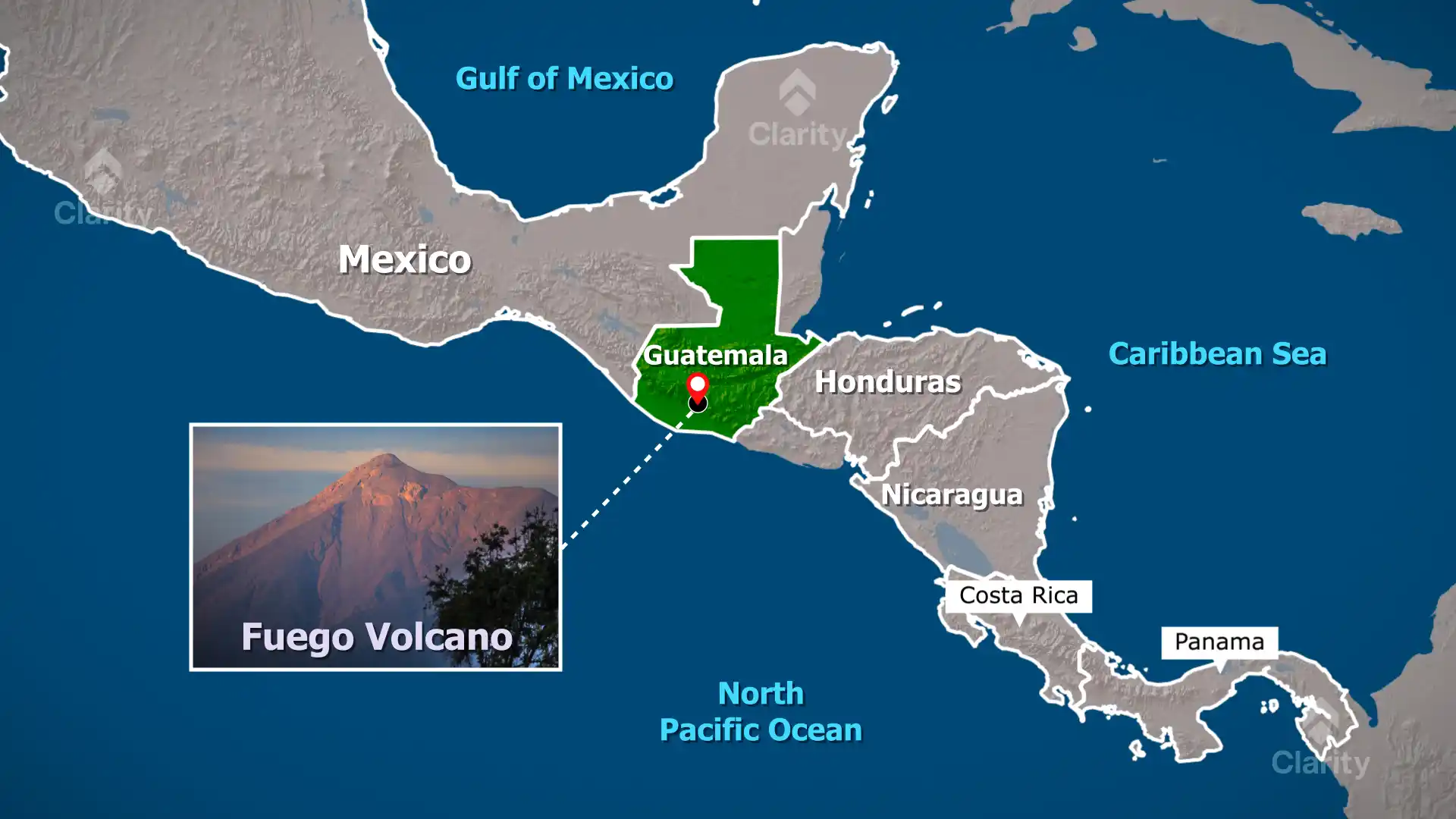
The Fuego volcano in Guatemala erupted explosively on 3 February 2026, sending ash plumes 4–5 kilometres into the sky and producing pyroclastic flows down its slopes. Authorities issued alerts to nearby communities and rerouted air traffic as ash fall spread over the region.
Background
Volcán de Fuego (Spanish for “Volcano of Fire”) is one of Central America’s most active stratovolcanoes. Rising over 3,700 metres, it sits about 40 kilometres southwest of Guatemala City. Fuego experiences almost constant low‑level activity punctuated by larger eruptions every few years. A devastating eruption in June 2018 killed more than 190 people when pyroclastic flows buried nearby villages.
Details of the 2026 eruption
- Ash plume height: Ash clouds reached altitudes of 14,000–16,000 feet, posing hazards to aviation and causing flights to be diverted.
- Pyroclastic flows: Hot avalanches of gas, ash and rock descended the southeast flank, prompting evacuations in vulnerable settlements.
- Seismic activity: The eruption was accompanied by tremors and rumbling audible kilometres away.
- Preparedness: Guatemala’s disaster agency, CONRED, maintained yellow (watch) alert and advised residents to wear masks and stay indoors if ash fell.
Why it matters
- Frequent eruptions remind authorities of the need for robust early‑warning systems and evacuation plans.
- Ash fall can contaminate water supplies, damage crops and harm respiratory health.
- Monitoring Fuego contributes to understanding volcanic hazards across the Pacific “Ring of Fire”.
Source: India Today