

Why in news?
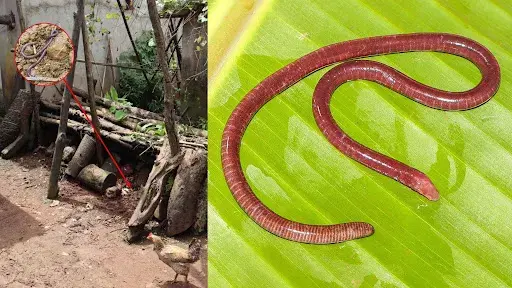
Scientists have described a new caecilian species named Gegeneophis chandgadi from Maharashtra. The formal description appeared in a 2026 publication of the Zoological Survey of India. Researchers found the animal near Buzawade village in Chandgad taluka of Kolhapur district. The finding reveals overlooked amphibian diversity within the northern Western Ghats.
What kind of animal is it?
Caecilians are limbless amphibians that usually live underground or beneath wet forest litter. They belong to the amphibian order Gymnophiona, apart from frogs and salamanders. Their ringed bodies can resemble earthworms or snakes. However, their anatomy, moist skin and life cycle place them firmly among amphibians.
Gegeneophis chandgadi belongs to the family Grandisoniidae and genus Gegeneophis. Its body is slender and pale flesh-coloured. Complete primary rings encircle the body, while secondary rings occur mainly towards the rear. Researchers used these features alongside genetic evidence to distinguish the species.
The team compared its deoxyribonucleic acid with related species and studied preserved anatomical characters. It found a close relationship with Gegeneophis mhadeiensis. Yet the new animal showed a distinct combination of molecular and physical traits. A scientific species description requires this evidence, not appearance alone.
Where was it found?
The type locality is Buzawade village in Chandgad, near Maharashtra's southern boundary. Chandgad lies in Kolhapur district within the northern Western Ghats landscape. Goa and Karnataka adjoin this wider border region. High seasonal rainfall supports moist soil, leaf litter and small forest patches.
Specimens were found beneath wood piles and damp litter near homes. Such microhabitats retain moisture and shelter small soil animals. The known record is currently restricted to the immediate type locality. That narrow record may reflect limited surveys, rather than the species' complete distribution.
The species name honours Chandgadi, the local speech variety associated with the area. This links the scientific name with the place and its community. The holotype is held by the Zoological Survey of India's Western Regional Centre. A preserved reference specimen lets later researchers verify the identification.
Why underground biodiversity is easily missed
Caecilians spend much of their lives beyond ordinary observation. Standard wildlife surveys often favour birds, mammals and visible amphibians. Soil-dwelling species may appear only during careful digging or heavy rain. Several outwardly similar populations can also conceal separate evolutionary lineages.
Genetic tools therefore complement close measurement of skulls, teeth, rings and other structures. They can reveal differences hidden by a simple external resemblance. Molecular separation still needs sound taxonomy and accessible specimens. Together, these methods reduce both mistaken splitting and mistaken grouping.
Soil amphibians also depend upon conditions that are rarely mapped in detail. Moisture, shade, organic matter and loose soil can determine survival. Road building, soil compaction and removal of ground cover may damage habitat without obvious forest clearance. Household land management can therefore affect an unseen community.
What the discovery means for conservation
The description adds one species to science, but it does not establish its population size. Researchers have recommended a Data Deficient assessment until wider surveys are completed. That phrase means available evidence is inadequate for a confident risk category. It does not mean the species faces no danger.
Future surveys should examine similar habitats across Chandgad and adjoining Ghats. They should record seasonal activity, breeding, soil conditions and local threats. Genetic sampling can test whether nearby populations belong to this species. Any collection should remain limited because the known population may be small.
The discovery also supports conservation beyond famous protected areas. The animal was detected in a human-used setting near village homes. Small wooded patches and damp ground can retain important native life. Local awareness can protect these places without treating residents as outsiders.
Conclusion
Gegeneophis chandgadi shows how much underground biodiversity remains undocumented. Its discovery strengthens the northern Western Ghats' importance for amphibian research. The single known locality makes careful follow-up especially necessary. Surveys should determine its range before firm conservation claims are made. Protecting moist soils and local vegetation can support this hidden fauna.