
Why in news?
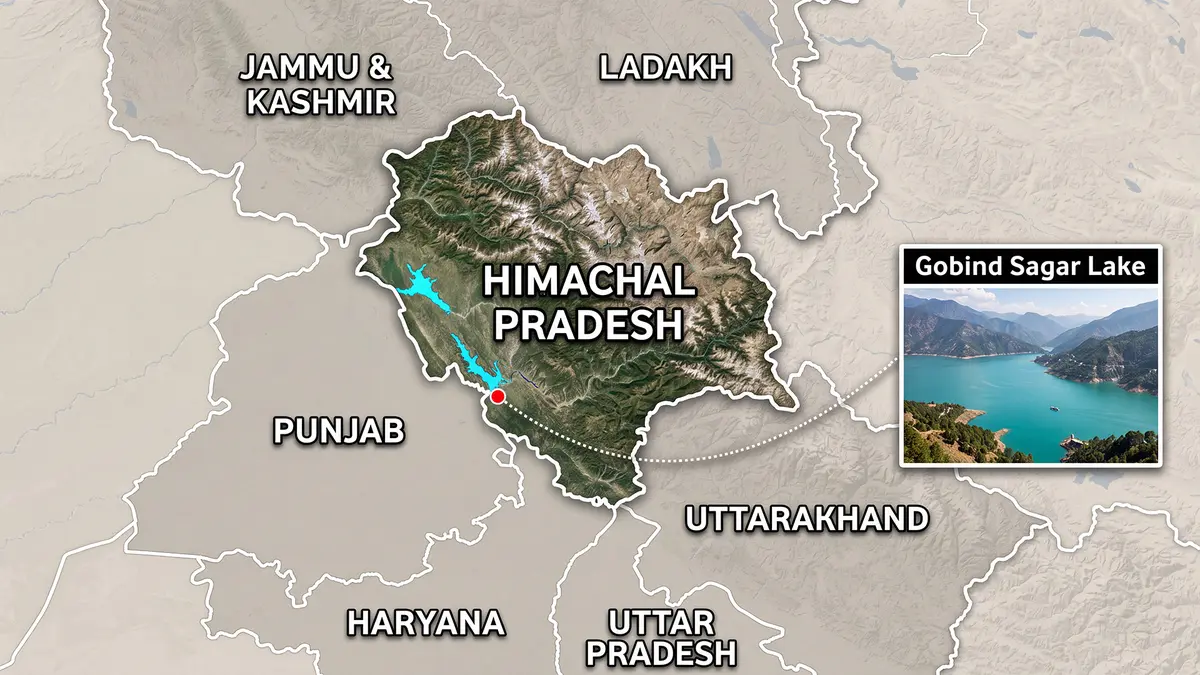
Himachal Pradesh is developing its first island tourism project at Gobind Sagar. The project covers Jeori Pattan, Dhararsani and Bholu sites. Officials expect the first facilities by late September 2026. All structures are proposals or ongoing works, not completed attractions.
Background
Gobind Sagar is a large human-made reservoir created by Bhakra Dam across the Sutlej River.
It spreads mainly across Bilaspur and Una, and honours Guru Gobind Singh, the tenth Sikh Guru.
Bhakra project: chronological history
| Period | Development |
|---|---|
| Early twentieth century | Engineers examined the Bhakra gorge for a major dam. |
| 1948 | Independent India formally began the large multipurpose project. |
| 1955 | Builders placed the first concrete in the main dam. |
| 1963 | The completed project entered its major operational period. |
| Later decades | Tourism, fisheries and water sports developed around the reservoir. |
Important physical facts
| Feature | Details |
|---|---|
| River | The Sutlej, also written Satluj, feeds the reservoir. |
| Dam type | Bhakra is a straight concrete gravity dam. |
| Dam height | It stands 225.55 metres above the deepest foundation. |
| Reservoir area | Official specifications give about 168.35 square kilometres. |
| Storage figures | The overview lists 9,621 million cubic metres of gross capacity. Its 1,680-foot table lists 7,551 gross and 6,007 live. |
| Dam powerhouses | The left and right banks together provide 1,415 megawatts. |
A gravity dam resists stored water mainly through its own weight.
Why was the project built?
- It stores monsoon and snowmelt water, while large powerhouses generate electricity for participating states.
- Regulated releases support irrigation across northwestern India and provide some moderation of damaging floods.
- The reservoir supports fisheries, boating and other local activities.
Who manages the wider system?
The Bhakra Beas Management Board (BBMB) operates linked water and power assets across the wider project system.
Several participating states receive allocated shares of the generated electricity and stored water.
How does the Beas–Sutlej Link help?
Pandoh Dam diverts Beas water through tunnels and channels towards the neighbouring Sutlej basin.
The diverted water produces electricity at Dehar before reaching the Sutlej and Gobind Sagar.
The annual diversion design is about 4,711 million cubic metres.
What does the tourism project propose?
| Site | Present position |
|---|---|
| Jeori Pattan | Work is advanced near the Mandi-Bharari bridge. |
| Dhararsani | Development continues near Jagatkhana with seasonal access. |
| Bholu | Logistical difficulties have delayed planned work. |
Jeori Pattan is expected to receive the earliest operating facilities.
Planned visitor facilities
- Portable accommodation would avoid large permanent concrete construction.
- Restaurants would offer local Himachali food.
- Water sports and fishing activities may attract visitors.
- Cultural programmes would present local traditions.
- Self-help groups could sell food, crafts and other products.
- Aero-sport activities remain part of the wider proposal.
Why are portable structures proposed?
Reservoir levels change substantially, so portable fibre structures can move when water or weather requires.
They disturb less ground than permanent buildings, but cannot automatically guarantee ecological safety.
Seasonal access needs explanation
Dhararsani needs boat access during higher water, expected roughly between mid-September and January.
A land route reappears as water recedes, reflecting reservoir operations rather than ocean tides.
Local rights and possible benefits
Officials said existing local grass and grazing rights would continue around the developing sites.
Tourism may support boat operators, cooks, guides and village craftspeople through greater local spending.
Environmental safeguards needed
- Visitor numbers should remain within each site’s safe capacity.
- Sewage must never enter the reservoir untreated.
- Solid waste requires collection and transport back to shore.
- Boats need safety equipment and trained operators.
- Noise should remain low near bird and fish habitats.
- Construction must respect local grazing and access rights.
- Emergency plans must account for changing water levels.
Social and heritage impact of the reservoir
Dam construction submerged old Bilaspur and many villages, while low water sometimes reveals temple remains.
The lake represents both development and displacement, which responsible tourism should explain together.
Conclusion
The project can diversify tourism if safety, ecology and local rights guide development.