

Why in news?
India’s Defence Minister recently met his Greek counterpart in New Delhi to strengthen bilateral defence cooperation. The visit prompted interest in the geography and resources of Greece.
Background
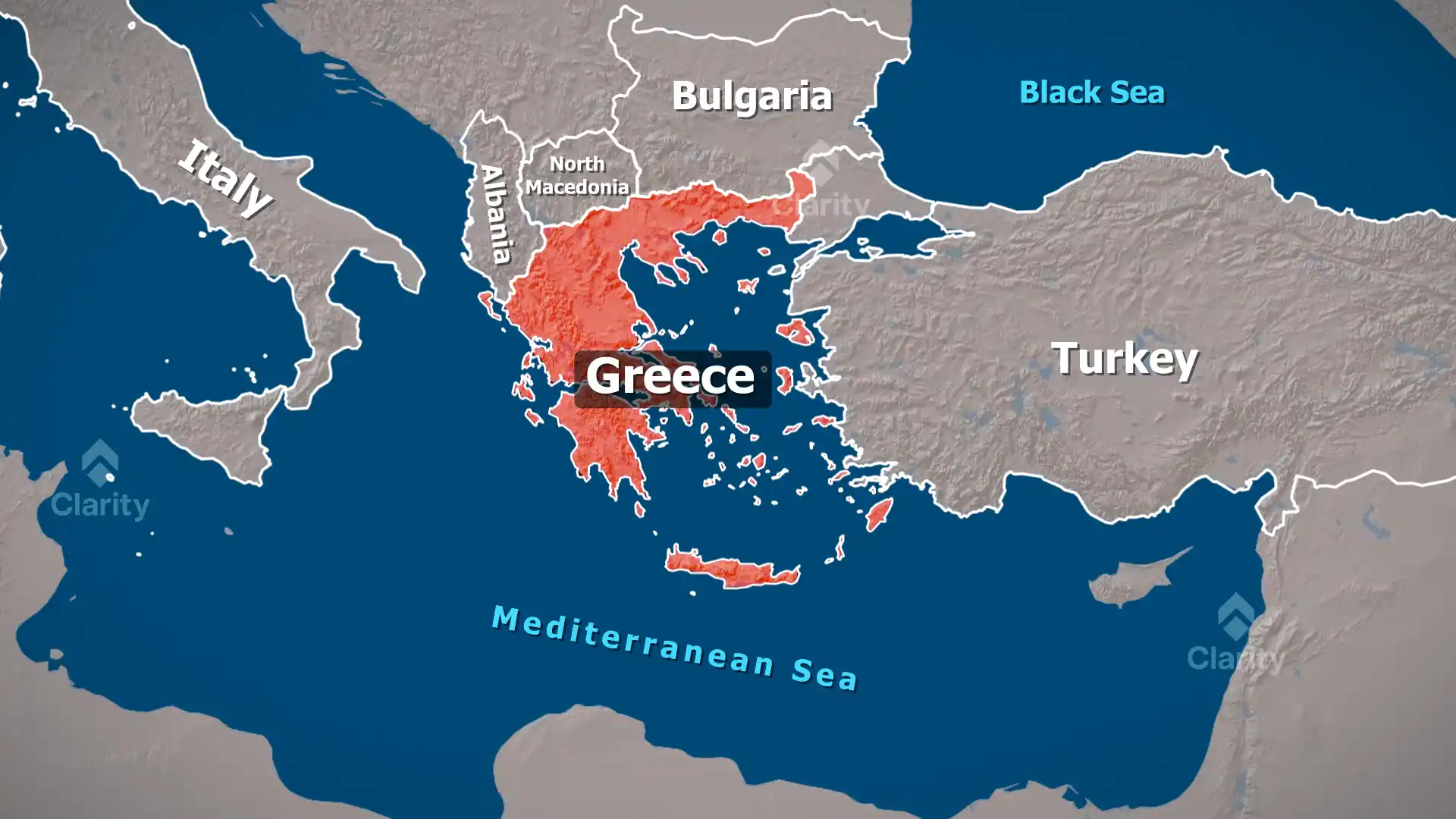
Greece sits at the crossroads of Europe, Asia and Africa on the southern edge of the Balkan Peninsula. It shares land borders with Albania to the northwest, North Macedonia and Bulgaria to the north and Turkey to the northeast. To the east lies the Aegean Sea, to the west the Ionian Sea and to the south the Mediterranean Sea. The capital and largest city is Athens.
Geographical features
- Mountainous terrain: About 80 % of Greece is mountainous or hilly, making it one of Europe’s most rugged countries. The Pindus range runs down the mainland and contains the Vikos Gorge, one of the world’s deepest.
- Highest peak: Mount Olympus, at 2,918 metres, is the country’s highest point and plays a major role in Greek mythology.
- Climate: Greece has a Mediterranean climate with hot, dry summers and mild, wet winters. In mountainous regions, winters can be harsh with snow.
- Rivers and seas: Major rivers include the Maritsa (Evros), Struma and Vardar. The lengthy coastline has created thousands of islands, of which Crete, Rhodes and Corfu are some of the best known.
Natural resources and economy
- Minerals: Greece has deposits of lignite (brown coal), bauxite, nickel, iron ore and marble. It also produces petroleum and natural gas in the Aegean and Ionian seas.
- Renewable potential: Mountain streams offer hydropower sites, while plentiful sunshine and winds provide opportunities for solar and wind energy.
- Tourism and shipping: The scenic islands, ancient ruins and beaches support a large tourism industry. Greece also has one of the world’s largest merchant fleets.
Conclusion
Understanding Greece’s geography helps explain its strategic importance in the Mediterranean. Its rugged landscapes and extensive coastline have shaped its history and economy, while its resources and location make it a valuable partner for countries like India.
Source: The Hindu