

Why in news?
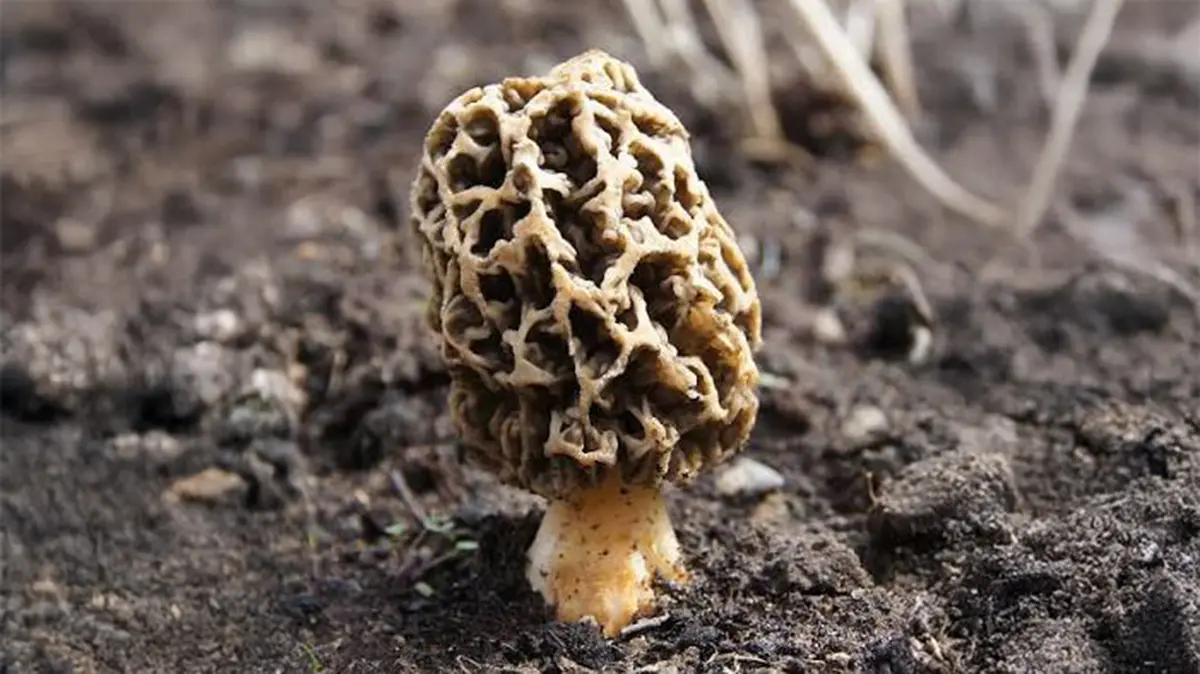
A dish called Gucchi Marmik featured at India’s BRICS summit dinner, according to Business Today’s 13 September report. BRICS takes its name from Brazil, Russia, India, China and South Africa; the grouping’s membership has since expanded. Gucchi is a regional name for morels, the prized mushrooms recognised by their deeply ridged, honeycomb-like caps. The report drew attention to Himalayan supplies and quoted premium prices reaching ₹40,000 per kilogram. That is a reported high-end price, not a fixed payment received by every collector. The menu brings attention to the ingredient’s biology and its value in mountain livelihoods. It also highlights an important distinction: morels can be cultivated, although obtaining dependable yields is difficult. Scarcity in particular markets does not mean cultivation is impossible.
A fungus, not a mountain vegetable
Morels belong to the genus Morchella. The visible mushroom is a reproductive structure, often called a fruiting body. Much of the fungus’s growth takes place as fine threads forming a network called mycelium. Producing that network and producing a harvestable mushroom are different stages, which helps explain why cultivation requires more than keeping fungal material alive.
The common name gucchi does not reliably identify every traded specimen as Morchella esculenta. Research on material from India’s western Himalaya found multiple morel lineages and highlighted difficulties in identification from appearance alone. Similar-looking caps can therefore conceal biological differences. Scientific names are useful only when the identification behind them is supported.
Why the Himalayan setting matters
Gucchi collection is associated with Himalayan areas including Jammu and Kashmir, Himachal Pradesh and Uttarakhand. These are mountain environments with strongly seasonal conditions rather than one uniform growing zone. The food report describes collection from forested terrain and the labour involved in locating mushrooms. A small, scattered harvest can require considerable searching before it becomes a marketable lot.
Drying allows mushrooms to be stored and transported beyond their collecting season. It also changes the weight being priced: a kilogram of dried mushrooms is not equivalent to a kilogram of fresh mushrooms. Quality, condition and the point of sale further affect a quoted price. A restaurant or retail figure cannot simply be multiplied by the fresh collection weight to calculate village income.
From a rare harvest to a high retail price
The reported premium reflects a combination of demand, limited supplies and the work involved in collection and handling. Yet the final selling price is spread across a chain that may include collectors, traders, transporters and retailers. The summit menu does not reveal how that value is distributed. Understanding livelihoods therefore requires evidence about local purchasing terms, not only expensive dishes.
This distinction also changes how increased demand should be assessed. More attention can create opportunities, but it does not automatically increase the collector’s share. Reliable identification, careful drying and transparent grading can matter as much as publicity. These are practical considerations arising from the supply chain, not measured outcomes of the summit dinner.
Cultivation exists, but biology still creates difficulties
A published experiment in the Journal of Fungi examined cultivated black morels, Morchella sextelata, under different cropping conditions. The researchers investigated why yields fell when morels were grown repeatedly in the same soil. They studied the surrounding fungal community as well as the crop. This is direct evidence that cultivation occurs, while also showing why stable production remains challenging.
Morel cultivation can use soil beds and additional nutrient bags to support growth. The surrounding soil is a living environment, containing other fungi and microorganisms. Adding nutrients does not necessarily benefit only the desired crop. Changes in that community can affect the formation of the small structures that later develop into mushrooms.
The experiment linked repeated cropping with changes in the soil fungal community and sharply reduced production in its tested conditions. It does not prove that every Himalayan species will respond identically. The useful distinction is between achieving cultivation and achieving reliable commercial supply. Research success in one species or setting should not be converted into a universal farming guarantee.
Edibility does not remove the need for safe preparation
Morels are valued as food, but raw or inadequately cooked mushrooms can cause serious illness. An investigation by the United States Centers for Disease Control and Prevention examined a Montana restaurant outbreak in 2023. It found a strong association with morel consumption, with raw preparations more strongly associated with illness than cooked or partly cooked preparations.
The agency advises thorough cooking to reduce potential toxicity, while acknowledging gaps in understanding the responsible substances. That advice does not make unidentified wild mushrooms safe. Nor does a high price establish medicinal benefit. Correct identification, sound handling and appropriate preparation belong to the ingredient’s story just as much as flavour and prestige.
Conclusion
Gucchi’s appeal connects mountain ecology, skilled collection and distinctive cooking. Its appearance at a summit dinner brings visibility to that wider chain, but does not establish a standard price or guaranteed income. Dependable cultivation could broaden supply, while collectors still need viable terms for their seasonal harvest. Food safety remains essential regardless of the mushroom’s price or origin.