

Why in news?
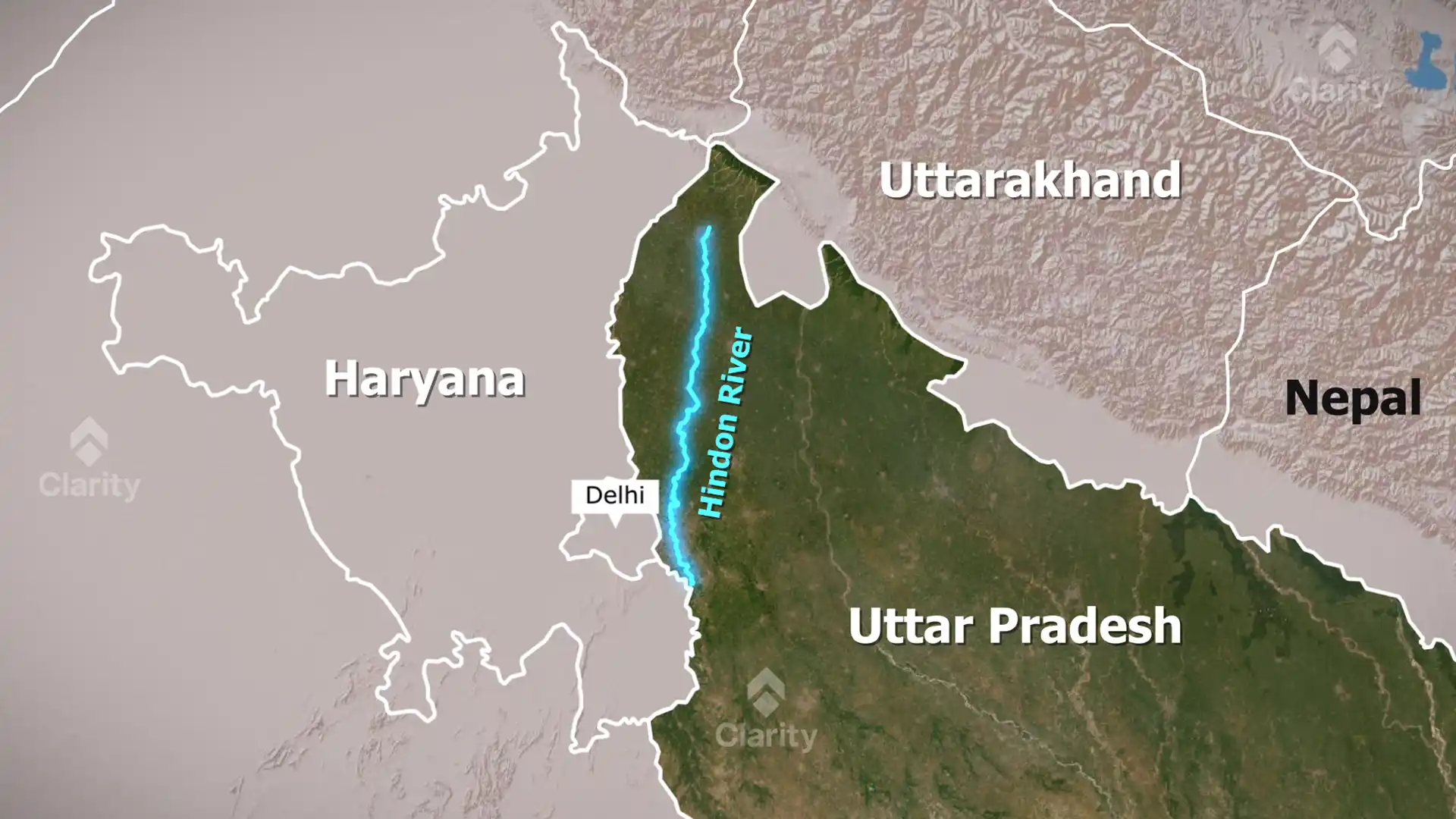
A recent survey of the Hindon River in western Uttar Pradesh reported zero dissolved oxygen at several sites, indicating that the water is incapable of supporting most aquatic life. The findings highlight severe pollution in the river, which ultimately joins the Yamuna.
Background
The Hindon River is a rain‑fed tributary of the Yamuna. It originates in the Shivalik hills of Saharanpur district and travels roughly 400 km through industrial belts of Uttar Pradesh and Haryana before merging with the Yamuna near Noida. Historically the river supported agriculture and wildlife and even hosts archaeological sites dating back to the Harappan civilisation. However, rapid urbanisation and industrialisation have turned it into one of the most polluted rivers in the Ganga basin.
Findings of the survey
- Zero dissolved oxygen (DO): Samples collected near industrial areas in Saharanpur and Muzaffarnagar recorded pH levels around 7.5 and high total dissolved solids, but no dissolved oxygen. A healthy river typically has DO levels of at least 5 mg/L to sustain aquatic life.
- Comparison with source: Water collected near the river’s origin in the Shivalik hills showed clean conditions with DO around 8 mg/L, indicating that pollution accumulates downstream.
- Causes of pollution: Untreated sewage and industrial effluents from sugar mills, paper factories and tanneries are the main contributors. During dry seasons the Hindon carries mostly wastewater because natural flow is low.
- Community concerns: Residents reported health problems such as skin ailments and cancers. Toxic water has also contaminated groundwater used for irrigation and drinking, threatening crops and public health.
Significance
- Environmental alarm: Zero DO indicates a “dead river” where fish and other organisms cannot survive. The survey draws attention to the failure of pollution control measures.
- Need for enforcement: Although regulatory bodies and courts have ordered industries to treat effluents before discharge, implementation remains weak. Civil society groups call for stricter enforcement and public participation in river clean‑up efforts.
- Sustainable water management: Restoring the Hindon will require reducing industrial discharge, improving sewage treatment and ensuring minimum ecological flow in the river.
Conclusion
The Hindon River’s deterioration is a wake‑up call about unchecked pollution. Urgent action from government, industries and communities is needed to revive the river and protect those who depend on its waters.
Source: The Times of India