

Why in news?
The United Nations observes the International Day of the World’s Indigenous Peoples on 9 August; it is an annual observance. The 2026 theme is “Honouring Indigenous Midwives: Safeguarding Life and Well-being”; it recognises their health and cultural roles.
Indigenous midwives support mothers, newborns and communities. The theme also asks health systems to respect their rights and improve safe care.
Origin and global context
The United Nations General Assembly proclaimed the observance in December 1994. Resolution 49/214 provides the formal basis; the date recalls a Geneva meeting in 1982. This was the first United Nations Working Group meeting on Indigenous Populations.
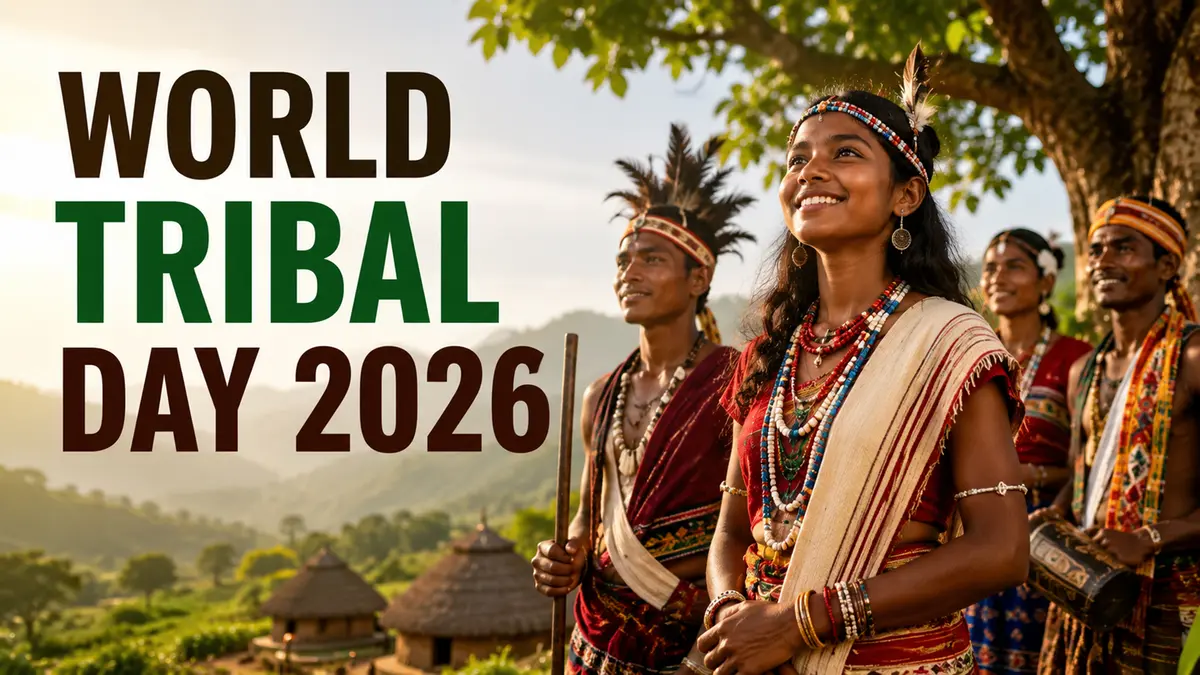
The official name and date matter. “World Tribal Day” is a common but informal Indian expression.
The international observance falls on 9 August. Discussion beginning one day earlier does not change that date.
United Nations material estimates about 476 million Indigenous people across 90 countries; they form less than 6 per cent globally. However, they account for at least 15 per cent of people in extreme poverty; this disparity reflects deep structural exclusion.
Indigenous communities represent most of an estimated 7,000 languages. United Nations material also refers to about 5,000 cultures.
These global figures cover highly diverse peoples; they do not imply identical legal positions, livelihoods or health needs.
Why midwives are the focus in 2026
Indigenous midwives may support women through pregnancy, birth and the post-natal period; they may also carry language and dietary knowledge. Their practice can include medicinal and ceremonial knowledge. Familiar support can improve trust where mainstream services feel distant or discriminatory.
The theme therefore connects maternal health with cultural continuity; it also concerns bodily autonomy and community participation.
Respect must not become romanticisation. Traditional knowledge and practice vary greatly.
Severe bleeding, obstructed labour and infection require rapid clinical care. Eclampsia and newborn breathing failure can also become emergencies; a rights-based system should enable culturally safe birth support. It must also provide referral transport, blood and medicines.
Trained obstetric and neonatal teams remain essential. Informed consent must guide all care.
Good integration requires two-way respect and clear referral pathways. Traditional practitioners should neither be excluded nor left without resources.
A practical health-policy approach
Governments can involve Indigenous midwives in programme design. Voluntary training and supplies should not erase their identity. Midwives need fair payment and reliable links with primary and emergency facilities; community knowledge needs protection from unauthorised commercial use.
Data collection should preserve privacy and community agency. Maternal survival, respectful care and cultural safety should reinforce one another.
India: related concerns, a distinct constitutional vocabulary
India’s Constitution uses the category “Scheduled Tribes”. Article 366(25) links it to communities recognised under Article 342. Under Article 342, the President specifies tribes or tribal communities for each State or Union Territory. Parliament can change these lists.
The Indian category should not automatically be equated with “Indigenous Peoples”; the international term is broader and historically varied.
The rights concerns overlap, but the legal terms come from different frameworks. Careful writing must preserve that distinction.
The 2011 Census recorded 10.45 crore Scheduled Tribe persons; they formed 8.6 per cent of India’s population. These figures come from the Ministry of Tribal Affairs; they are 2011 data, not a current population count.
Scheduled Tribe communities vary greatly in language and geography. Political representation and land relations also differ.
Access to health and education is similarly uneven; national averages can hide severe barriers in remote forests, hills and islands.
The Fifth Schedule covers administration and control in most Scheduled Areas; it also concerns Scheduled Tribe protections in those States. The Sixth Schedule applies to specified tribal areas; these lie in Assam, Meghalaya, Tripura and Mizoram.
The Panchayats (Extension to the Scheduled Areas) Act, 1996 adapts local government in Fifth Schedule areas. It gives Gram Sabhas important roles.
These roles include safeguarding traditions and community resources; they also cover aspects of customary dispute resolution.
The Scheduled Tribes and Other Traditional Forest Dwellers (Recognition of Forest Rights) Act, 2006 recognises individual and community rights. Recognised rights remain subject to its provisions; implementation quality determines their practical value.
These protections matter because health depends on more than clinics. Secure land, forest access and nutrition affect maternal outcomes.
Clean water, safe roads and language access also matter. Functioning local government and protection from displacement shape trust.
A programme may reach a village without earning community confidence. Services must address both access and experience. Culture cannot justify preventable deaths or denial of women’s choices. Indigenous and tribal women must retain agency.
They should be participants, not symbols used by institutions or community leaders. Policy must hear their own priorities.
Implications for public policy
The day tests whether governments move beyond ceremonial programmes. Health systems can recruit staff who speak local languages. Mobile and telemedicine support can widen access. Neither should replace functioning physical facilities.
Authorities should map gaps in emergency transport. Communities may also choose locally acceptable maternity waiting homes.
Health systems should audit disrespect and discrimination. Community-controlled documentation can preserve medicinal and birthing knowledge.
Communities should set limits on access and commercialisation. Documentation must not become extraction; the United Nations scheduled its 2026 online event for 10 August. This is the working day after the observance.
The schedule does not change the annual date of 9 August; it simply reflects institutional event planning.
Conclusion
The 2026 observance connects Indigenous midwifery with health, rights and cultural continuity; their knowledge should not be dismissed. Neither should midwives bear the full burden of maternal safety. Partnerships need emergency care, public resources and community authority.
In India, this approach must respect the constitutional framework; it must also recognise the diversity among Scheduled Tribe communities.