

Why in news?
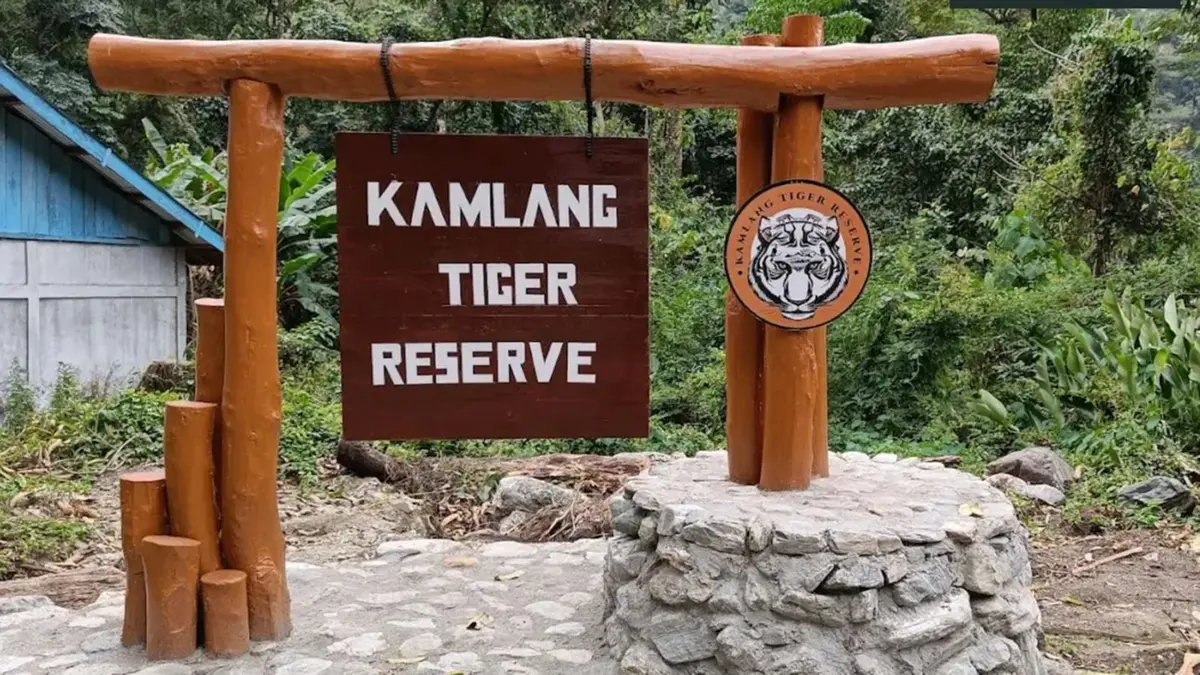
Arunachal Pradesh’s Deputy Chief Minister announced in October 2025 that a nature trail and angling site would be developed in the Kamlang Tiger Reserve to promote eco‑tourism and provide livelihood opportunities for local communities. Plans for a butterfly park are also underway, highlighting the state’s emphasis on sustainable tourism.
Background
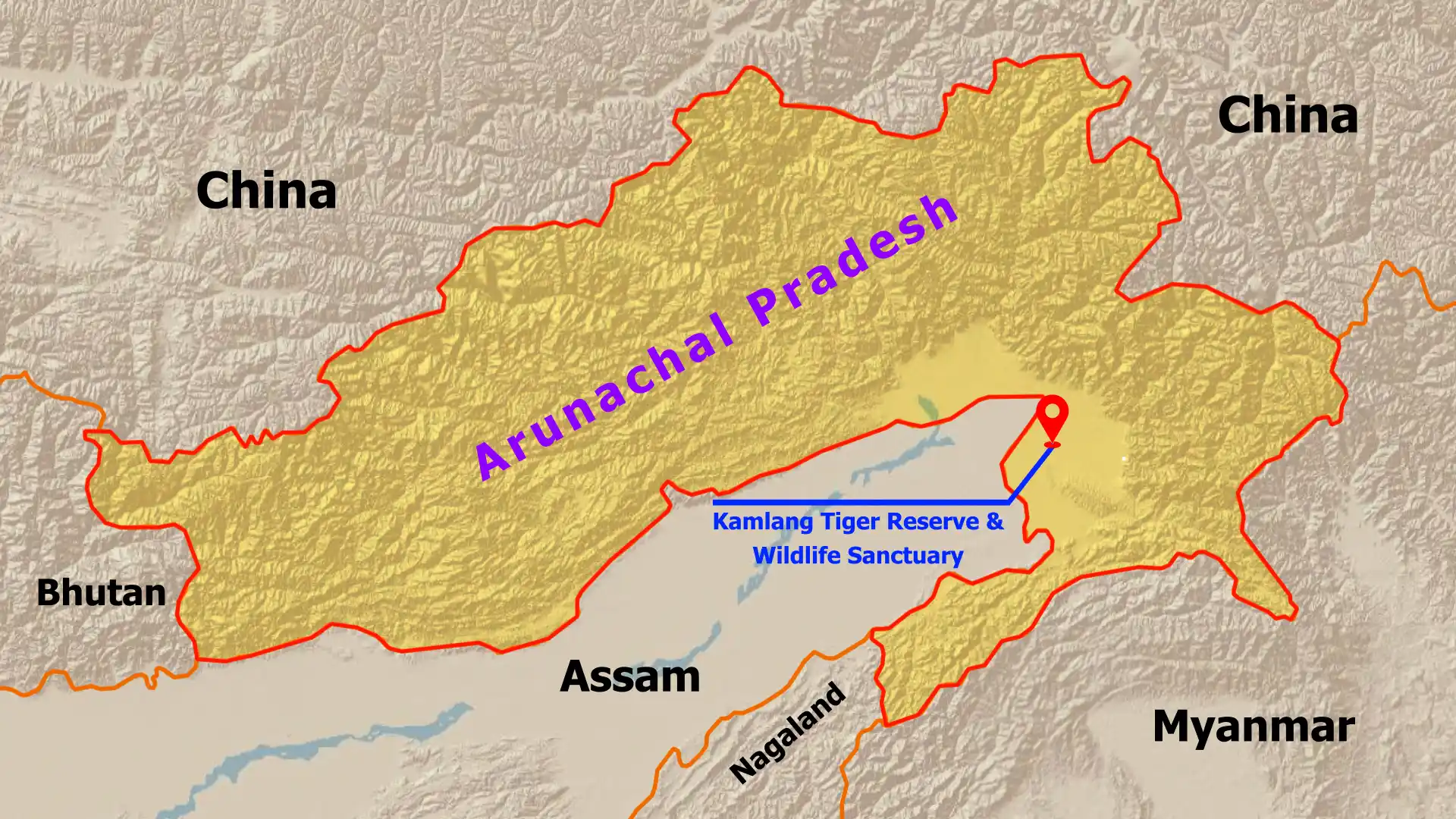
The Kamlang Tiger Reserve lies in the south‑eastern corner of Lohit district in Arunachal Pradesh, close to the border with Myanmar. Established in 2016, it forms part of the Eastern Himalayan biodiversity hotspot. The reserve is named after the Kamlang River, which flows through dense forests before joining the Brahmaputra. It sits between Namdapha National Park to the south and the Lang River to the north, while the Lati and Tawe rivers mark its western and eastern boundaries. Indigenous communities like the Hishmi, Digaru and Mizo have long lived in harmony with this landscape.
Landscape and climate
- Diverse terrain: The reserve includes tropical evergreen forests in the foothills, subtropical forests at mid‑elevations and alpine vegetation near peaks such as Daphabhum. It also features grasslands, rivers and the scenic Glow Lake.
- Climate: The area falls within a subtropical zone, with high rainfall during the monsoon and cooler temperatures at higher altitudes.
- Flora: Common tree species include Ammora wallichi (Amari), Gmelina arborea (Gamari), Terminalia chebula (Haritaki) and Canarium resiniferum (Dhuna). The forests harbour dozens of medicinal and aromatic plants.
Wildlife
- Big cats: The reserve is one of the few places where all four big cats – tiger, leopard, clouded leopard and snow leopard – are found.
- Primates and ungulates: Endangered species such as the hoolock gibbon, slow loris, capped langur and stump‑tailed macaque share the forest with deer, wild boar and gaurs.
- Birdlife: Hornbills, pheasants and migratory waterfowl thrive here, making it a paradise for birdwatchers.
Significance of eco‑tourism
- Community empowerment: Developing nature trails and angling sites creates employment for local residents as guides, homestay operators and artisans.
- Conservation awareness: Responsible tourism educates visitors about the importance of protecting forests and wildlife, while revenue can support conservation initiatives.
- Balanced development: By focusing on low‑impact activities like trekking, bird‑watching and angling, the state aims to balance ecological integrity with economic growth.
Conclusion
Kamlang Tiger Reserve showcases the extraordinary biodiversity of Arunachal Pradesh. Thoughtfully planned eco‑tourism can preserve its pristine habitats while providing sustainable livelihoods for the area’s indigenous communities.
Source: Economic Times Travel