

Why in news?
The foundation stone for a planned e-methanol project was laid at Kandla in Gujarat on 26 September. The shipping ministry describes it as India's first port-based project of this kind, a claim attached to the official announcement. Deendayal Port Authority and Assam Petro-Chemicals Limited plan a combined capacity of 150 tonnes a day, costing about ₹2,300 crore. E-methanol uses electricity-derived hydrogen and a carbon source to produce a liquid fuel that can serve suitable ships. Its attraction is the possibility of lower lifecycle emissions than conventional fossil fuels. The plant is not yet operating, and its environmental performance will depend on the actual electricity, carbon supply and production process.
Why Kandla is a relevant location
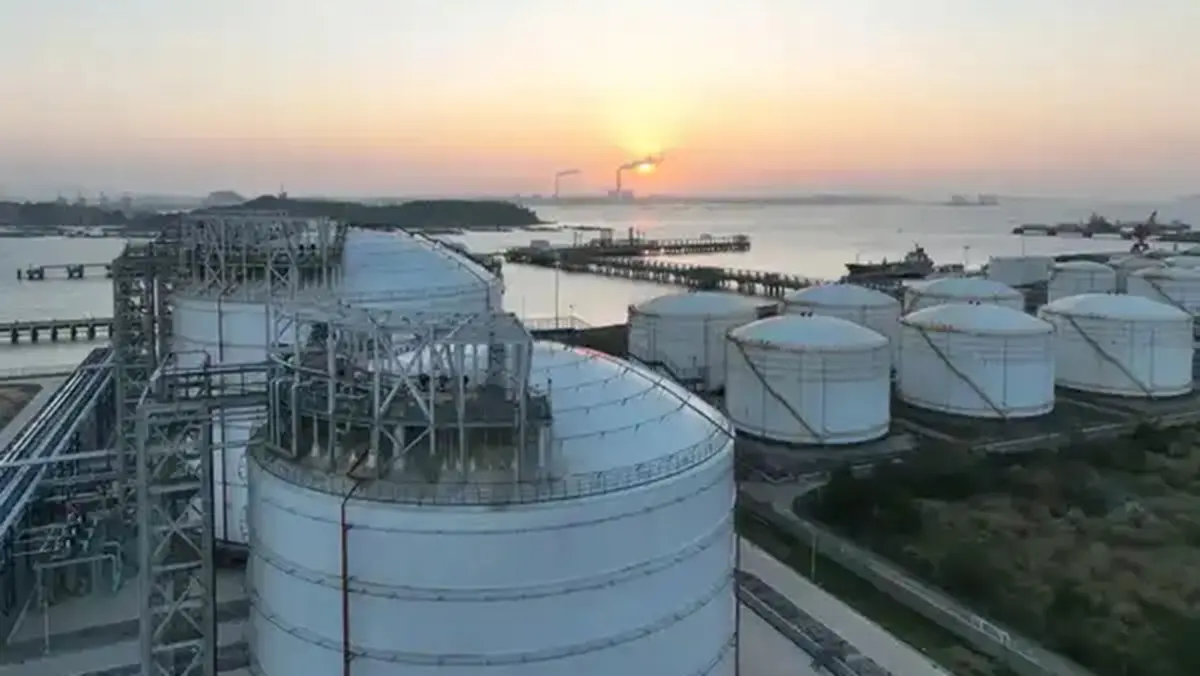
Deendayal Port is located on Kandla Creek in Gujarat's Kachchh district, near Gandhidham. The creek connects with the Gulf of Kutch on India's north-western coast, opening towards the Arabian Sea. This is different from the Gulf of Khambhat farther south. Its coastal position makes the relationship between fuel production, storage and maritime users central to the project.
A port-based plant can potentially place production closer to the facilities that handle and supply marine fuels. That can simplify part of the supply chain, but proximity alone does not create a functioning market. Ships need compatible systems, buyers need dependable quantities and the port needs safe handling arrangements. The project's location creates an opportunity that still requires operational connections.
What the announcement actually commits to
The ministry identifies two phases. The first is planned at 50 tonnes a day, with an investment of ₹1,200 crore and a January 2027 target. The second adds 100 tonnes a day, with ₹1,100 crore and a March 2027 target. Together they make the stated 150-tonne daily capacity. These are announced commissioning targets, not production already achieved in September.
The partnership combines the port authority with Assam Petro-Chemicals Limited, which is associated with Namrup in Assam. The new project itself is at Kandla, not Namrup. The ministry's account envisages renewable electricity, green hydrogen and biogenic carbon dioxide as inputs. Its commercial projections remain expectations until the plant demonstrates sustained output, costs and sales under operating conditions.
How electricity becomes a liquid fuel
Methanol is a simple alcohol with the chemical formula CH₃OH. Conventional production commonly relies on fossil feedstocks. In a renewable e-methanol route, an electrolyser uses renewable electricity to split water and produce hydrogen. That hydrogen is then combined with carbon dioxide through a catalytic process to make methanol. Electricity supplies energy for the process rather than becoming a new element in the molecule.
The carbon source is important. Biogenic carbon dioxide comes from biological material or processes, while other projects may consider captured atmospheric carbon. Using carbon captured from a fossil industrial source can recycle it once, but does not make its origin renewable. “E-methanol” describes a production route; the label alone does not settle its complete climate impact.
Biomethanol and e-methanol also should not be treated as identical production methods. Biomethanol can be made from biomass-derived feedstocks, while e-methanol centres on electricity-derived hydrogen and a carbon input. The resulting methanol molecule can be chemically the same. What differs is the chain of resources and energy used to produce it, which influences the emissions associated with each tonne.
Why shipping is interested
Methanol is liquid at ordinary temperature and pressure, which can make storage and transport simpler than handling some gaseous alternatives. It can be used in appropriately designed engines and other suitable energy systems. However, it is not a universal drop-in replacement for every ship's existing fuel. Equipment compatibility, tanks, piping, crew procedures and fuel quality all require attention.
The fuel also contains less energy per unit volume than conventional diesel-type fuels. A vessel therefore needs more storage volume to carry an equivalent amount of energy, other things being equal. That affects ship design and the space available for cargo or other uses. A promising emissions profile does not remove these physical trade-offs.
The emissions boundary that matters
Lower lifecycle emissions do not mean zero carbon dioxide at the exhaust. Methanol contains carbon, which is released when the fuel is burned. The climate assessment must consider how that carbon entered the fuel and how much energy production required. Renewable electricity and a suitable carbon source can lower the overall burden, but the actual supply chain must support the claim.
The International Maritime Organization's fuel-assessment approach considers both upstream production and use aboard a ship. The upstream stage is often called well-to-tank; the shipboard stage is tank-to-wake. Combining them avoids crediting a fuel simply because emissions have moved away from the vessel. Electricity generation, processing and transport can materially change the final comparison.
Production and safe supply must advance together
A viable project needs more than an electrolyser and a synthesis unit. Renewable power must be available reliably, the carbon feedstock must meet requirements and water use must be managed. Fuel buyers also need confidence in delivery schedules and certified properties. These requirements connect the engineering design with commercial agreements and environmental accounting.
Safety remains necessary even for a fuel promoted as green. Methanol is flammable and toxic, and some materials are unsuitable for handling it. Ports and vessels need appropriate storage, detection, ventilation and operating procedures. The International Maritime Organization has developed safety guidance for alcohol fuels. A lower-carbon production route does not change the need to protect workers, crews and surrounding waters.
Conclusion
Kandla's project connects renewable-energy ambitions with the practical needs of maritime transport. Its immediate status is a planned, phased facility with announced capacity and commissioning targets. The meaningful next tests are successful construction, dependable fuel supply and verified lifecycle performance. If those are achieved alongside safe handling and compatible ship demand, the port location could become an advantage in building a lower-emission fuel chain.