

Why in news?
On 25 May 2026 a woman collecting firewood near Amritpur village was killed by a tiger in Uttar Pradesh’s Katarniaghat Wildlife Sanctuary. The incident prompted authorities to increase patrols and remind villagers of safety protocols. It also drew attention to the sanctuary’s unique ecology and the challenges of human–wildlife coexistence.
Background
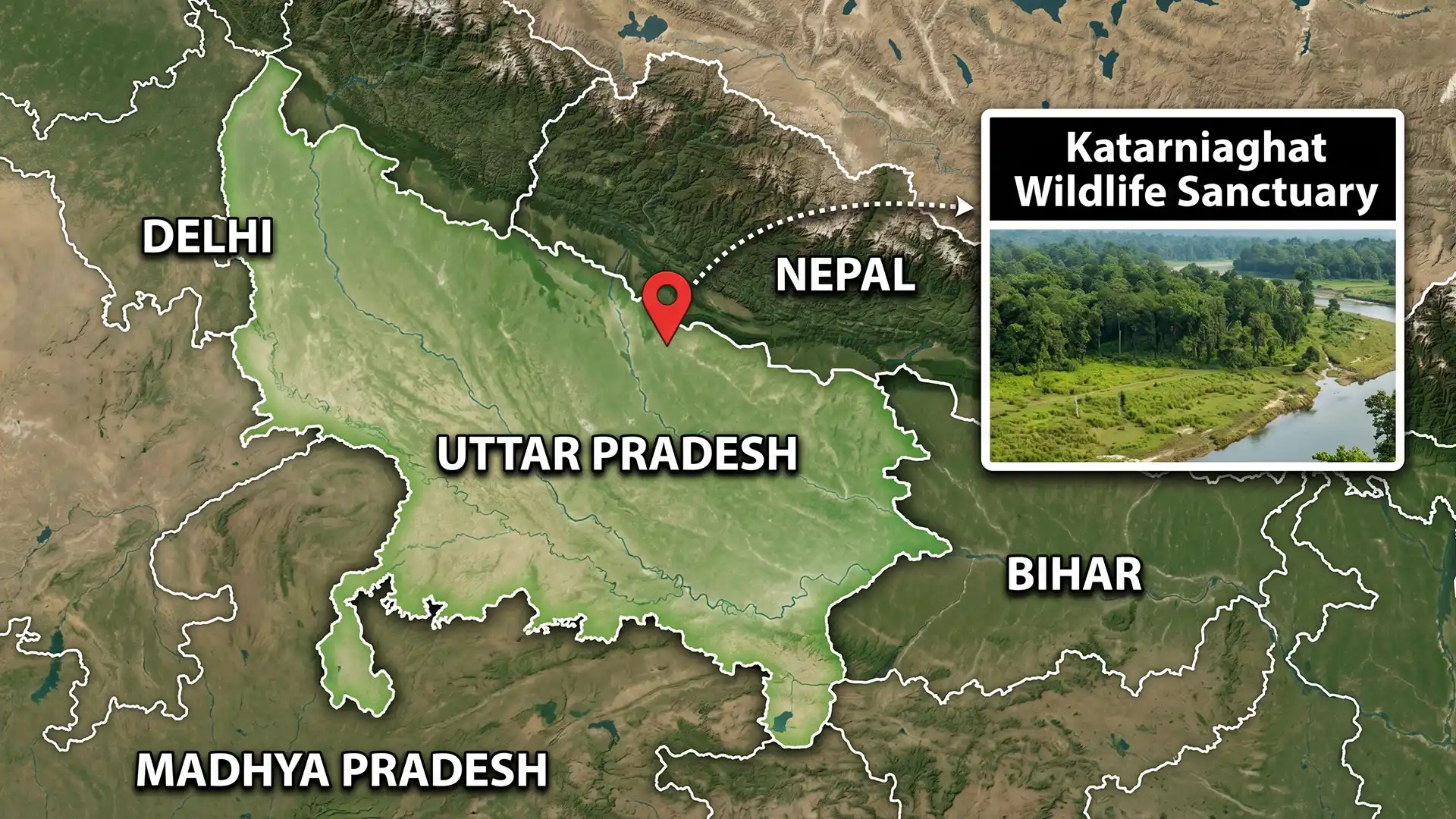
Katarniaghat is part of the Dudhwa Tiger Reserve in the Terai region of Uttar Pradesh. It lies in the Bahraich district near the Nepal border and covers about 400 sq km of sal and teak forests, tall grasslands, swamps and wetlands along the Girwa and Kaudiyala streams of the Ghaghra river. A buffer zone of about 150 sq km extends the protected area. The sanctuary was included in Project Tiger in 1987 and, in the early 2000s, along with Kishanpur Wildlife Sanctuary, it became part of the Dudhwa Tiger Reserve.
Ecological features
- Landscape connectivity: Katarniaghat links the tiger habitats of Dudhwa and Kishanpur in India with Bardia National Park in Nepal. This corridor allows tigers and other animals to move freely, maintaining genetic diversity.
- Diverse habitats: The sanctuary’s mosaic of sal forests, mixed deciduous trees and wetlands supports a wide range of species. The Girwa River and its tributaries are known for gharials and mugger crocodiles, while the swamps host swamp deer and hispid hares.
- Wildlife: Besides tigers, Katarniaghat is home to endangered species such as the one‑horned rhinoceros, Gangetic dolphin, Bengal florican, white‑backed vulture and long‑billed vulture. Its river ecosystems shelter rare turtles and fish.
Human–wildlife conflict
- Dependence on forests: Many villages border the sanctuary. Residents gather firewood, graze cattle and collect grass. As human activities expand, encounters with wild animals become more frequent.
- Prevention measures: Forest authorities regularly patrol conflict hotspots, set up early‑warning systems and provide compensation for losses. Awareness campaigns encourage villagers to avoid deep forest areas, particularly during early morning and evening hours when tigers are most active.
- Long‑term solutions: Expanding livelihoods outside the forest, such as promoting eco‑tourism and handicrafts, can reduce dependence on wood and fodder. Strengthening the corridor with Nepal ensures animals have space to move without entering villages.
Conclusion
The tragic tiger attack at Katarniaghat illustrates the tensions that arise when people and wildlife share space. Preserving the sanctuary’s biodiversity while protecting local communities requires careful management: maintaining corridors, investing in alternative livelihoods and fostering coexistence through education and fair compensation.