
Why in news?
Progress reports released in June 2026 show that the Kiru hydroelectric project in Jammu and Kashmir has crossed 83 percent physical progress. The project is now expected to be completed by December 2026, though costs have risen.
Background
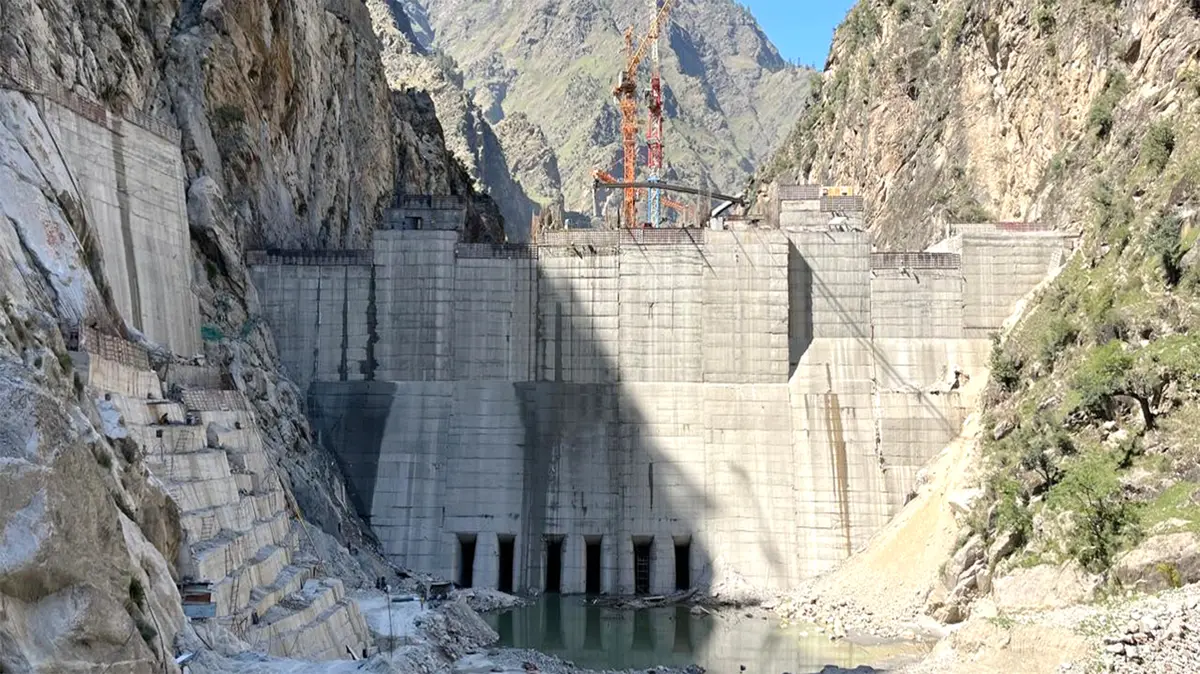
Kiru is a run‑of‑the‑river project on the Chenab River near the village of Patharnakki in Kishtwar district. It is being built by Chenab Valley Power Projects Limited, a joint venture between NHPC and the Jammu and Kashmir State Power Development Corporation. The scheme includes a 135‑metre high concrete gravity dam and an underground powerhouse with four units of 156 megawatts each, giving a total capacity of 624 megawatts. The original project cost was about ₹4,287 crore at July 2018 price levels, and it was slated for completion in 54 months. Once completed, Kiru should generate roughly 2,272 million units of electricity per year and feed power to the northern grid.
Current status and challenges
- Progress: As of June 2026 construction is approximately 83.46 percent complete. The dam and spillway works are nearing completion, and tunnelling for the power house is well advanced.
- Cost escalation: The total estimated cost has increased to about ₹5,409 crore due to geological surprises, rising material costs and delays caused by the COVID‑19 pandemic.
- Timeline: Officials now aim to finish civil works by December 2026. Commissioning of all four units may occur in phases thereafter.
- Significance: Kiru will harness the fast‑flowing Chenab to supply affordable, clean energy. It will also provide employment in a remote region and strengthen the power supply for northern India.
Conclusion
Despite delays and higher costs, the Kiru project remains vital for meeting growing electricity demand. Proper resettlement, ecological safeguards and efficient execution will determine its long‑term benefits.