

Why in news?
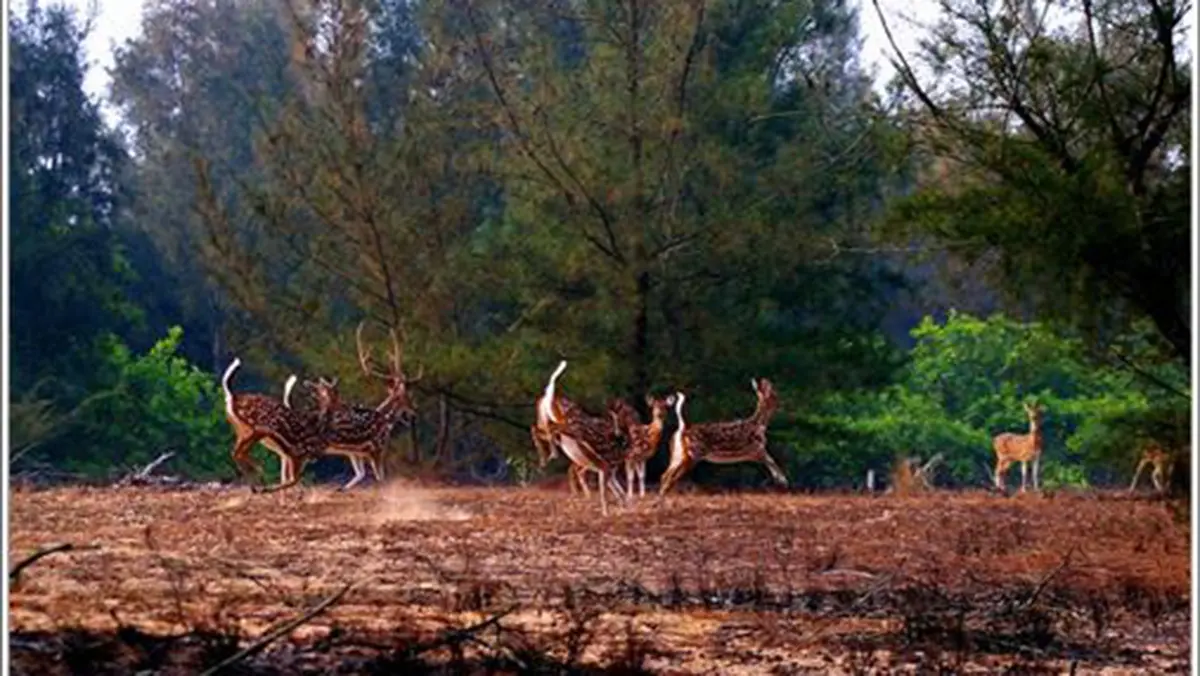
Residents and wildlife enthusiasts have raised alarm over the dwindling population of spotted deer in the Konark-Balukhand Wildlife Sanctuary of Odisha. Once abundant along the marine drive between Puri and Konark, deer are now rarely seen, prompting calls for an updated census and better protection.
Background
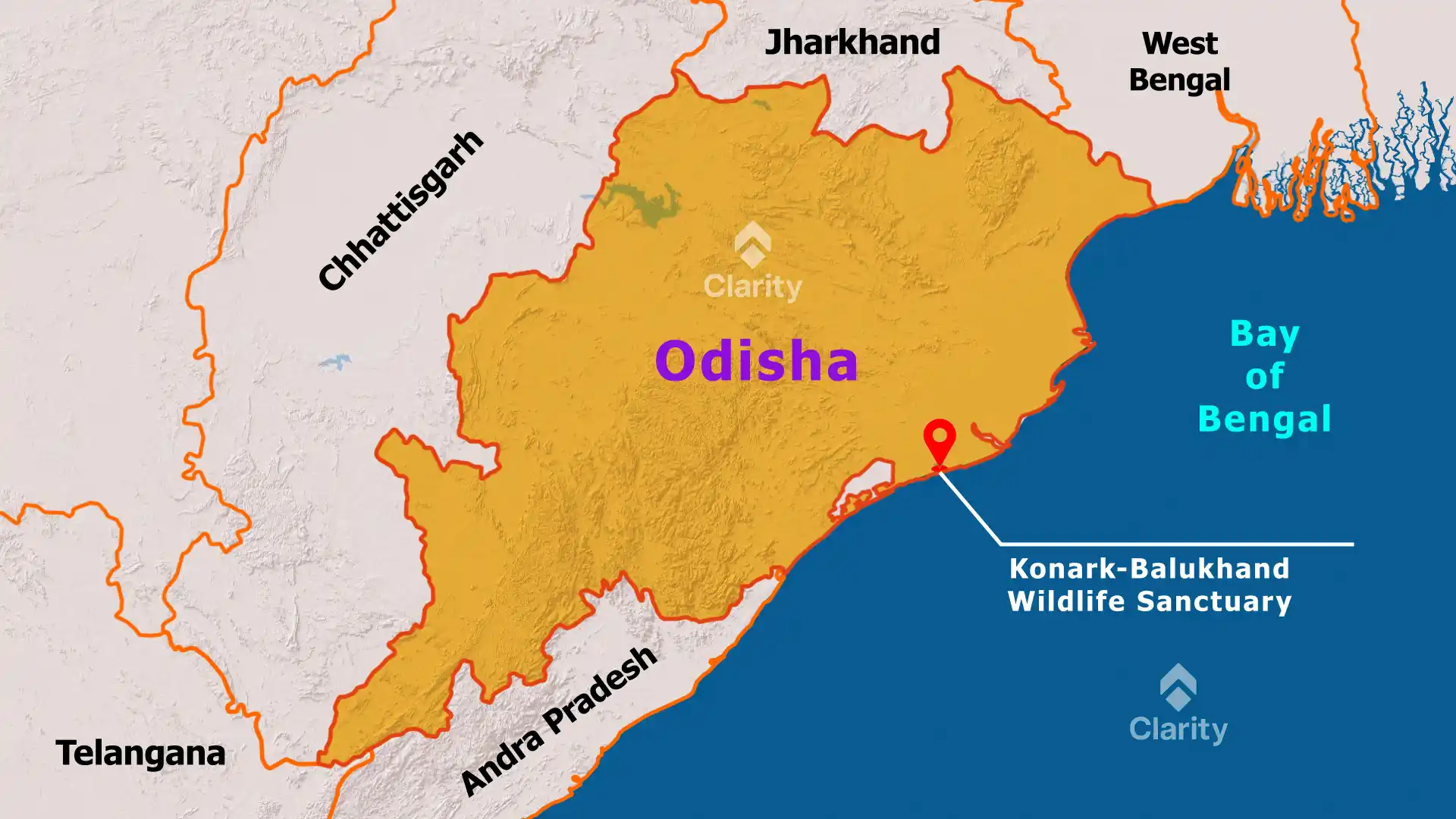
The Balukhand-Konark sanctuary covers around 87 square kilometres along the Bay of Bengal between the temple towns of Puri and Konark. Created in 1984, it consists mainly of casuarina and cashew plantations on sand dunes and is crossed by small rivers such as the Nuanai and Kusabhadra. The sanctuary provides habitat for spotted deer, blackbuck, hyenas, jackals, jungle cats and numerous bird species. Olive Ridley turtles nest on its beaches, adding to its ecological importance.
Once home to thriving herds of spotted deer and blackbuck, the sanctuary suffered heavy damage when Cyclone Fani hit Odisha in 2019. Many trees were uprooted and freshwater ponds were filled with sand, reducing food and water availability for herbivores. Blackbuck became locally extinct but have since been reintroduced. The last deer census was reportedly conducted in 2016, leaving uncertainty about current numbers.
Reasons for decline
- Road accidents: The busy Marine Drive road that cuts through the sanctuary has led to frequent vehicle collisions with deer. Speeding vehicles at night pose a particular threat.
- Habitat degradation: Post-cyclone restoration has been slow. Water scarcity during the dry season forces deer to venture outside the sanctuary in search of ponds and rivulets.
- Human interference: Unregulated tourism, expansion of resorts and roads and grazing by cattle have disturbed the animals' habitat and increased human-wildlife conflict.
Steps ahead
Conservationists urge the Forest Department to conduct a scientific census of deer and blackbuck, restore water bodies and plant native fruiting trees. Installing speed breakers and signboards could reduce roadkill. Involving local communities in protection efforts may help curb poaching and grazing.
Conclusion
The decline of spotted deer in the Konark-Balukhand sanctuary serves as a warning about the fragile nature of coastal ecosystems. Protecting these herbivores is not only about preserving a tourist attraction but also about maintaining the ecological balance that supports predators and plant life. A proactive management plan is needed to ensure that the dunes and casuarina groves continue to harbour abundant wildlife.
Source: The Telegraph . Wikipedia - Balukhand-Konark Wildlife Sanctuary