Why in news?
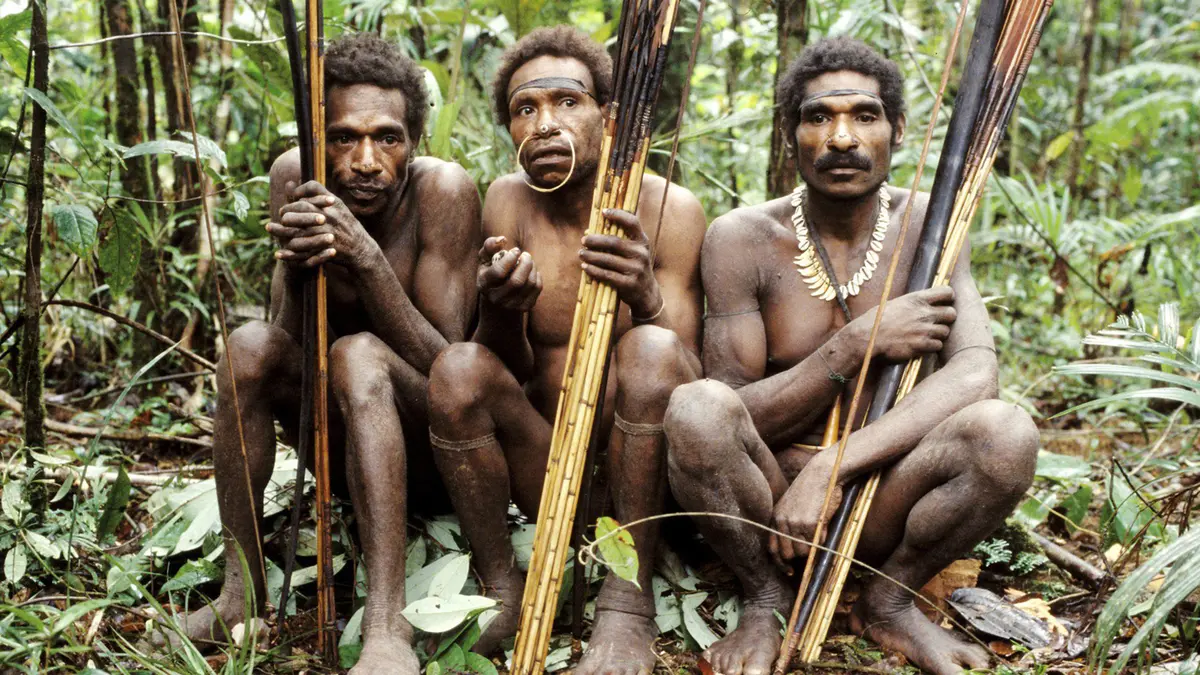
The Korowai, a small indigenous community in the remote forests of southeastern Papua, recently drew international attention after media features highlighted their tree‑house lifestyle and unique cultural practices. Their way of life has fascinated people because they live high above the ground in houses built on towering trees and only made contact with the outside world in the late twentieth century.
Background
The Korowai (also spelled Kolufape) inhabit dense lowland rainforests about 150 kilometres inland from the Arafura Sea in the Indonesian province of Papua. Anthropologists estimate their population to be between 2,500 and 4,000 people. Until the mid‑1970s, they had little or no contact with outsiders and survived as hunter‑gatherers and small‑scale horticulturalists. Their language and customs are distinct from neighbouring groups.
Unique tree‑house living
For centuries the Korowai built their homes high in the canopy to protect their families from floods, mosquitoes, wild animals and raids from rival tribes. Most houses stand 8–12 metres above ground, but a few reach astonishing heights of 40–45 metres. Each house is lashed together from local materials: a central banyan tree provides the main support, while sago palms supply floorboards, walls and thatching. Access is gained via a notched log ladder or a springy pole. Families usually occupy a tree house for about three years before building a new one.
Contact and change
Missionaries began visiting the Korowai in 1978, and some members of the community have since moved into more permanent villages built on the ground. However, many still maintain tree houses both for ceremonial reasons and to preserve their independence. Historical accounts suggest that the Korowai once practised ritual cannibalism against men believed to be witches (known as khakhua), but such practices have faded and are rarely reported today.
Key points
- Location: Southeastern Papua, Indonesia; between the Becking, Ei and Brazza rivers.
- Population: Roughly 2,500–4,000 people living in small clans.
- Way of life: Hunter‑gatherers and horticulturalists; diets dominated by sago starch, bananas, forest game and river fish; pigs and dogs are kept.
- Architecture: Tree houses built 8–12 m high (some up to 45 m); structure uses banyan trunks and sago palm; ladder carved from a single log.
- Social change: Contact with missionaries in the late 1970s led to the establishment of ground villages and new trade networks, but many Korowai continue to build tree houses for cultural continuity.