
Why in news?
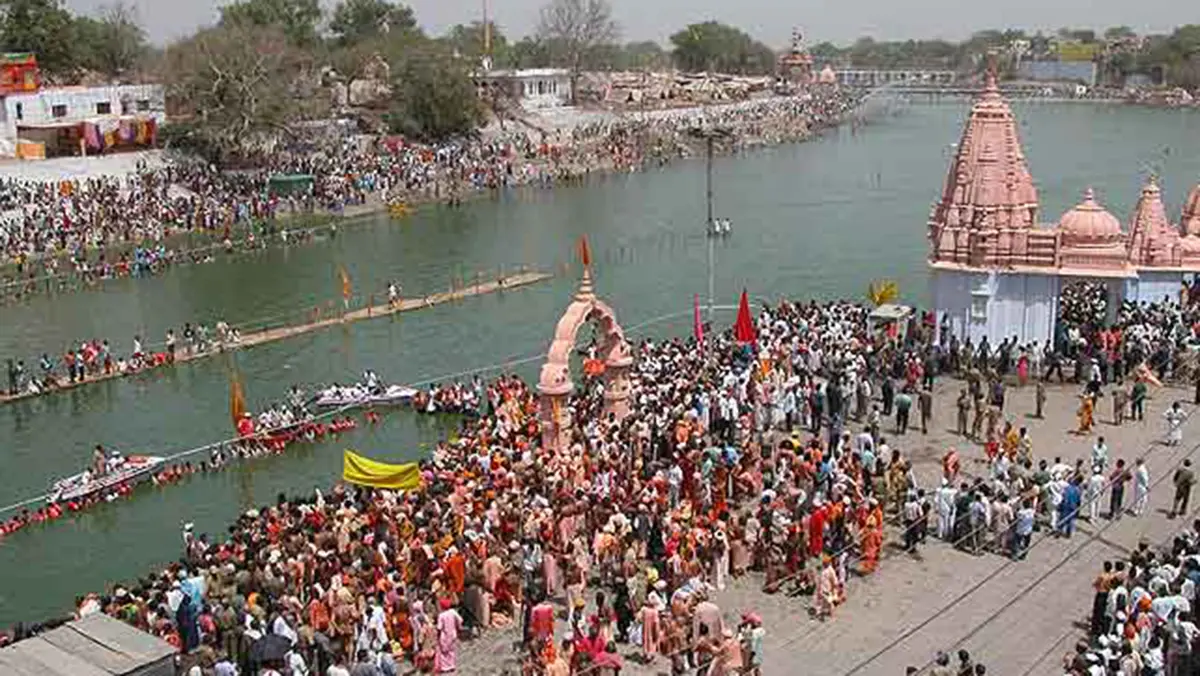
The Kshipra River has been in focus due to ongoing efforts to augment its flow for the forthcoming Ujjain Simhastha festival and to combat pollution. Authorities are working on the Narmada–Kshipra link and other conservation projects so that the river can sustain religious and ecological functions throughout the year.
Background
The Kshipra, also called the Shipra, is a right‑bank tributary of the Chambal River. It rises in the Kakri Bardi hills of the Vindhya Range near Indore (about 15 km south of the city) and flows roughly north across the Malwa Plateau for about 195 km before joining the Chambal at the Madhya Pradesh–Rajasthan border. A hydrological study estimates that its drainage basin covers around 562,000 hectares. The holy city of Ujjain, one of Hinduism’s seven sacred places (Sapta Puri), lies on its east bank.
Mythology and culture
- Mythological origin: Ancient texts suggest that the river sprang from the heart of Varaha (the boar incarnation of Vishnu). Another legend tells that the river formed from drops of blood when Lord Shiva cut off Lord Vishnu’s fingers. These stories symbolise purity and sacrifice.
- Religious festivals: Every 12 years Ujjain hosts the Simhastha Kumbh Mela on the river’s ghats, attracting millions of pilgrims who take a sacred dip. Daily aartis, ritual baths and ancestor‑offering ceremonies (pitru tarpan) continue throughout the year.
- Sage Sandipani’s ashram: It is believed that Lord Krishna studied under Sage Sandipani on the banks of the Kshipra, further enhancing the river’s spiritual aura.
Geography and hydrology
- Course and tributaries: After rising in the Vindhya hills the river flows north past Indore and Ujjain, receiving tributaries such as the Khan (from Indore city), Gambhir and the seasonal Kshepra. It enters the Chambal near Mandsaur district.
- Perennial challenges: Although once perennial, the Kshipra now stops flowing a few months after the monsoon because of reduced rainfall, deforestation and over‑extraction. Pollution from urban sewage and industrial effluents, particularly from Indore, contaminates the water.
- Narmada–Kshipra link: To revive the river, the Madhya Pradesh government implemented the Narmada–Shipra link in 2015 as part of the larger Narmada–Malwa project. Water is pumped from the Narmada River through pipelines to recharge the Kshipra and supply towns like Ujjain and Indore. This project has improved water availability for religious events and urban drinking water but also raised concerns about inter‑basin transfers.
Significance
- Cultural heritage: The river’s ghats, temples and festivals contribute to Ujjain’s identity as a centre of pilgrimage and classical learning.
- Water management: Conserving the Kshipra requires controlling pollution, recharging groundwater, protecting catchment forests and managing water demand. The success of the Narmada–Kshipra link is being closely watched as a model for rejuvenating other degraded rivers.
- Ecological health: Sustaining flow will help maintain aquatic life, wetlands and the livelihoods of communities dependent on the river for farming and fishing.
Conclusion
The Kshipra River is both a sacred symbol and a practical lifeline for central India. Restoring its perennial flow and water quality will require sustained investment, community participation and careful environmental management.