

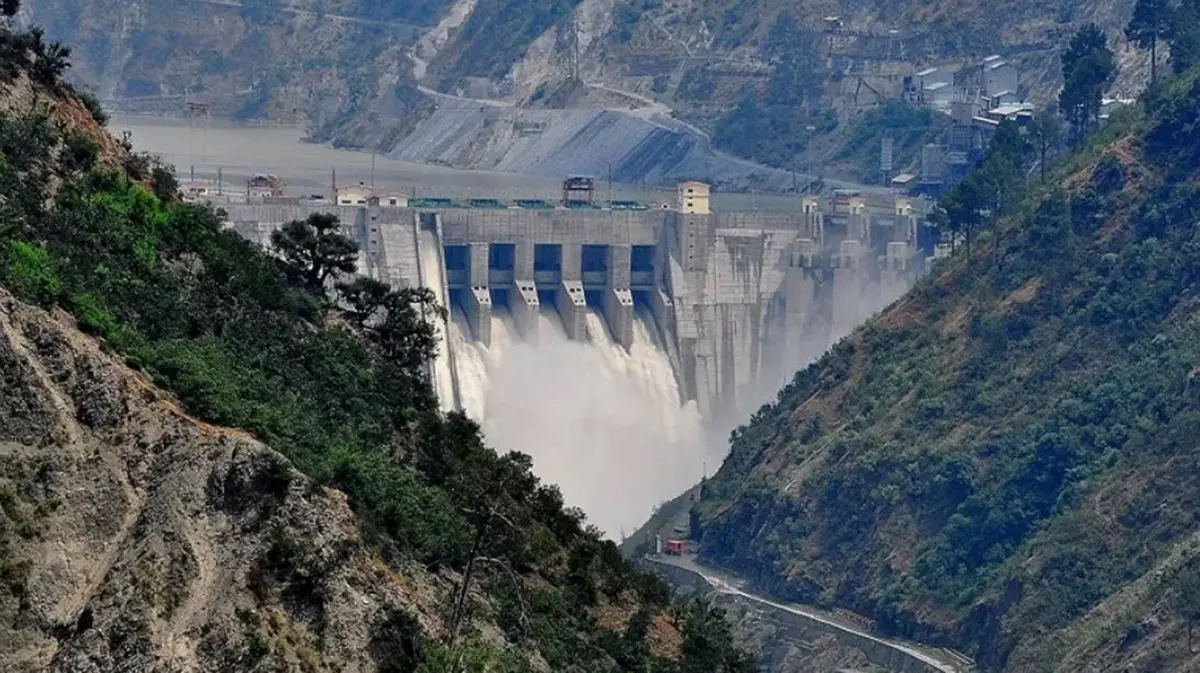
Why in news?
The 540 megawatt Kwar hydroelectric project on the Chenab river is one of several hydropower schemes under construction in Jammu and Kashmir. Its approval and tendering have been in the news as India seeks to harness western rivers under the Indus Water Treaty.
Background
The Kwar project is located near the village of Padyarna in Kishtwar district, about 28 km from Kishtwar town. It forms part of the Chenab Valley Power Projects, a joint venture between the National Hydroelectric Power Corporation (NHPC) and the Jammu & Kashmir State Power Development Corporation. Under the Indus Water Treaty of 1960, India has rights to use the waters of the Chenab for non‑consumptive purposes such as hydropower, subject to design constraints that ensure minimum flows into Pakistan.
Project features
- Design: Kwar is a run‑of‑river scheme with a 109 metre high concrete gravity dam. Water will be diverted through four penstocks, each 5.65 m in diameter, to an underground powerhouse housing four Francis turbines of 135 MW each.
- Generation: The plant’s design energy is estimated at 1,975 million units in a 90 % dependable year. Electricity generated will feed into the northern grid, helping to meet growing demand in Jammu and Kashmir and neighbouring states.
- Joint venture: The project is implemented by Chenab Valley Power Projects Private Limited (CVPPL), which is owned by NHPC (51 %) and JKSPDC (49 %). Construction is expected to create around 2,500 jobs.
- Cost and timeline: When approved by the Cabinet Committee on Economic Affairs, the project cost was estimated at about ₹4,526 crore (at 2020 prices). Tenders for electro‑mechanical works were invited in 2024, with completion targeted in the late 2020s.
- Environmental considerations: The project’s reservoir will have a gross storage of around 27 million cubic metres and a catchment area of 10,325 square kilometres. Being a run‑of‑river scheme, it is designed to limit submergence and reduce displacement compared with large storage dams.
Significance
Kwar is part of a series of hydropower projects on the Chenab river – including the Pakal Dul (1,000 MW) and Kiru (624 MW) projects – aimed at utilising India’s entitlement under the Indus Water Treaty. These projects will enhance energy security in Jammu and Kashmir and contribute to the region’s economic development. They also highlight the need for balancing power generation with ecological and social impacts.
Conclusion
The Kwar hydroelectric project demonstrates how run‑of‑river hydropower can add capacity without large reservoirs. Careful project management, timely completion and equitable benefit sharing will determine its success.