
Why in news?
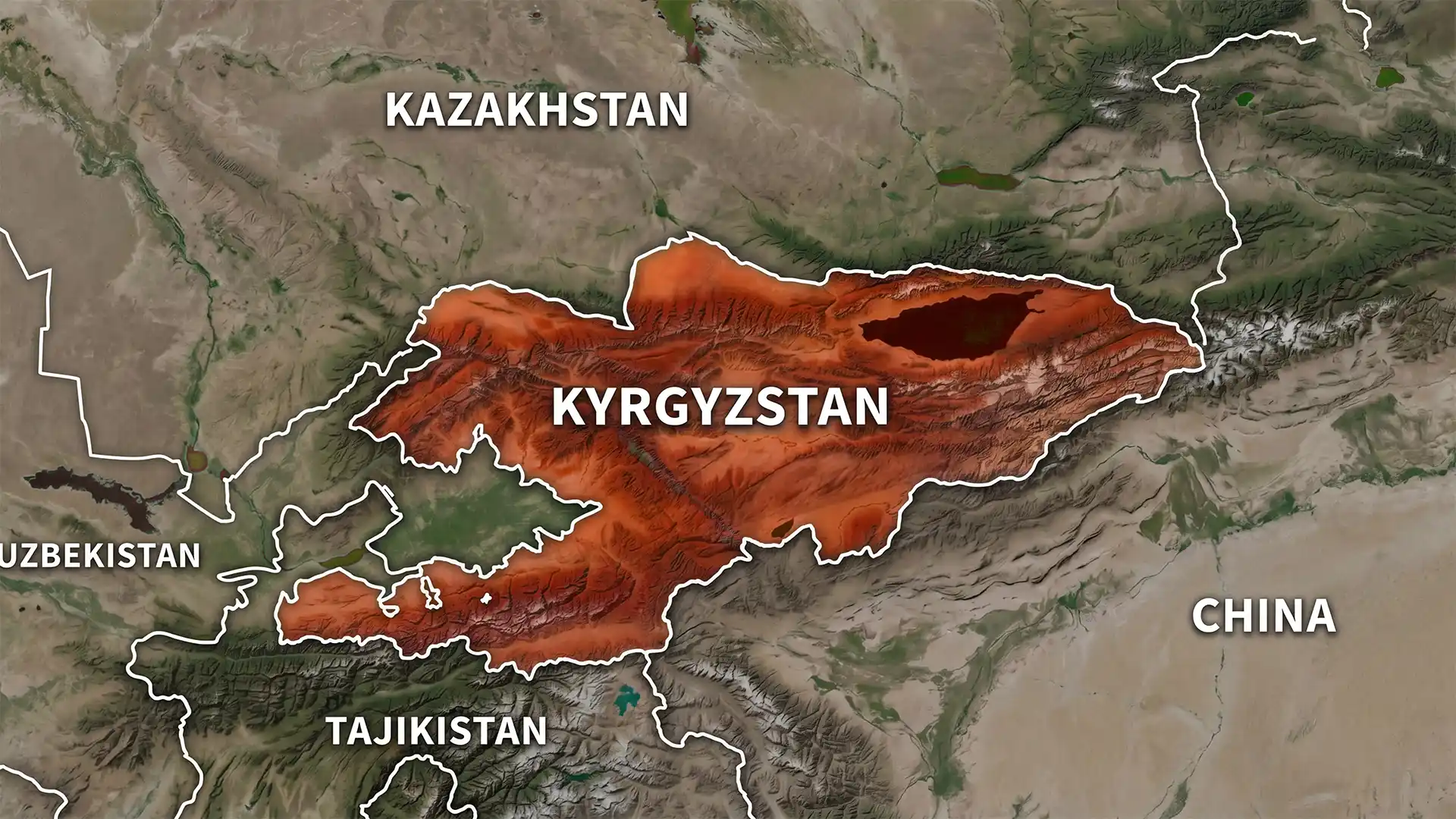
Defence ministers of the Shanghai Cooperation Organisation (SCO) met in Bishkek, the capital of Kyrgyzstan. The meeting drew attention to the host country’s geography and strategic location in Central Asia.
Background
Kyrgyzstan is a landlocked country in Central Asia bordered by Kazakhstan, Uzbekistan, Tajikistan and China. Covering about 198,500 square kilometres, it is slightly smaller than the state of Gujarat. The country is renowned for its dramatic mountains, high pastures and nomadic traditions. The Tian Shan mountain system dominates the landscape, with the highest peak, Jengish Chokusu (also called Victory Peak), rising to 7,439 metres.
Geography and climate
- Mountainous terrain: More than two‑thirds of Kyrgyzstan is mountainous. The rugged topography leads to limited arable land but provides abundant pastures and mineral resources.
- Major lakes and rivers: The alpine lake Issyk‑Kul, one of the world’s largest saline lakes, lies in the northeast. Rivers such as the Naryn and Chu flow through deep valleys, feeding into larger basins beyond the country’s borders.
- Continental climate: Summers are warm and dry, while winters can be severe with heavy snowfall. Temperatures vary widely between valleys and high plateaus.
Economy and culture
- Livelihoods: Many Kyrgyz people practise animal husbandry, moving herds of sheep, goats and horses between seasonal grazing lands. Agriculture focuses on wheat, barley and fruit.
- Natural resources: The country has deposits of gold, coal and rare earth metals. Hydropower from mountain rivers is a major energy source.
- Cultural heritage: Traditional felt yurts, epic poetry and horse sports like Kok boru remain important. Russian is widely spoken alongside the Kyrgyz language due to the country’s Soviet past.
Source: Hindustan Times

