

Why in news?
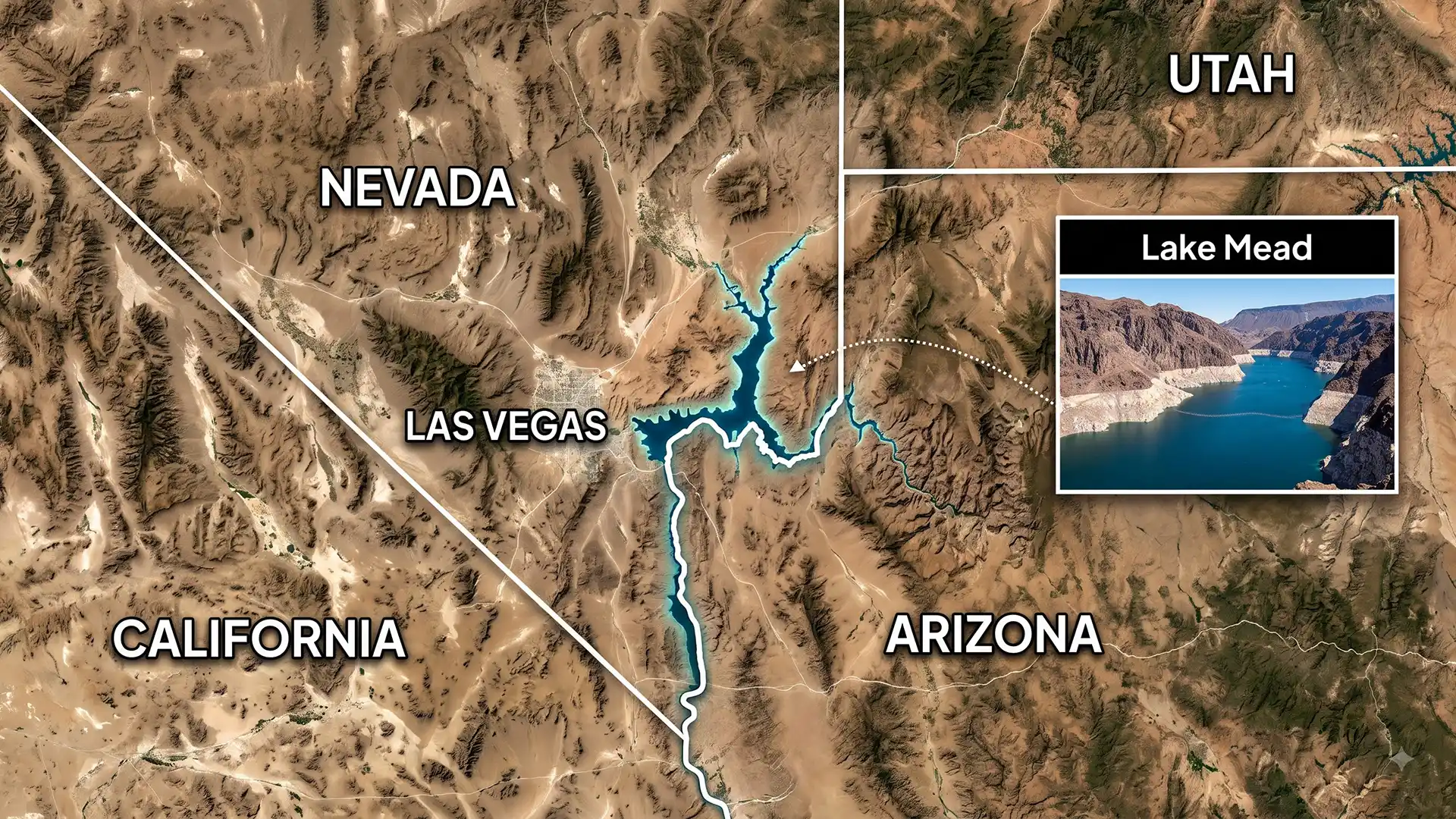
Lake Mead fell to 1,040.4 feet above sea level on 7 August. Federal data placed it below the previous record from July 2022.
The reservoir and its role
Lake Mead lies behind Hoover Dam on the Colorado River. It straddles the boundary between Nevada and Arizona in the United States.
The reservoir began filling during the 1930s and became the country’s largest by capacity. It stores water for cities, farms and hydropower operations.
The wider Colorado River system serves seven American states, tribal nations and Mexico. More than 40 million people depend on its flows.
Lake Mead’s elevation therefore measures more than a local drought; it signals stress within a heavily allocated interstate river basin.
Why the level has fallen
The basin has endured prolonged drought, high temperatures and weak mountain snowpack. Warming also increases evaporation and reduces effective runoff. Demand has historically exceeded the river’s reliable supply. Legal allocations were developed during a wetter period and now face harsher hydrology.
Lake Powell normally releases water downstream towards Mead. Emergency protection of Powell can reduce that contribution, shifting pressure between reservoirs.
The Bureau of Reclamation planned a smaller Powell release for the 2026 water year. That step aimed to protect hydropower operations at Glen Canyon Dam.
Implications for water and power
Lower storage reduces the buffer against another dry year. It also narrows managers’ room for balancing urban, agricultural and environmental claims. Hoover Dam can still generate electricity at the current level; however, lower hydraulic pressure reduces generation efficiency and available capacity.
Water intakes and recreational facilities also need adaptation as the shoreline retreats. Such work raises costs for agencies and local communities.
The immediate record does not mean taps will suddenly run dry. Formal shortage rules and conservation agreements distribute reductions over time.
A governance problem across borders
Existing operating rules approach expiry after 2026. Basin states have struggled to agree on how future shortages should be shared. Upper Basin states emphasise variable river flows. Lower Basin states debate how cuts should reflect legal priority, consumption and conservation efforts.
Tribal water rights and Mexico’s treaty interests add essential dimensions. Durable reform must include these governments, not only state water agencies.
Central lesson
A reservoir can delay scarcity but cannot create water. Long-term security requires demand to match a hotter basin’s dependable supply.
Conclusion
Lake Mead’s record low is a warning about climate, allocation and delayed compromise. Engineering responses can buy time, but basin-wide demand reform remains unavoidable.