

Why in news?
Lake Powell fell to about 3,519.91 feet, just below its April 2023 record low.
What the latest level shows
The Associated Press reported the measurement on 16 August 2026. It was more than 20 feet below the year’s starting level. The reservoir stood roughly 30 feet above the threshold for hydropower generation.
Continued decline would threaten operations at Glen Canyon Dam. A record-dry winter sharply reduced snowpack feeding the Colorado River. Long-term warming and persistent overuse have deepened the system’s stress.
Daily elevations can change. The United States Bureau of Reclamation maintains the authoritative operational record.
Do not confuse reservoir and river dependence
More than 40 million people rely on the Colorado River system. They do not all receive water directly from Lake Powell.
Where Lake Powell lies
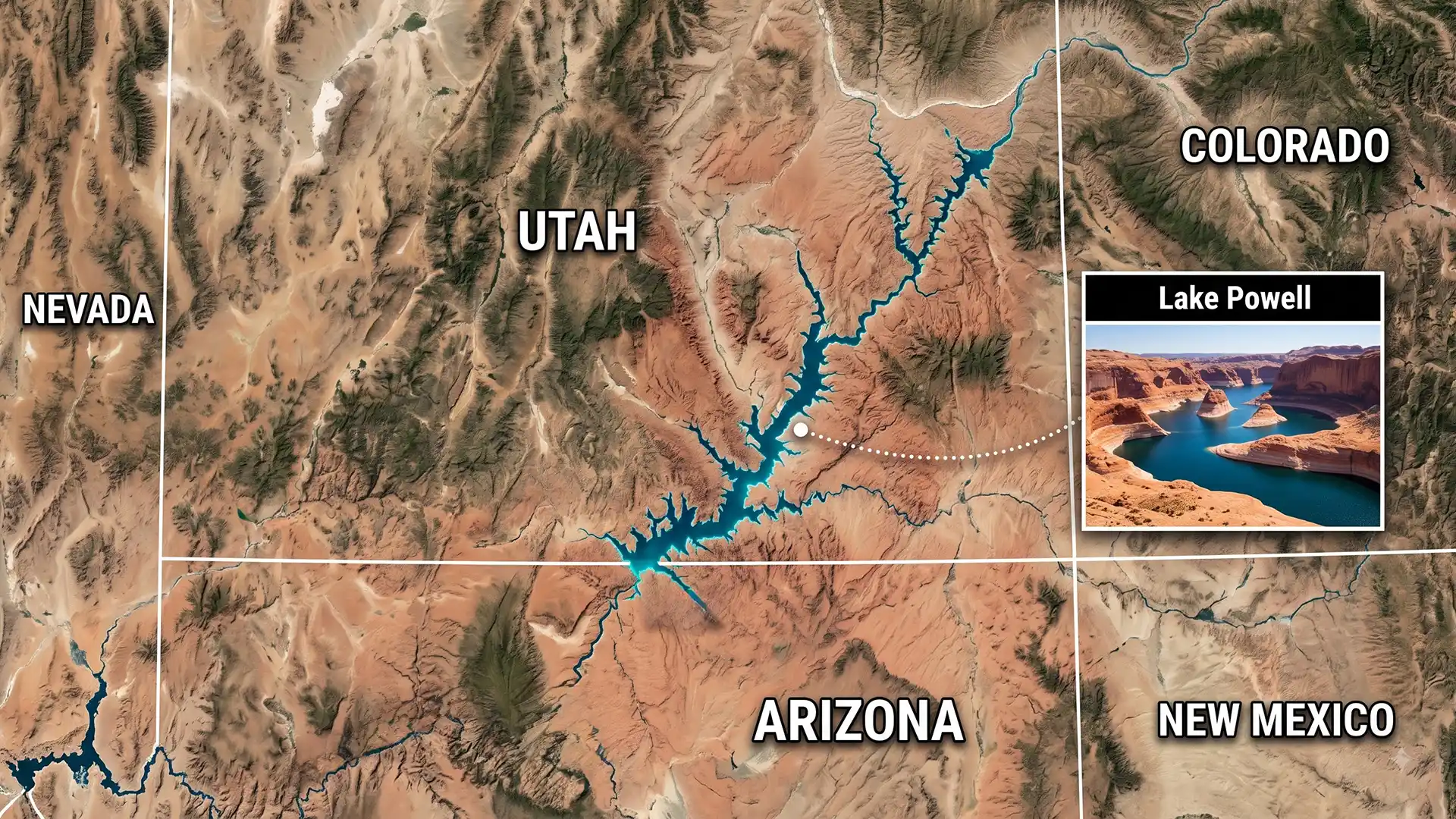
Lake Powell extends across southern Utah and northern Arizona. Glen Canyon Dam impounds the Colorado River near Page, Arizona. The reservoir occupies deeply incised canyons of the Colorado Plateau.
Its long shoreline follows drowned tributary valleys and sandstone walls. Construction finished in the 1960s, and filling began in 1963. The reservoir first reached its full pool in 1980.
At full pool, its surface elevation is 3,700 feet. Nominal storage is about 27 million acre-feet. Lake Powell stretches about 186 miles at maximum extent. Water conditions can leave many side canyons dry or inaccessible.
Its role in the Colorado system
Lees Ferry lies about 15 miles below Glen Canyon Dam. Water law uses this location to separate Upper and Lower Basin obligations.
The Upper Division includes Colorado, New Mexico, Utah and Wyoming. Arizona, California and Nevada form the Lower Division. Tribal nations and Mexico also hold vital interests.
The basin therefore crosses jurisdictions, cultures and national boundaries. Powell stores Upper Basin water and supports regulated releases downstream. Glen Canyon Dam also produces electricity for the western grid.
Why low water creates difficult choices
Lower storage reduces the buffer against drought. It also narrows options for meeting downstream commitments during another poor snow year. Hydropower output falls as the water head declines.
Reaching minimum power pool would remove an important operational and financial benefit. Recreation, local businesses and cultural sites also change with the shoreline.
River ecosystems respond to altered temperature, sediment and release patterns. Emergency transfers can protect elevations temporarily. Durable recovery requires basin-wide reductions aligned with a warmer and drier river.
A storage crisis reflects a basin crisis
Lake Powell’s level is a visible indicator. The underlying problem joins climate pressure with water demand exceeding reliable supply.
Conclusion
The approaching record demands coordinated conservation and transparent operating rules. Waiting for hydropower failure would make every option harder.