

Why in news?
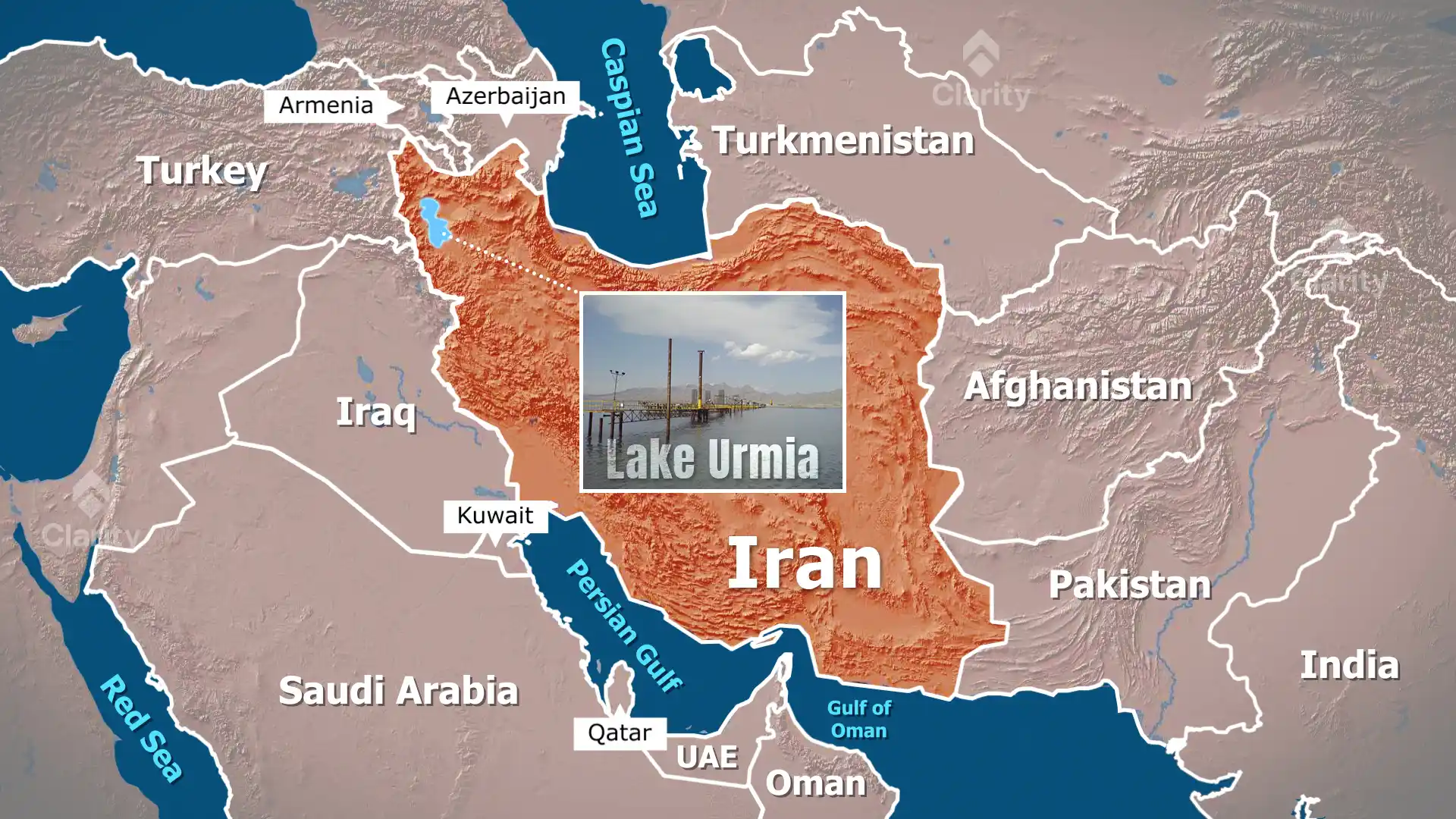
Iran is grappling with an extreme drought that has left Lake Urmia almost completely dry. Rainfall in autumn 2025 was about 90 percent below long‑term averages, causing water levels to plummet and exposing salt flats that generate toxic dust storms. In response, the government implemented cloud‑seeding operations over the basin, considered water rationing and warned that mass evacuations may be necessary.
Background
Lake Urmia, located in north‑western Iran, is the largest lake in the Middle East. At an elevation of about 4,183 feet, it stretches roughly 87 miles long and 25–35 miles wide with a maximum depth of about 53 feet. Because the lake has no outlet, minerals accumulate, making its water hypersaline—approximately one‑quarter as salty as the Dead Sea.
Several rivers, including the Talkheh, Zarīneh and Sīmīneh, feed the lake. Its shallow waters and wetlands provide habitat for migratory birds such as flamingos, pelicans, sheldrakes and avocets. In recent decades, however, upstream damming, excessive irrigation and climate change have drastically reduced inflows, causing the lake’s surface area to shrink dramatically.
Current crisis
- Severe rainfall deficit: Autumn 2025 precipitation fell to only a tenth of normal levels, leading to desiccated lake beds and salt storms that threaten nearby communities.
- Public appeals: With reservoirs depleted, citizens in Tehran held public prayers for rain. The government responded by seeding clouds over the Lake Urmia basin and considering strict water rationing measures.
- Potential evacuations: Officials warned that if the drought continues, millions of residents in north‑western Iran may have to be relocated to areas with more reliable water supplies.
- Environmental consequences: As the lake dries, exposed salt crusts produce airborne dust laced with salt and heavy metals, harming agriculture and public health.
Significance
- Ecological disaster: The collapse of Lake Urmia threatens migratory bird populations and destroys a unique saline ecosystem.
- Human impacts: Dust storms and water shortages endanger millions of people and could trigger large‑scale displacement.
- Lessons for water management: The crisis highlights the need for sustainable irrigation, river restoration and climate adaptation strategies in arid regions.
Conclusion
The drying of Lake Urmia is a stark reminder of how climate variability and human water use can devastate natural systems. Addressing the crisis will require coordinated action to restore inflows and reduce demand, while protecting both ecosystems and communities.
Sources: Down To Earth