

Why in news?
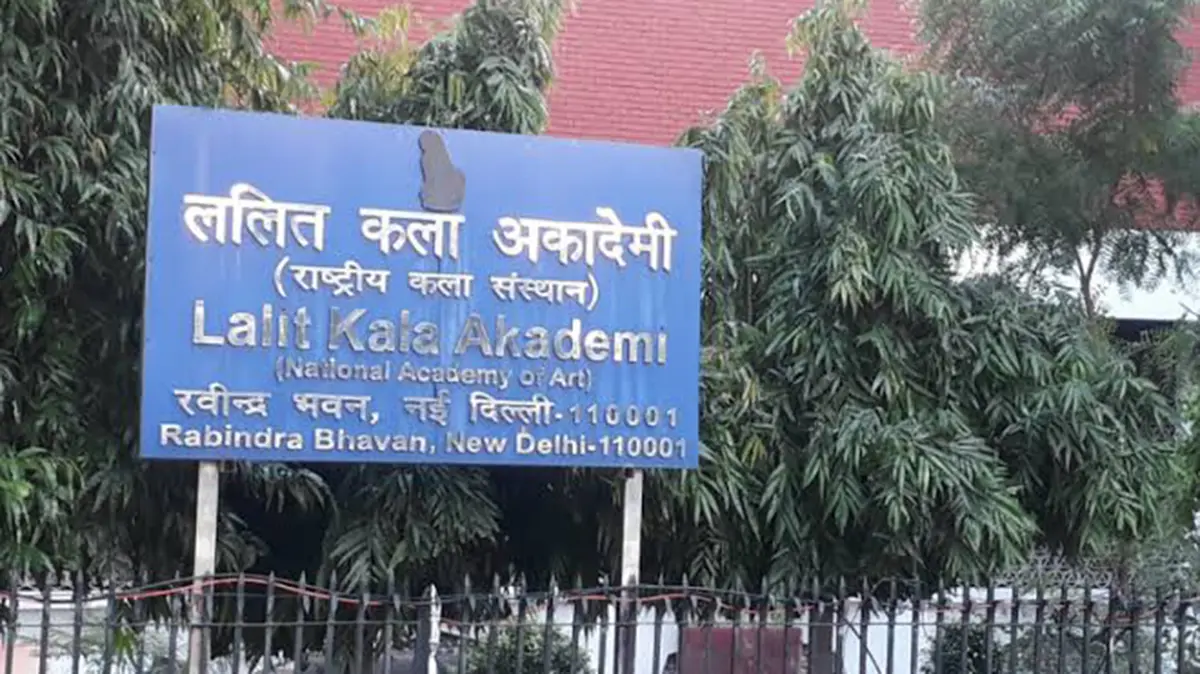
Lalit Kala Akademi marked its seventy-second Foundation Day on 5 August 2026. The central programme took place at Rabindra Bhavan in New Delhi. It included an archival exhibition, publications and live artistic activity. The anniversary also renewed attention to the Akademi's legal status and role.
Background
Independent India created national academies for literature, performing arts and visual arts. Lalit Kala Akademi became the National Academy of Art; it is the youngest of these three cultural institutions.
Education Minister Maulana Abul Kalam Azad inaugurated the Akademi on 5 August 1954. Its early purpose was to encourage creative art across regional and stylistic boundaries. It also connected Indian artists with international exhibitions.
The organisation registered under the Societies Registration Act, 1860, on 11 March 1957. It operates as an autonomous organisation under the Ministry of Culture. Government support does not make it a department of that ministry.
Its headquarters are within Rabindra Bhavan in New Delhi; the building also houses other national cultural bodies. This shared location does not merge their separate mandates.
The 2026 anniversary programme
The celebration presented a timeline exhibition on the Akademi's institutional history; it connected archival material with changing artistic practice. Live painting also placed working artists within the commemorative programme.
Two Gujarati art publications were released during the event; they concerned painter Kanu Desai and artist-educator Ravishankar Raval. Kanaiyalal Fakirchand Patel prepared the volumes.
Regional centres organised related activities beyond New Delhi. Such decentralisation matters because Indian visual art is not confined to national institutions. Local artists need sustained platforms rather than anniversary events alone.
Governance and institutional structure
The Akademi works through a General Council, Executive Board and specialised committees. These bodies shape programmes, awards and administrative decisions; their composition and procedures are governed by the society's rules.
Regional centres operate at Chennai, Lucknow, Kolkata, Bhubaneswar and Garhi in New Delhi. Additional sub-centres and regional facilities have developed in several cities. Official labels can change as programmes expand.
Autonomy should protect artistic judgement from daily political control; public funding simultaneously requires financial transparency and fair selection. Both principles must operate together.
The Akademi does not license every practising artist or art institution. It also does not decide one official national style; its mandate is promotional, scholarly and cultural.
Core functions
The National Exhibition of Art provides a recurring platform for contemporary work. Camps and workshops bring artists from different regions together. Scholarships support younger practitioners during focused periods of work.
The Akademi publishes monographs, catalogues and research material. Documentation can preserve knowledge about artists beyond the commercial market. Translation and digitisation can widen access to these records.
Its permanent collection contains modern, contemporary, folk and tribal works. Collection management requires conservation, cataloguing and clear acquisition histories; digital images cannot substitute for proper physical preservation.
Cultural agreements support exhibitions and exchange abroad; international exposure can create professional networks for Indian artists. It should represent diverse regions and practices rather than a narrow metropolitan selection.
Questions facing a national art academy
Public institutions must combine expert judgement with open procedures. Selection criteria, jury composition and conflict declarations should therefore be clear. Artists also need practical grievance channels.
Visual art now includes digital, performance and interdisciplinary practice. Archival and exhibition systems must adapt without neglecting painting, sculpture and printmaking. Conservation methods also change with new media.
Regional access remains uneven because travel and exhibition costs favour large cities. Partnerships with state academies and universities can extend reach. Online catalogues should complement local programmes, not replace them.
Folk and tribal work requires respectful attribution and consent. Institutions should avoid separating objects from community meaning. Fair payment and documentation are central to ethical display.
Conclusion
The Akademi's longevity reflects India's commitment to cultural institutions after independence. Its future relevance depends upon autonomy, access and transparent artistic stewardship.