

Why in news?
A passenger ferry caught fire near Indonesia's Madura Island. The vessel was travelling from Surabaya towards Makassar. Authorities ultimately confirmed five deaths and 233 survivors. Final reconciliation showed that 238 people were aboard.
Background
The motor vessel Mutiara Sentosa 2 caught fire near Madura on 2 August 2026, shortly after leaving Surabaya. It carried passengers, crew members and many vehicles.
Indonesia relies heavily upon sea transport because thousands of inhabited islands require regular connections. Roll-on, roll-off ferries carry people and vehicles, creating distinctive fire and evacuation risks.
Early official information listed 232 passengers and 39 crew members, producing an initial total of 271. Search reports consequently treated dozens as missing after comparing rescues with this list.
Rescuers used boats and aircraft while survivors entered the sea or reached evacuation craft. Authorities checked names and duplicate entries during the operation, which recovered five people dead.
Why the figures changed
By 4 August, Indonesian authorities had reconciled the passenger manifest and concluded that 238 people were actually aboard. Of these, 233 were evacuated alive and five died.
The final accounting ended the search because nobody remained officially missing. Earlier missing-person figures reflected incomplete list reconciliation, rather than final confirmed casualty counts.
Passenger lists can contain duplicate entries, cancellations or omitted travellers, creating errors in either direction. Accurate embarkation checks are therefore central to effective maritime rescue.
Cause and safety questions
A survivor reported seeing fire near a truck, but that observation did not establish the official cause. Investigators needed to examine the vessel, cargo records, electrical systems and fire-control response.
Vehicle decks allow heat and smoke to spread, while fuel, batteries and commercial cargo may intensify danger. Enclosed decks can also accumulate toxic smoke before passengers understand the threat.
Effective protection requires working alarms, fire doors, extinguishing systems and trained crews. Passengers need accessible life jackets and clear routes, while authorities must control hazardous goods.
Madura Island and its setting
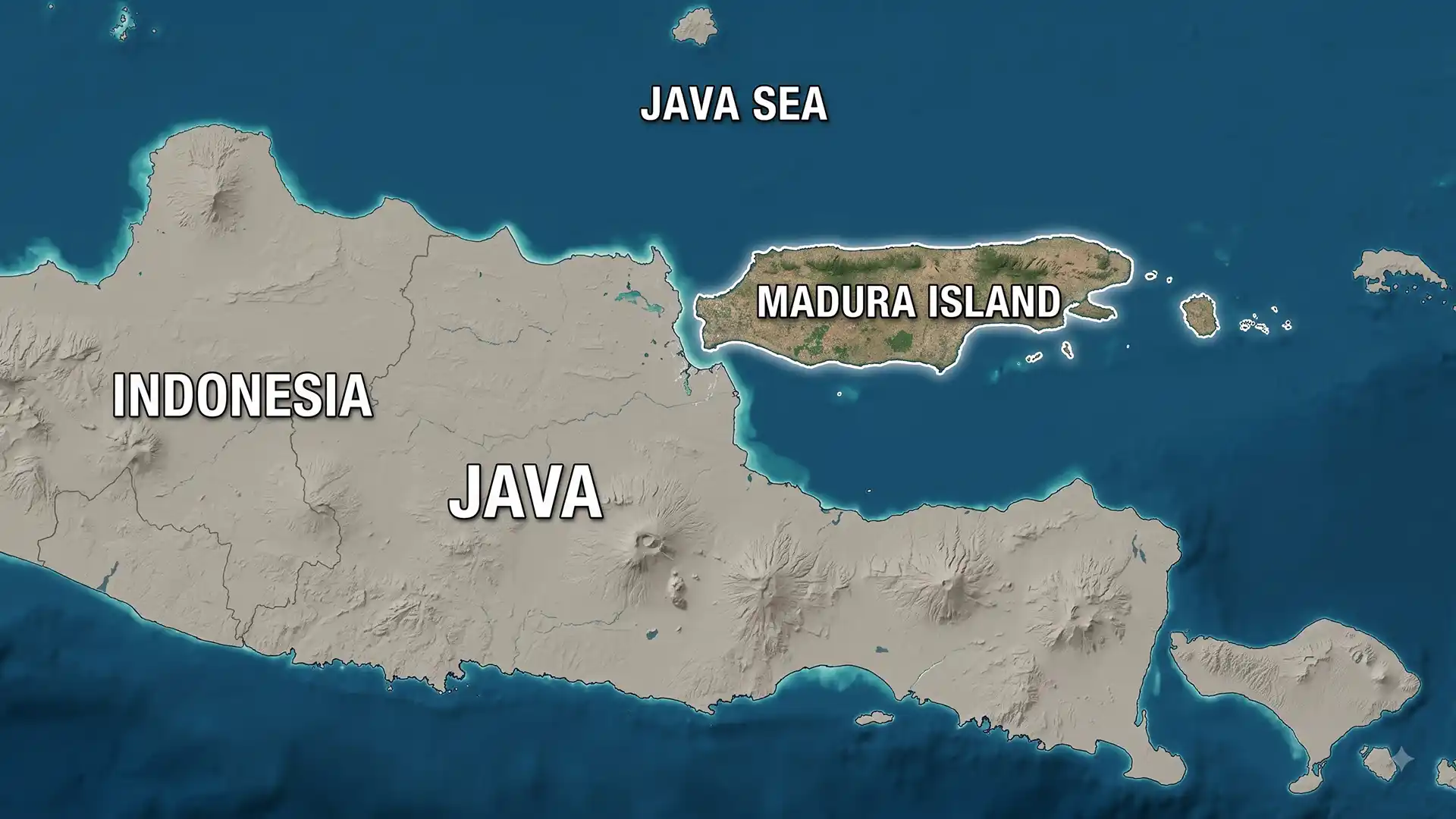
Madura lies immediately northeast of Java and belongs administratively to East Java province. The Madura Strait separates it from Surabaya, while the Suramadu Bridge provides a fixed road connection.
The island includes the regencies of Bangkalan, Sampang, Pamekasan and Sumenep. Madurese communities also live widely across other Indonesian islands. Salt production, cattle rearing, maize and tobacco have shaped the local economy.
The island is associated with karapan sapi, a traditional bull-racing event. Such details provide geographic context but remain separate from the emergency's cause.
Wider implications
The incident shows how record failures can complicate rescue during the first critical hours. Digital ticketing helps only when boarding checks match the actual passenger list. Crew and vehicle drivers must also appear correctly.
Final casualty reconciliation does not reduce the seriousness of five deaths. It does, however, prevent continued circulation of a false missing-person total. Dated figures and transparent revisions are essential during fast-moving disasters.
Conclusion
The Madura tragedy combined a dangerous shipboard fire with unreliable early records. Stronger manifests, cargo controls and emergency systems can reduce future losses.