

Why in news?
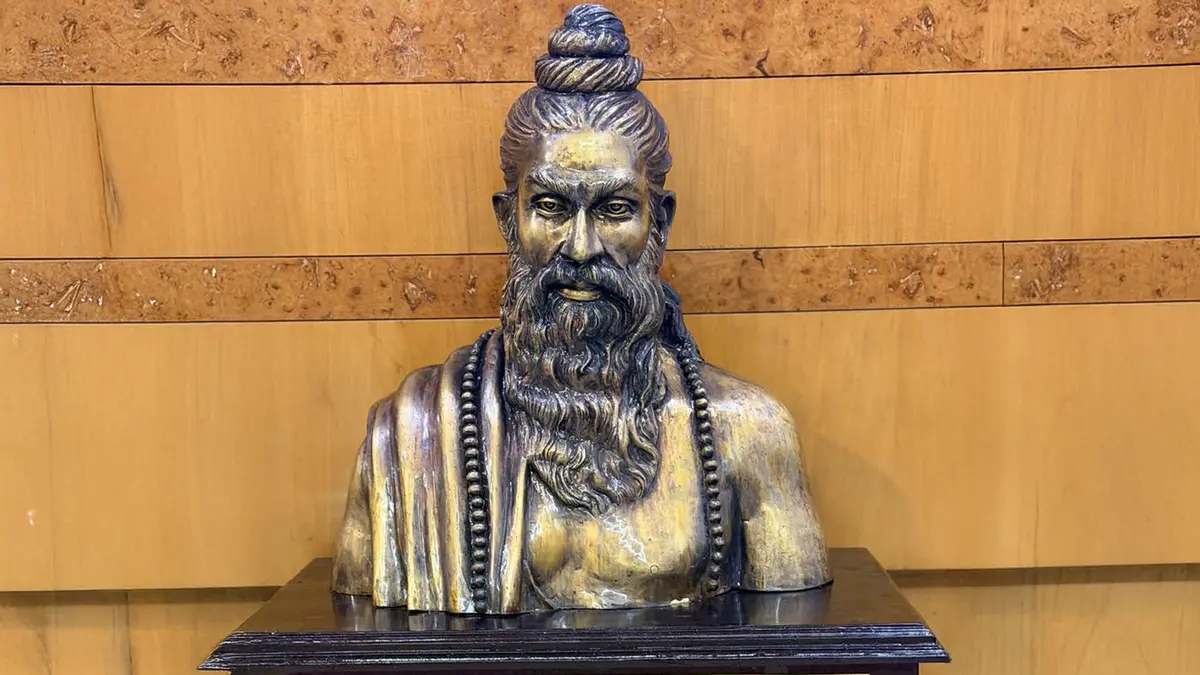
On 19 June 2026 a bronze statue of Maharishi Sushruta was unveiled at the Playfair Auditorium of the Royal College of Surgeons of Edinburgh. The installation recognises the ancient Indian surgeon’s pioneering contributions and builds bridges between Indian and Western medical traditions.
Background
Sushruta lived around 2 thousand 6 hundred years ago and is often called the “Father of Surgery.” He authored the Sushruta Samhita, a Sanskrit treatise covering over 300 surgical procedures, 120 instruments and descriptions of 700 medicinal plants. His work emphasised cleanliness, cadaver dissection and precise operative techniques. One of his most famous contributions was the forehead flap method for reconstructive rhinoplasty, which is still used in modern plastic surgery. The Royal College of Surgeons of Edinburgh, founded in 1505, is one of the world’s oldest surgical institutions.
Details of the installation
- Statue: The sculpture weighs about 90 kilograms and is cast in bronze. It was crafted in India and shipped to Scotland.
- Donor: The Cheruvu Family Foundation gifted the statue to the college. The foundation supports projects that celebrate Indian heritage.
- Venue: The statue stands in the Playfair Auditorium, a historic hall where surgeons have trained for centuries. Placing Sushruta here symbolises a link between ancient Indian surgical knowledge and modern practice.
- Global recognition: Similar statues have been installed at medical schools in Melbourne and other cities. These efforts reflect a growing awareness of India’s early contributions to science.
Conclusion
Honouring Sushruta abroad highlights the universality of medical knowledge. It encourages students and surgeons to learn from diverse traditions and reminds Indians of their rich scientific heritage.