Why in news?
In early May 2026 the United Kingdom carried out its first medical parachute mission. An RAF A400M aircraft flew more than 3,000 kilometres south from Ascension Island to Tristan da Cunha, a tiny British territory in the South Atlantic Ocean. Paratroopers and clinicians jumped from the aircraft with medical supplies and oxygen cylinders to assist an islander suffering from suspected hantavirus infection. The patient had been aboard the cruise ship Hondius, and the island’s small hospital was running low on oxygen. The successful airdrop ensured treatment for the patient and highlighted the logistical challenges of delivering health care to the world’s most remote settlement.
Background
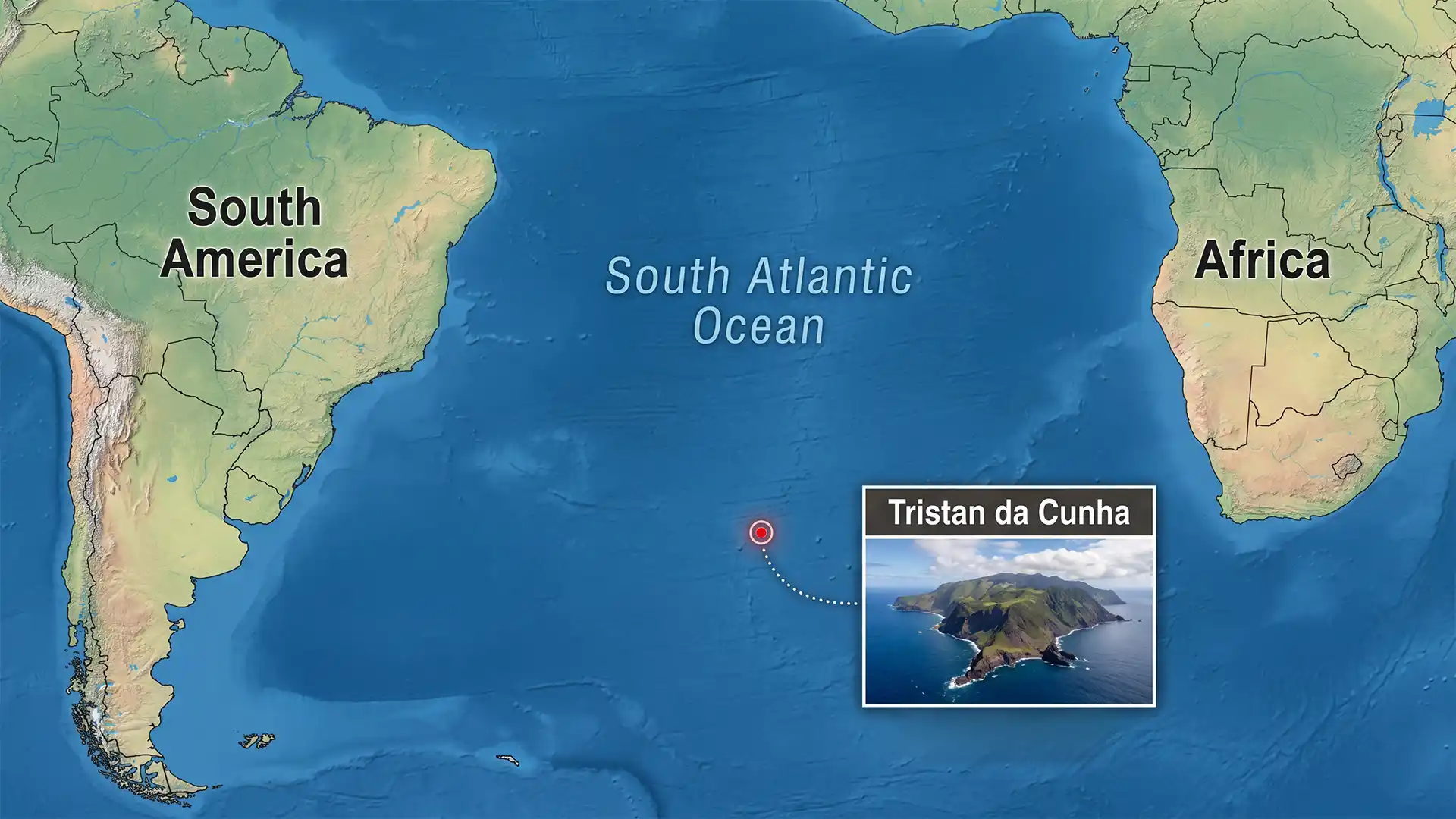
Tristan da Cunha is a group of volcanic islands roughly midway between southern Africa and South America. Discovered in 1506 by Portuguese explorer Tristão da Cunha, it later became a British overseas territory. The main settlement, Edinburgh of the Seven Seas, supports around 250 residents who live a largely self‑sufficient life through fishing and agriculture. There is no airstrip; the islands are accessible only by boat or helicopter. Land is communally owned and worked by families, and the economy is managed through a local council. Tristan da Cunha, Gough Island and Inaccessible Island are part of a UNESCO World Heritage Site because of their unique ecosystems.
Airdrop and health emergency
- The emergency began when a British passenger on the cruise ship Hondius developed a suspected hantavirus infection after visiting Tristan da Cunha. Hantaviruses are normally carried by rodents and can cause severe respiratory disease in humans.
- Tristan’s two‑bed hospital soon depleted its oxygen reserves. With no airstrip and rough seas delaying ships, the island authorities requested assistance from the UK government.
- A Royal Air Force A400M aircraft flew from RAF Brize Norton to Ascension Island, refuelled and then continued to Tristan da Cunha. Paratroopers and two clinicians from the 16 Air Assault Brigade jumped onto the island with oxygen cylinders and medical equipment.
- The mission was Britain’s first medical parachute deployment. It underscored the island’s isolation—around 2,400 kilometres from the nearest neighbour St Helena and over 3,000 kilometres from South Africa—and demonstrated the value of rapid response capabilities for remote communities.
Significance
The airdrop shows how quickly a medical emergency can become critical in remote regions. It also illustrates how modern military aircraft can deliver aid where conventional transport is impossible. Beyond the immediate health response, the mission drew global attention to Tristan da Cunha’s unique social structure, fragile medical facilities and the need for sustainable support systems for isolated island communities.