

Why in news?
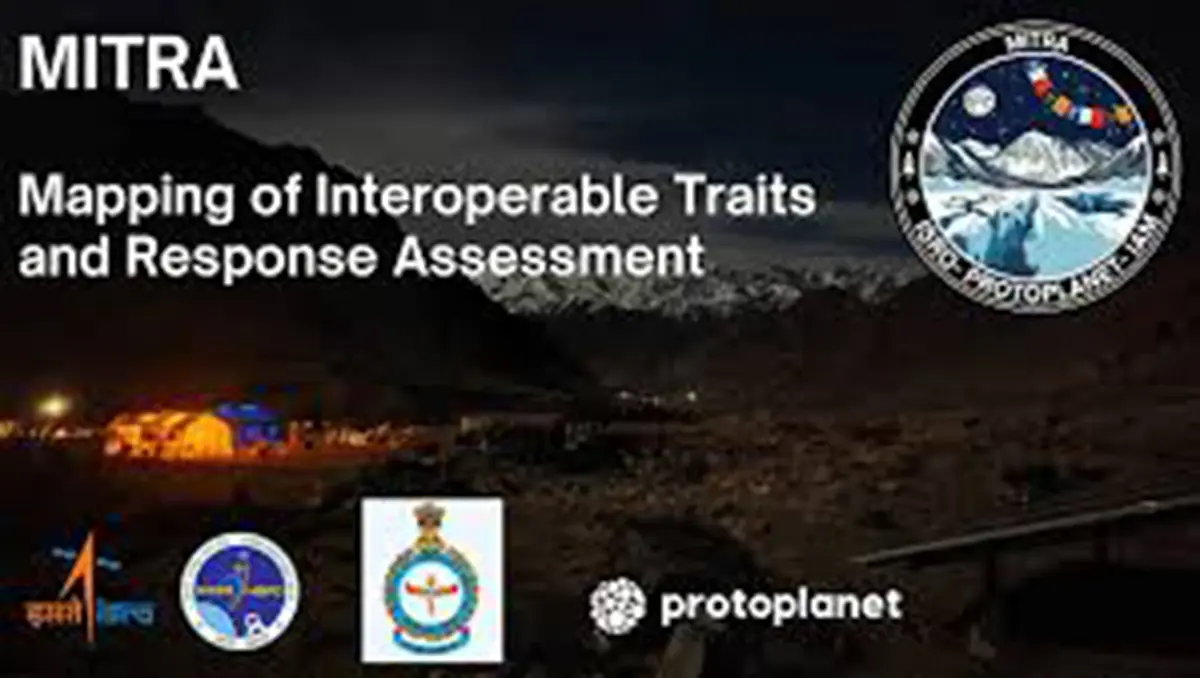
India’s space agency ISRO and the Indian Air Force’s Institute of Aerospace Medicine completed a unique high‑altitude analogue mission called Mission MITRA (mental and physical Integrated Training for realistic Assessment). The trial, held in Leh between 2 and 9 April 2026, tested the mental and physical resilience of the four Gaganyaan astronaut‑designates in hypoxic, cold and isolated conditions similar to space. News outlets highlighted the successful completion of the mission and its importance for India’s forthcoming human spaceflight programme.
Background
India plans to launch Gaganyaan, its first human spaceflight mission, later in this decade. To ensure crew safety and performance, ISRO conducts analogue studies that simulate space‑like environments on Earth. Mission MITRA was one such study designed to observe how small teams behave and communicate when deprived of oxygen and comforts. The trial was hosted in a high‑altitude camp near Leh at an elevation of around 3 500 m, where hypoxia, extreme cold and isolation mimic certain stresses of space travel.
Key aspects of the mission
- Participants and setting: Four Gaganyaan astronaut‑designates lived in two isolated cabins connected by a central control station. The camp was built by Bengaluru‑based firm Protoplanet and powered by solar arrays. Temperatures dropped below freezing, and oxygen levels were substantially lower than at sea level.
- Simulated activities: The crew performed simulated spacewalks, operated scientific instruments, practised communications with mission control and undertook manual tasks such as equipment repair. Daily routines were designed to impose physical and cognitive stress.
- Monitoring and data collection: Doctors from the Institute of Aerospace Medicine monitored vital signs, cognitive performance, sleep patterns and team interactions. Remote support teams practised real‑time problem solving and decision‑making.
- Significance for human spaceflight: Data from Mission MITRA will feed into the design of life‑support systems, crew selection criteria and training modules for Gaganyaan and future long‑duration missions. Insights into how isolation and hypoxia affect mood and cooperation will help engineers plan habitats and schedules that maintain crew health.
Why it matters
This mission demonstrates India’s growing capability in human spaceflight research. By subjecting astronauts to realistic stressors on Earth, ISRO can refine its procedures and anticipate challenges before launching humans into orbit. The experiment also highlights the collaborative role of the Indian Air Force and private industry in building infrastructure for space exploration.
Source: ISRO, The Times of India, India Today