

Why in news?
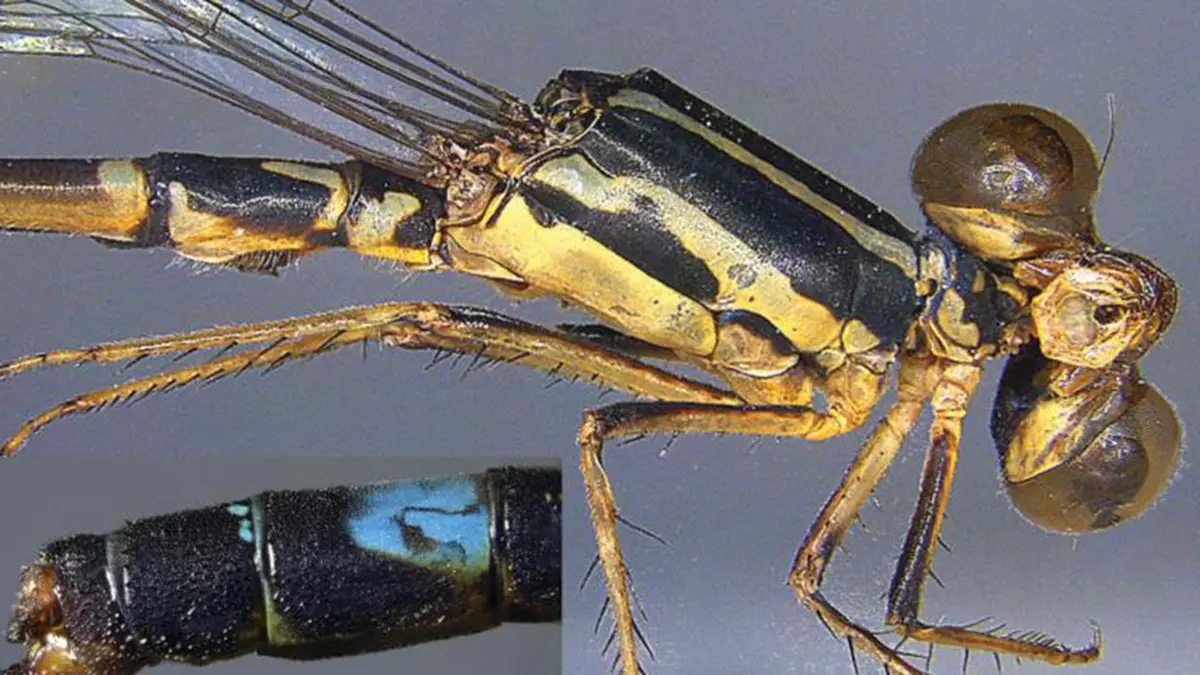
Scientists from the Zoological Survey of India and the University of Madras have discovered a new species of damselfly, Mortonagrion santha, in the Andaman and Nicobar Islands. The species was formally described after specimens were collected near a small farm pond in Dasarathpur, Rangat tehsil.
Background
Damselflies belong to the order Odonata and are important predators of smaller insects. The genus Mortonagrion contains secretive, coastal species. Researchers first sighted the new damselfly in 2017 and confirmed its distinctiveness through additional collections in 2019. The species was named in honour of P. Santhakumar, a field entomologist who netted the specimens.
Distinctive traits
- Colour patterns: M. santha has pale‑blue, crescent‑shaped spots behind its eyes and a bright blue marking on its ninth abdominal segment.
- Body structure: Under a microscope, the species shows a unique three‑lobed prothorax and mating appendages whose upper parts are half the length of the lower parts.
- Secretive behaviour: Like its relatives, M. santha prefers shaded coastal vegetation and is difficult to spot. Its discovery highlights the rich, yet under‑explored biodiversity of the Indo‑Burma hotspot.
Ecological importance
Damselflies play a dual role in ecosystems: they control mosquito and other insect populations and serve as prey for birds and larger insects. Finding a new species in a human‑modified landscape suggests that biodiversity can persist even in agricultural settings. The discovery encourages more systematic surveys in remote islands to document additional species.
Conclusion
Mortonagrion santha adds to the list of species endemic to the Andaman and Nicobar Islands. By highlighting unique traits and naming the species after a dedicated field researcher, the study underscores the importance of local expertise in biodiversity discovery. Protecting coastal habitats will be vital for safeguarding such hidden creatures.