
Why in news?
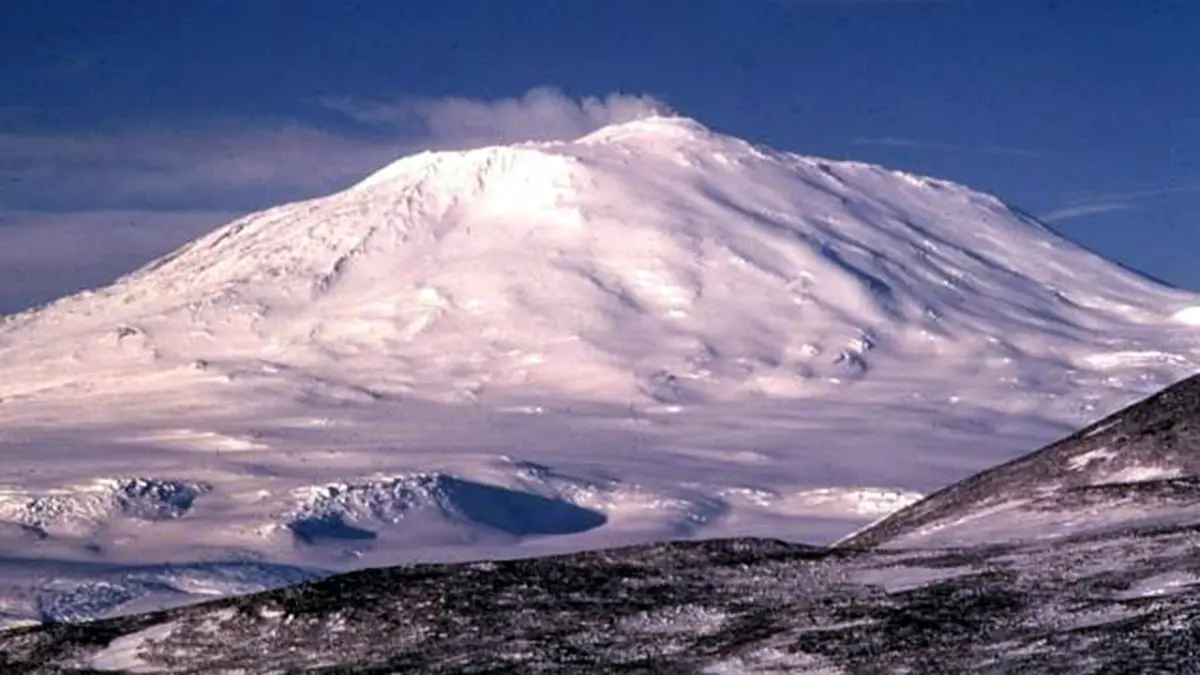
Scientists studying Antarctica have reported continued activity at Mount Erebus on Ross Island. The volcano’s persistent lava lake and small eruptions offer rare insights into volcanic processes in polar environments. Renewed interest comes as researchers plan fieldwork during the austral summer.
Background
Mount Erebus is a stratovolcano situated on Ross Island in the Ross Sea of Antarctica. With a summit elevation of 3,794 metres (12,444 feet), it is the second highest volcano on the continent and the southernmost active volcano on Earth. The volcano has been continuously active since at least 1972 and contains a convecting lava lake in its summit crater. Its lava is anorthoclase phonolite, an alkaline rock type.
Characteristics
- Lava lake: Mount Erebus hosts one of only a few long‑lasting lava lakes on the planet. The lake erupts bubbles of gas and lava, causing small Strombolian explosions that throw volcanic bombs onto the crater rim.
- Geological age: The volcano is relatively young, likely less than one million years old. It sits on the Antarctic Plate’s rift system.
- Unique environment: Its remote polar environment and persistent activity make Mount Erebus valuable for studying how volcanic gases interact with the Antarctic atmosphere. Scientists have even discovered tiny gold crystals in its plume.
Conclusion
Mount Erebus is a natural laboratory for volcanologists. Its continuous activity in a polar setting provides data on magma plumbing systems and gas emissions. Ongoing research will help improve our understanding of volcanism on Earth and potentially other planetary bodies.