

Why in news?
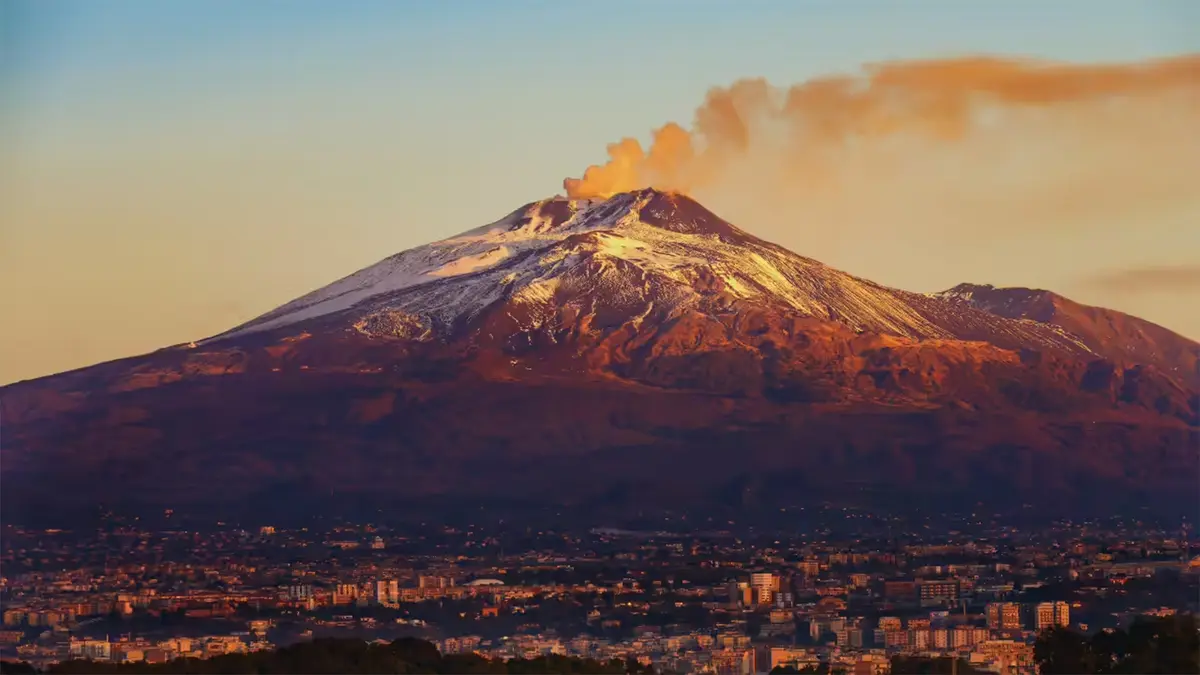
Researchers analysing two decades of seismic data beneath Mount Etna have found that changes in the ratio of small earthquakes to larger ones—known as the b‑value—closely track the volcano’s eruptive behaviour. This insight could help scientists forecast eruptions of Europe’s largest active volcano and improve hazard preparedness.
Background
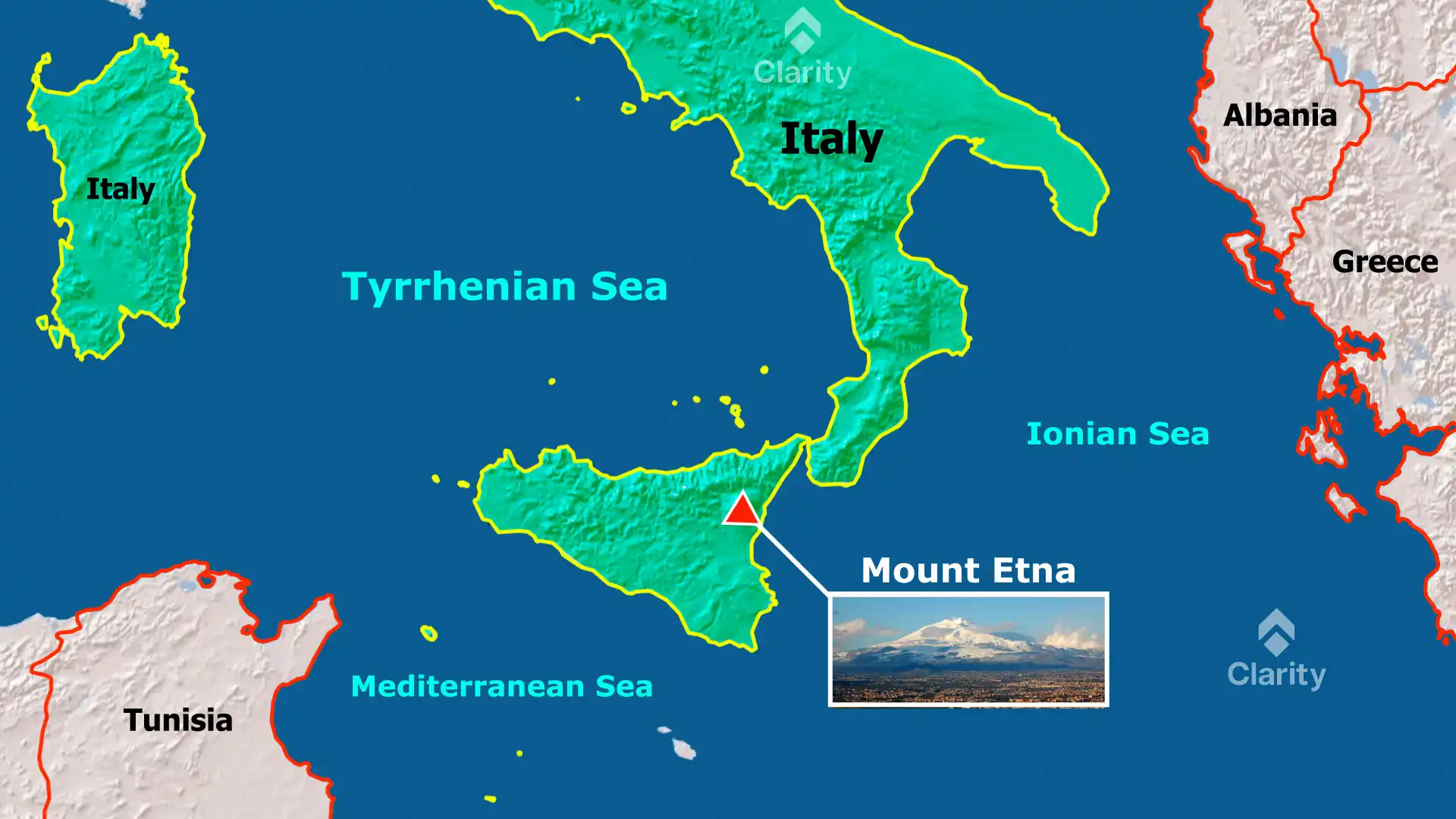
Mount Etna is a massive stratovolcano on the island of Sicily, Italy. Sitting above the convergent boundary between the African and Eurasian tectonic plates, it towers about 3,350 metres (11,000 feet) above sea level and is the highest mountain south of the Alps. The volcano covers roughly 1,190 sq km with a basal circumference of around 140 km. Etna’s eruptive history extends back 500,000 years, with records of activity for at least 2,700 years. Its eruptions have created myths and stories since ancient Greek times, and UNESCO designated it a World Heritage Site in 2013.
Understanding the b‑value
The b‑value is a statistical parameter that expresses the ratio of small earthquakes to larger ones in a given region. A high b‑value indicates many small quakes relative to big ones, while a low b‑value means larger events are more common. Because magma movement within volcanoes causes swarms of tiny earthquakes, shifts in the b‑value can reflect changes in magmatic pressure and stress.
Italian geophysicists studied more than 3,000 earthquakes recorded under Mount Etna between 2004 and 2023. They noticed that the b‑value tended to drop months before major eruptions and rise again after volcanic vents opened. Monitoring this ratio may therefore provide an early warning signal, enabling authorities to evacuate areas and reroute aircraft. The method could also be applied to other volcanoes, though each requires site‑specific calibration.
Conclusion
Mount Etna is both a natural wonder and a potential hazard for the millions living nearby. By combining long‑term seismic monitoring with parameters like the b‑value, scientists hope to improve eruption forecasts. Such research underscores the importance of investing in volcanic surveillance and public awareness, especially as climate and population pressures grow.
Source: Live Science · Mount Etna