

Why in news?
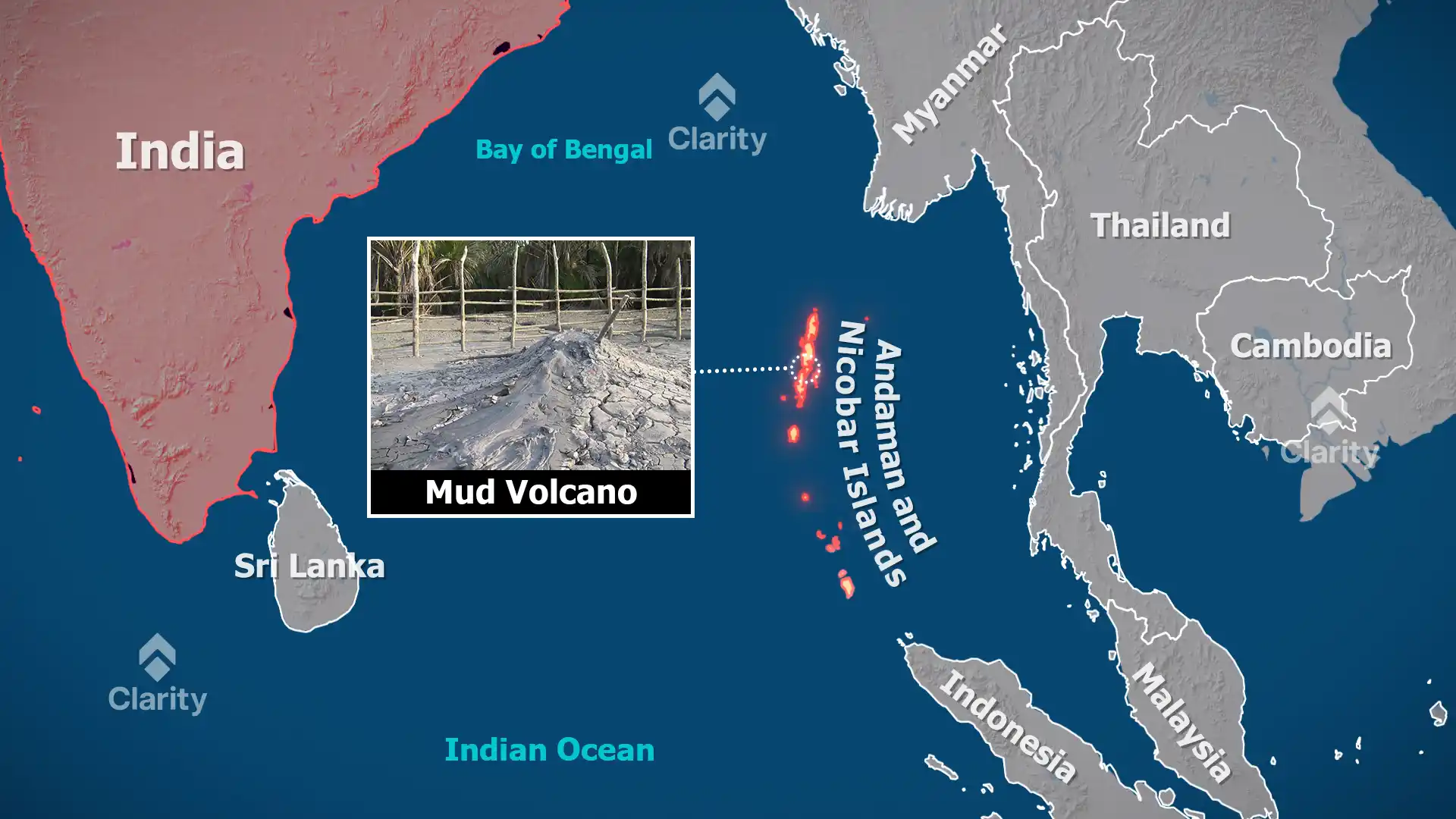
On 8 January 2026, a rare mud volcano erupted near Jol Tekri in Diglipur, North Andaman district. Local authorities cordoned off the area and restricted public access while geologists monitored the ongoing activity. Although there were no injuries or major damage, the event drew attention because the volcano had been dormant for years.
What happened?
Residents heard a loud rumble from nearby forested areas before mud flowed across parts of the site. The eruption involved the expulsion of mud, gas and water rather than molten rock. Mud volcanoes form when underground pressure forces mud and gases to the surface through weak zones in sedimentary layers. Hot‑spring activity or the build‑up of methane and other hydrocarbons can trigger such eruptions.
Understanding mud volcanoes
- Nature: Mud volcanoes, sometimes called “sedimentary” or “gas‑oil” volcanoes, are cousins of magmatic volcanoes. They eject mud, fluids and gases instead of lava. The cones are typically low and prone to erosion.
- Global occurrence: Over 1 000 mud volcanoes are known worldwide, both on land and under the sea. Some seafloor mud volcanoes can create temporary islands or banks.
- Andaman context: India’s only other known mud volcano is located on Baratang Island in the Andaman chain. The region sits near the boundary of several tectonic plates, making it prone to seismic and volcanic activity.
- Scientific significance: Monitoring such events helps scientists study subsurface fluid movement and tectonic pressures. Researchers may collect gas and sediment samples to understand geological processes and assess any links to broader seismic patterns.
Impact
The eruption temporarily covered nearby vegetation with mud, though major damage to flora and fauna was not reported. Officials are watching wildlife movement to ensure animals are safe. Experts emphasise that mud volcanoes are driven primarily by geological pressures rather than climate change, although changes in rainfall patterns could influence underground water pressure.
Sources: Moneycontrol