

Why in news?
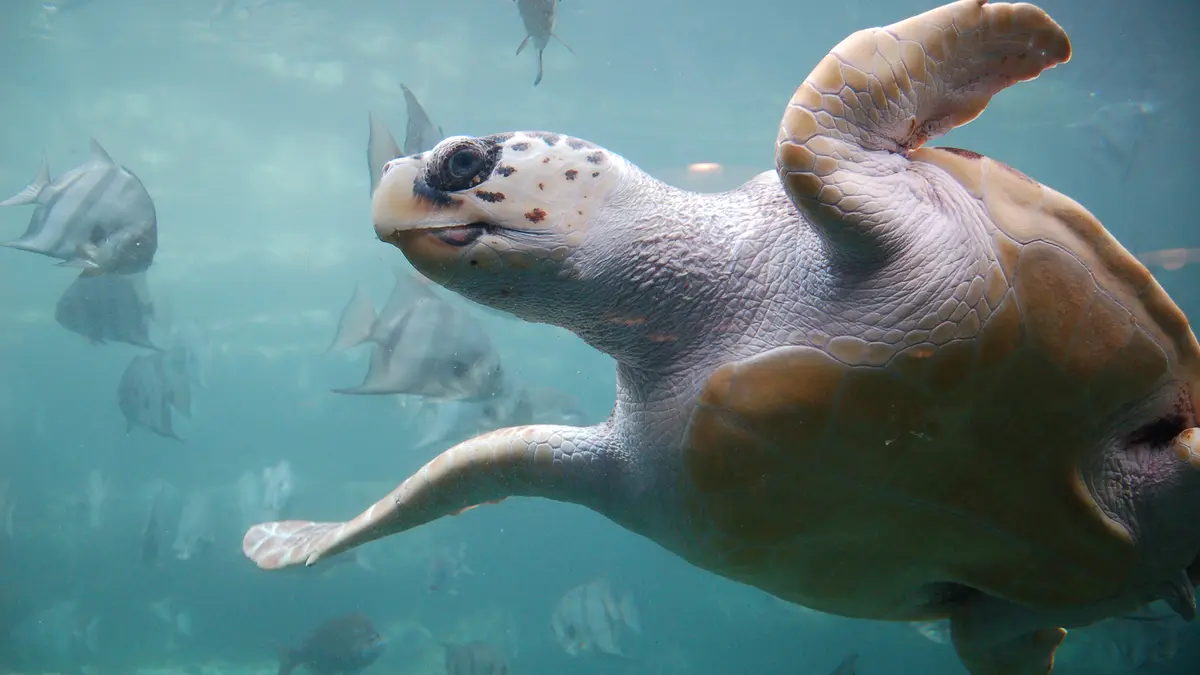
Mumbai Police rescued a distressed loggerhead sea turtle from the Arabian Sea and arranged specialised treatment in Dahanu.
The reported rescue
A Yellow Gate Police patrol found the turtle floating and struggling near Mumbai. The news report estimated its weight at 100 kilograms.
Police transferred it to a wildlife rescue organisation. Maharashtra’s Mangrove Cell then directed movement to a sea-turtle treatment centre in Dahanu.
Dahanu lies north of Mumbai along Maharashtra’s Arabian Sea coast. Transporting a large marine animal requires controlled handling and veterinary supervision.
The report did not establish why the turtle was distressed. Injury, disease, entanglement and exhaustion require clinical examination, not speculation.
Origin cannot be inferred
A rescue location does not reveal the turtle’s nesting population. Genetic, tagging and movement evidence would be needed.
Understanding the species
The loggerhead’s scientific name is Caretta caretta. Its large head supports powerful jaws for crushing hard-shelled prey.
Loggerheads occur across temperate and tropical oceans. They migrate among nesting beaches, feeding areas and developmental habitats.
The International Union for Conservation of Nature assesses the species globally as Vulnerable. Individual populations can face different levels of risk.
All marine turtles receive strict international trade protection under Appendix I of the Convention on International Trade in Endangered Species.
Threats in coastal waters
Accidental capture in fishing gear is a major threat. Vessel strikes, plastics, habitat loss and artificial lighting also cause harm.
Mumbai’s busy harbour combines shipping, fishing and urban runoff. These pressures make rapid reporting of distressed wildlife especially valuable.
Rescue is only the first step. Rehabilitation must assess buoyancy, wounds, nutrition and fitness before any release decision.
Release should return a recovered animal to suitable habitat under official supervision. Public crowds and ceremonial handling can add avoidable stress.
Conservation beyond one animal
Hotlines and trained coastal responders can shorten rescue times. Fishers and port workers often provide the earliest observation.
Bycatch reduction requires gear changes, safe release training and evidence on seasonal movement. Cleaner coasts reduce another preventable hazard.
Stranding records can reveal recurring locations and injury patterns. Standardised data make individual rescues useful for broader policy.
Rescue should build evidence
The turtle’s treatment matters in itself. Its clinical and stranding record can also improve coastal-risk management.
Conclusion
Mumbai’s response created a path from patrol to specialist care. Prevention will require safer fisheries, cleaner waters and coordinated monitoring.