

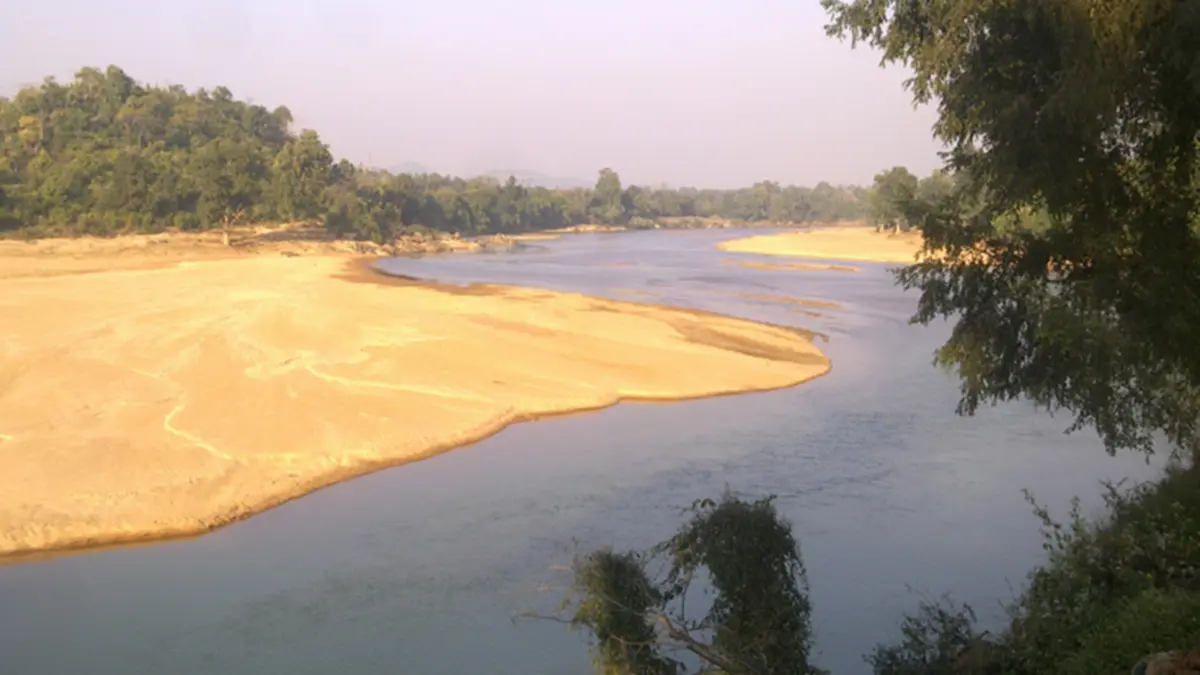
Why in news?
Four young people drowned in the Koel River in Jharkhand's Palamu district during the immersion of Karma Puja materials. ETV Bharat's 23 September morning report, quoting local police, said a fifth person remained missing. The incident occurred near Bokeiya Patria village in the Chainpur police-station area. This is the North Koel river system, which drains towards the Son and then the Ganga. It must not be confused with the separate South Koel, a headstream of Odisha's Brahmani. The tragedy highlights the risks of entering flowing water, while the shared river name makes accurate geographical identification particularly important.
The river involved in the incident
The report described five young people entering the river for the immersion ritual on Wednesday morning. Villagers searched for them, and four bodies were recovered. Police were gathering information while the search for the missing person continued. That was the reported position at the time of publication, not a final accounting of all subsequent events. The report described strong current at the location; it did not provide a completed technical investigation of the accident.
Palamu lies in northwestern Jharkhand, with Bihar to the north. Its administrative headquarters, Medininagar, also known as Daltonganj, stands beside the Koel. Official district and groundwater records identify the North Koel and its tributaries as central to local drainage. The river belongs to the Chhota Nagpur plateau landscape. Here, hills, valleys and changing channel forms influence where rainfall collects and how water moves through the catchment.
North Koel: towards the Son and Ganga
The North Koel rises in the Chhota Nagpur uplands and flows through the Latehar–Palamu region. Its course includes a northward turn through the Kutku gorge before it reaches the Son. The Auranga and Amanat are important tributaries. These are streams joining the larger river, not alternative names for its entire course. Their runoff adds to the flow carried downstream. The basin's general drainage direction is from the southern uplands towards the Son in the north.
The Son is itself a tributary of the Ganga. Thus, the North Koel's connection to the Ganga is through another river, not a direct confluence in Palamu. Following that chain identifies the correct basin and downstream relationships. It also helps explain why water management upstream can matter beyond one district. A river's administrative location and its drainage basin are different kinds of boundary: water does not stop at a district border.
The Central Ground Water Board describes rocky beds and high banks in upper reaches, with sandier beds downstream. Seasonal rainfall changes flow conditions in this plateau river system. Familiarity with a shallow reach in a dry month cannot establish its safety after rain. Nor can a calm-looking surface reveal every change in depth or current. These physical distinctions are relevant to public access, although they do not by themselves establish the precise cause of this particular incident.
South Koel: towards the Brahmani
The South Koel is a different river, not a branch produced when the North Koel splits. It originates near Nagri in the Ranchi region and follows a separate course across Jharkhand. Its direction changes along the plateau before it reaches the Rourkela area in Odisha. The Karo is an important tributary of this system. At Vedavyas, the South Koel meets the Sankh; downstream of their confluence, the combined river is called the Brahmani.
The Brahmani then crosses Odisha towards the Bay of Bengal. Its basin is distinct from the North Koel–Son drainage. A plateau can feed rivers flowing towards different larger systems because ridges separate their catchments. These ridges form drainage divides. Similar names and nearby upland origins do not establish a continuous river connection. The two Koels are best understood through their actual confluences: North Koel to Son, and South Koel with Sankh to Brahmani.
Water infrastructure in the North Koel basin
The North Koel Reservoir Project illustrates the river's importance for irrigation in Jharkhand and Bihar. Its main components include a dam near Kutku in Latehar and a barrage at Mohammadganj in Palamu. Canals are intended to carry regulated supplies to agricultural land. A dam stores water, while a barrage primarily helps control and divert flow. Referring to both simply as a single dam would obscure their different functions within the project.
The Union government's 2023 project account records construction beginning in 1972 and stopping in 1993. Environmental concerns included possible submergence within the Palamu Tiger Reserve and Betla National Park landscape. Later approvals revised the completion plan and costs. These are documented stages in a long-running project, not evidence that every component was operational by September 2026. They also show that irrigation benefits and the ecological effects of storage must be considered together.
Making river access safer
Gatherings near water require planning suited to the actual site, season and activity. The World Health Organization's drowning-prevention guidance emphasises safer infrastructure, controlled exposure to hazards and trained rescue arrangements. Applied to riverbank events, that means considering access routes, identified safe areas and the ability to respond without creating additional casualties. These are prevention principles, not a finding that any particular safeguard was absent at Bokeiya Patria.
Public awareness works best alongside practical arrangements. A warning is less useful when people cannot recognise the hazardous area or have no safer way to carry out an activity. Local authorities and organisers therefore need site-specific information, not just a general description of the river. Rescue also requires appropriate training and equipment. Entering strong water to help someone can endanger another person, so emergency response should not depend solely on unprepared bystanders.
Conclusion
The Palamu incident concerns the North Koel, within the Son–Ganga basin. Keeping it separate from the South Koel–Brahmani system is essential for understanding both the location and its wider geography. The human consequence also calls for attention to safe river access during community activities. Accurate incident reporting, knowledge of changing flows and planned rescue capacity serve different purposes. Together, they support prevention and response without relying on untested explanations of the tragedy.