

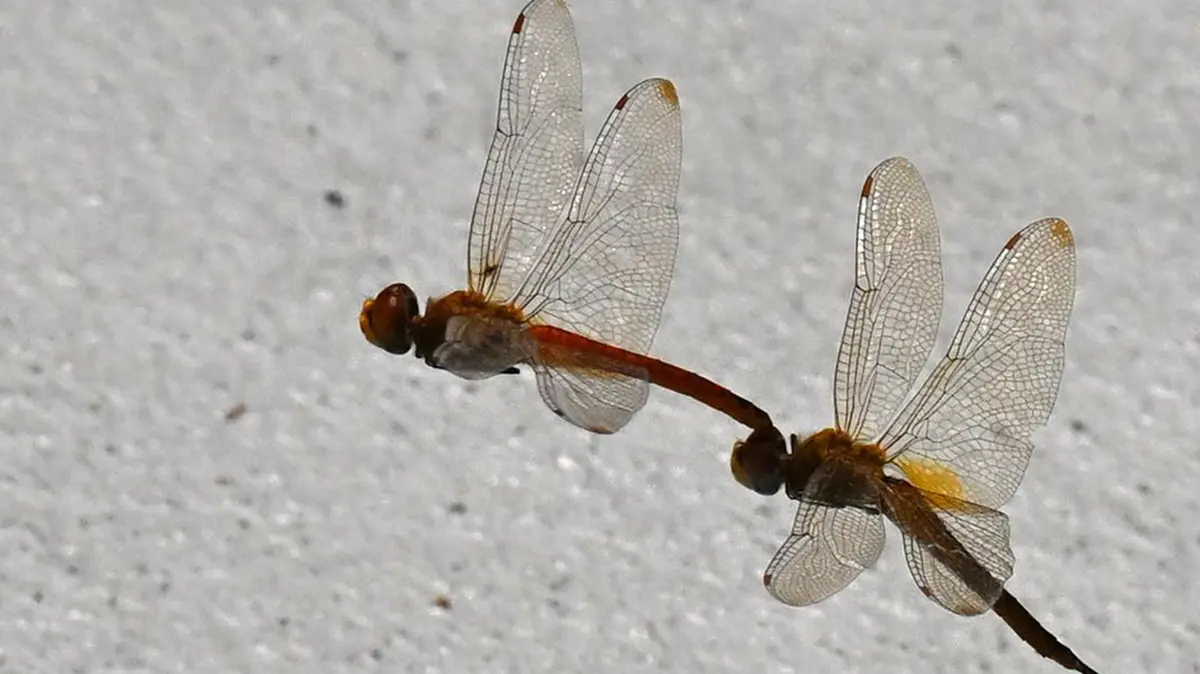
Why in news?
A recent survey across the Western Ghats recorded only about 65 percent of the dragonfly and damselfly species historically known from the region, suggesting a 35 percent decline. Researchers say the findings point to habitat loss and ecological stress in this biodiversity hotspot.
Background
Odonata is the order of predatory flying insects that includes dragonflies (suborder Anisoptera) and damselflies (Zygoptera). The name derives from the Greek word for “tooth,” reflecting the strong mandibles of adults. Odonates are ancient insects; fossil dragonflies with wingspans over 70 centimetres date back 300 million years.
Characteristics and ecological role
- Life cycle: Odonates undergo incomplete metamorphosis. Eggs hatch into aquatic larvae (naiads) that feed on small insects, tadpoles and even tiny fish. After several moults, they emerge from water, transform into winged adults and live for a few weeks to months.
- Morphology: Dragonflies have broader hind wings and hold their wings outstretched at rest, whereas damselflies have similar fore‑ and hind‑wings and fold them over the body when perching. Both groups have large compound eyes and slender abdomens.
- Bioindicators: Because their larvae require clean, well‑oxygenated freshwater, odonates are excellent indicators of ecosystem health. High species richness usually signals healthy streams and wetlands.
- Threats: In the Western Ghats, researchers linked the decline to habitat degradation from dams, pollution, deforestation, unregulated tourism and climate change. Conservation measures include protecting riparian vegetation and regulating development near water bodies.
Significance of the survey
The study, conducted between 2021 and 2023, recorded 143 species of dragonflies and damselflies across Maharashtra, Karnataka, Kerala, Goa and Gujarat. Forty species were endemic to the Western Ghats. Researchers warn that the missing species may indicate population declines rather than temporary absence. They call for expanded surveys, citizen science initiatives and habitat restoration to safeguard these charismatic insects.