

Why in news?
On 24 May 2026 Ukraine reported that Russia had used a new intermediate‑range ballistic missile, dubbed “Oreshnik,” in strikes on Ukrainian cities. The missile is believed to be derived from Russia’s RS‑26 Rubezh system and was previously tested in attacks on Dnipro in November 2024 and Lviv in January 2026. Defence analysts warn that the weapon can carry nuclear or conventional warheads and travels at hypersonic speeds.
Background
The RS‑26 Rubezh was developed in Russia during the early 2010s. It is technically an intercontinental ballistic missile but has a reported range of around 3,000–5,500 kilometres, placing it in the intermediate‑range category. The system was designed to circumvent the limitations of the now‑defunct Intermediate‑Range Nuclear Forces (INF) Treaty. The missile can carry multiple independently targetable re‑entry vehicles (MIRVs) and is said to reach speeds of Mach 10 or higher during flight, making interception difficult.
Features and implications
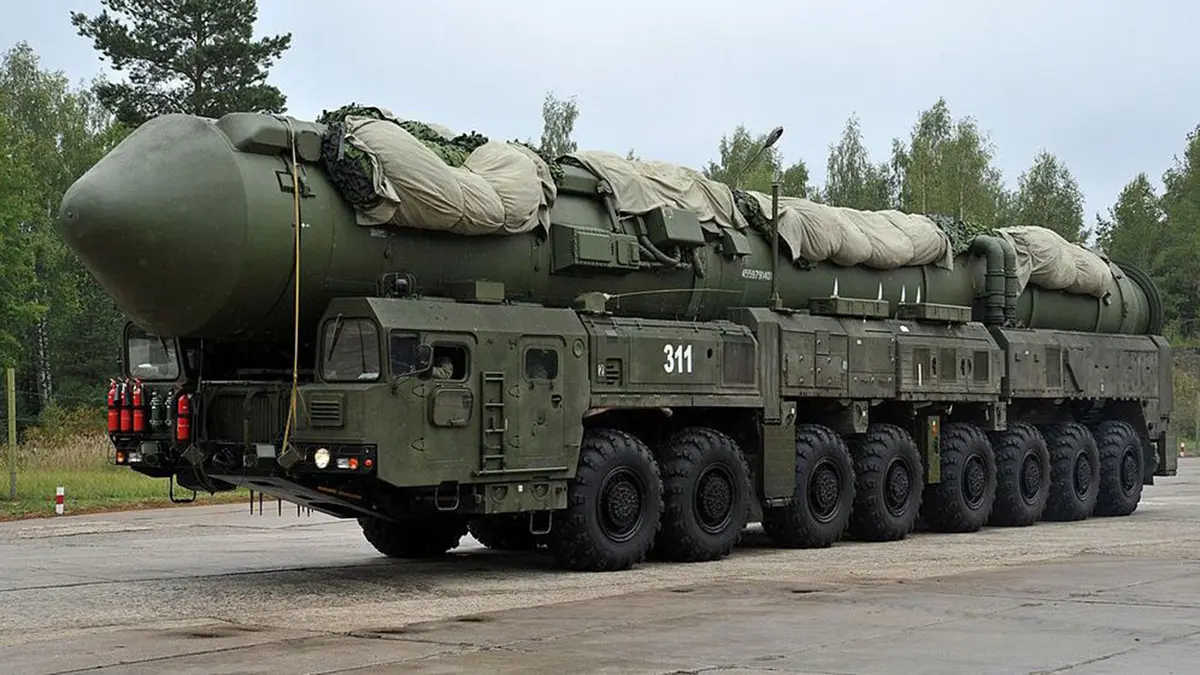
- Design: Oreshnik appears to be a shorter‑range variant of the RS‑26 Rubezh with a reduced booster section. Its smaller size allows deployment on road‑mobile launchers, enhancing battlefield mobility.
- Range and speed: Estimated range of 3,000–5,500 km and top speeds around 2.5 km per second (Mach 10), enabling it to hit targets across continental distances within minutes.
- Warhead options: The missile can carry a single nuclear warhead or multiple conventional warheads. MIRV capability complicates missile defence because each re‑entry vehicle can target different locations.
- Strategic context: Analysts suggest that Russia reintroduced this system to pressure NATO and Ukraine after the demise of the INF Treaty. Its use in Ukraine marks the first combat deployment of an intermediate‑range ballistic missile in Europe since the Cold War.
Conclusion
The emergence of the Oreshnik missile demonstrates how the erosion of arms‑control agreements has spurred development of new intermediate weapons. Its deployment heightens regional tensions and underscores the importance of diplomatic efforts to prevent escalation and restore arms limitations.