
Why in news?
India and Panama discussed deeper maritime cooperation on 22 July 2026. Their talks covered shipping, logistics, port technology and maritime security. Both sides also considered training and welfare for seafarers. The meeting highlighted Panama’s importance in global shipping.
Background
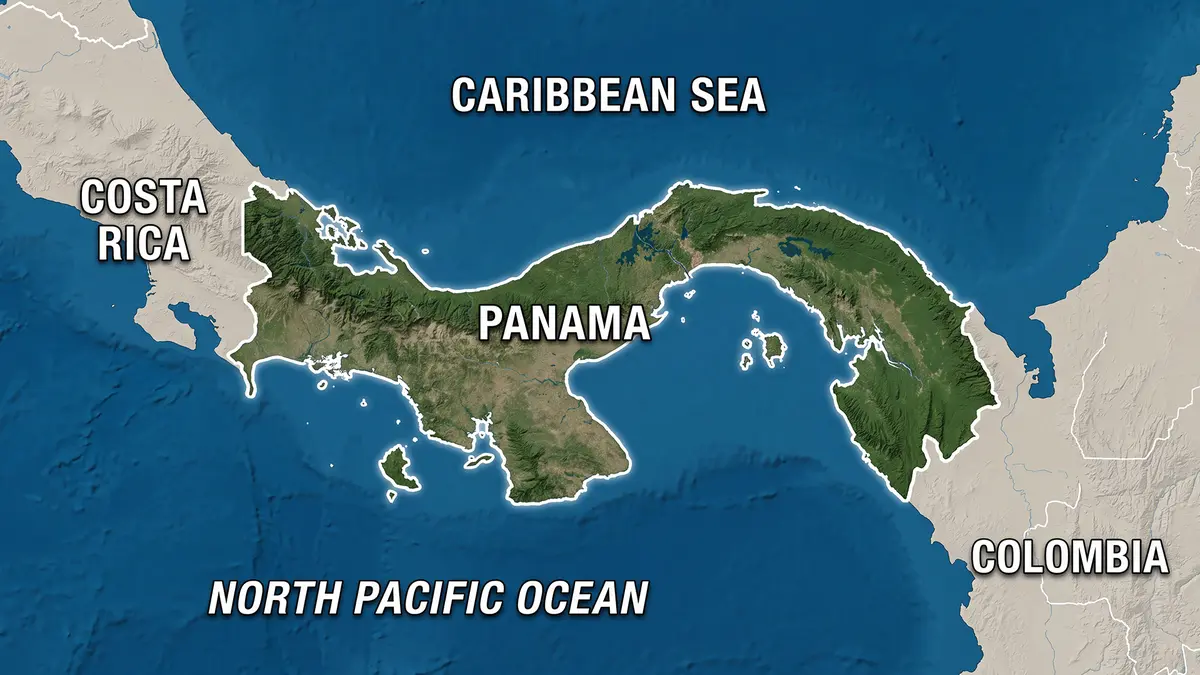
Panama is a narrow Central American country joining North and South America.
Its territory separates the Caribbean Sea from the Pacific, and the canal cuts across this narrow land bridge.
Panama at a glance
| Feature | Details |
|---|---|
| Capital | Panama City is the national capital. |
| Neighbouring countries | Costa Rica lies west, while Colombia lies east. |
| Northern coast | The Caribbean Sea forms this coast. |
| Southern coast | The Pacific Ocean forms this coast. |
| Official language | Spanish is the official language. |
| Currency | The balboa and United States dollar circulate together. |
How did modern Panama emerge?
- Panama became independent from Spain in 1821.
- It then joined a political union centred on Colombia.
- Panama separated from Colombia in November 1903.
- The new republic soon enabled United States canal construction.
The canal shaped Panama’s economy, diplomacy and national identity thereafter.
Panama Canal: a short history
| Year | Development |
|---|---|
| 1881 | A French company began construction, but disease and finance caused failure. |
| 1904 | The United States took over canal construction. |
| 1914 | The steamship Ancon made the official inaugural transit. |
| 1977 | The Torrijos–Carter Treaties set a transfer process. |
| 1999 | Panama assumed complete canal administration on 31 December. |
| 2016 | New locks opened for larger Neopanamax vessels. |
How does the canal work?
The roughly 80-kilometre canal uses locks to cross Gatun Lake, which stands 26 metres above sea level.
- A ship enters a closed chamber, which freshwater fills to raise the vessel.
- The vessel crosses elevated Gatun Lake before locks lower it towards the other ocean.
Why did the expanded canal matter?
The original locks limited vessel size, but the 2016 expansion added wider chambers on both canal sides.
Larger ships could then use the route, while ports elsewhere upgraded facilities for Neopanamax vessels.
Why is water security a serious issue?
Every transit and many Panamanian homes use freshwater from the same canal lake system.
Low rainfall can limit ship depth and daily transits, making long-term water storage increasingly important.
Why is the route valuable?
- Ships avoid South America’s longer route, reducing fuel use, time and transport costs.
- The canal connects global shipping networks while creating revenue and skilled employment for Panama.
India–Panama maritime discussions
Union Minister Sarbananda Sonowal and Panamanian Foreign Minister Javier Martínez-Acha Vásquez identified several practical cooperation areas.
- Both sides discussed shipping, port development and logistics infrastructure.
- They considered maritime security alongside education, institutional coordination, skilling and seafarer welfare.
- India proposed cooperation in green and safe ship recycling.
- They discussed artificial intelligence, smart ports and digital single-window systems for maritime clearances.
Why does Panama matter to India?
India depends heavily on shipping, while Panama offers expertise in registration, canal operations and maritime logistics.
Cooperation can also support Indian seafarers working across global fleets.
Conclusion
Panama converts a narrow location into global influence through maritime services.