

Why in news?
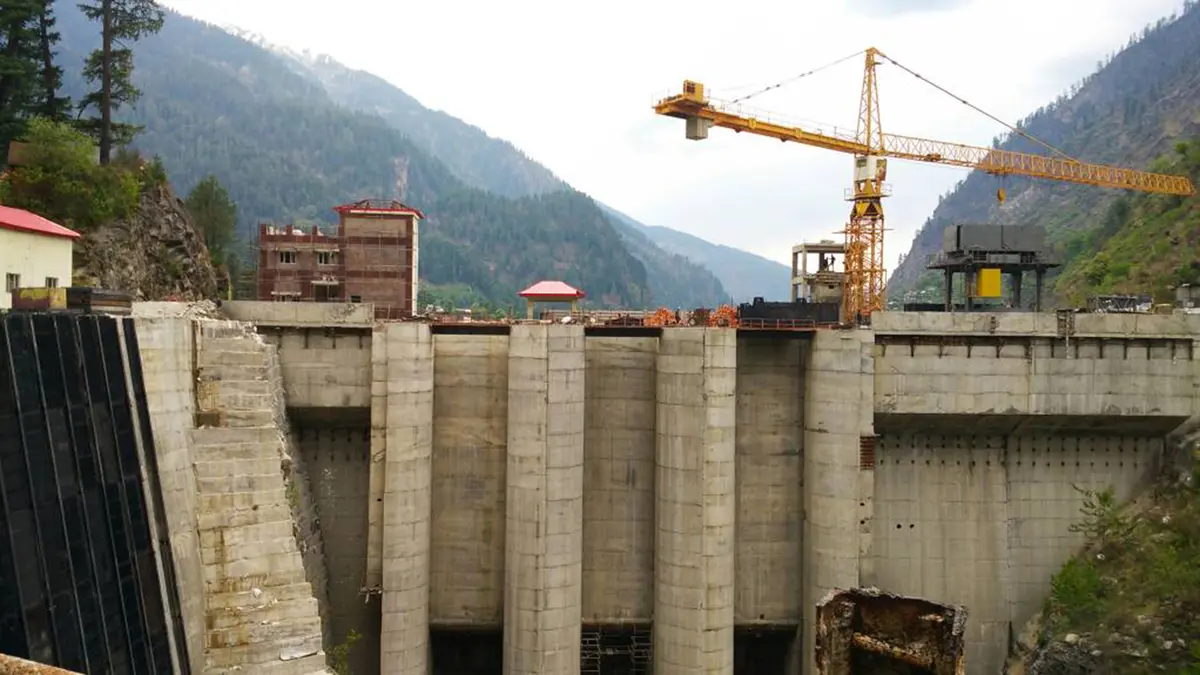
Water escaped from infrastructure associated with the Parbati-II hydropower project in Himachal Pradesh on 19 September 2026. A Times of India report described flooding and damage near Rella village in Kullu district. A local official provisionally linked the incident to a malfunctioning air-pressure valve, and an inquiry was ordered. Parbati-II is an 800-megawatt operating station that transfers water between mountain valleys before using its fall to generate electricity. The incident draws attention to the safety of that water-conveyance system and the communities around it. The reported valve explanation remains preliminary; it should not be presented as a completed technical finding.
Following the water from one valley to another
NHPC Limited operates Parbati-II on the Parbati River in Kullu district. Its diversion dam stands near Pulga in the Manikaran valley. Water then travels through a headrace tunnel of roughly 31.5 kilometres towards the powerhouse at Siund in the Sainj valley. A headrace tunnel is the passage carrying water towards the generating equipment. The project therefore cannot be understood from the dam alone: its operational footprint extends across the route linking the river intake and powerhouse.
The Parbati and Sainj belong to the Beas river system. The scheme moves water from the Parbati side towards the Sainj catchment, using the difference in elevation between intake and generation points. This geography explains why a problem along the conveyance route can matter away from the original river diversion. It also distinguishes Parbati-II from a conventional image of a powerhouse immediately beneath a large reservoir dam. Location, slope and the complete water pathway are central to understanding the project.
What an 800-megawatt capacity means
The station has four generating units rated at 200 megawatts each. Together they provide an installed capacity of 800 megawatts. Capacity describes the rate at which the equipment can generate under suitable conditions; it is not an annual electricity total. Actual energy generation depends on available water, operating hours, maintenance and other constraints. A year with reduced flow can therefore produce less electricity without changing the plant's installed capacity.
The project uses Pelton turbines, suited to high-head hydropower. Here, head refers to the vertical difference that makes water available for energy conversion. Water directed at specially shaped buckets turns the turbine, which drives a generator. The basic connection is between water flow, available head and conversion efficiency. A high mountain setting offers useful elevation differences, but the water must still be conveyed and controlled safely before that potential becomes electricity.
Run-of-river does not mean infrastructure-free
NHPC describes Parbati-II as a run-of-river scheme with small pondage. Such a scheme uses river flow and a diversion arrangement rather than relying on very large seasonal storage. Pondage provides a limited volume of stored water for operation. The description does not mean that the project has no dam, tunnel or control structures. Nor does it mean that every litre diverted reaches the turbines without changes in pressure, flow or operating conditions.
The United States Department of Energy distinguishes diversion hydropower from large impoundment and pumped-storage arrangements. In a diversion system, channels or enclosed conduits carry water towards turbines. Gates and valves help regulate that movement. Pumped storage serves a different purpose: it uses electricity to move water uphill for later release. Parbati-II should not be casually labelled a pumped-storage project merely because it conveys water through a long tunnel between locations.
The project was already in commercial operation
NHPC's stock-exchange disclosure records commercial operation of the first three units from 1 April 2025. The fourth unit, and the project as a whole, entered commercial operation on 16 April 2025. This is an important date correction when interpreting the September 2026 incident. The issue concerns infrastructure at an operating power station, not simply construction activity at a plant awaiting commissioning. Older descriptions of the project as under construction no longer describe that status accurately.
Commissioning marks the transition to commercial operation, but it does not end the need for inspection and maintenance. The diversion, tunnel and generating equipment continue to work as parts of one system. Water must reach the powerhouse under controlled conditions, while flows outside that route also require attention. The September incident therefore raises an operating-safety question alongside the project's established contribution to electricity generation. Its history and its current condition need to be understood together.
What the inquiry needs to establish
The news report linked escaping water with the movement of muck into nearby areas and described damage to buildings and infrastructure. Those observations make the flow path and surrounding material relevant to the investigation. However, they do not by themselves establish the complete chain of failure or legal responsibility. A useful inquiry would distinguish the initiating fault, the route taken by water and debris, and the measures available to limit harm.
For affected communities, that distinction has practical value. Repairing a failed component addresses one question; understanding how water reached homes or fields addresses another. The investigation should also clarify monitoring, warnings and response arrangements where relevant. These are questions for examination, not findings already established by this edition. Hydropower's electricity benefits do not remove the need to assess local risks throughout an operating asset's life.
Conclusion
Parbati-II illustrates how mountain hydropower depends on an interconnected system of rivers, tunnels and machinery. The September incident requires a verified explanation of that system's failure, alongside attention to affected residents. Accurate reporting must preserve both facts: the station was commissioned in 2025, and the immediate cause reported in 2026 remained subject to inquiry.