

Why in news?
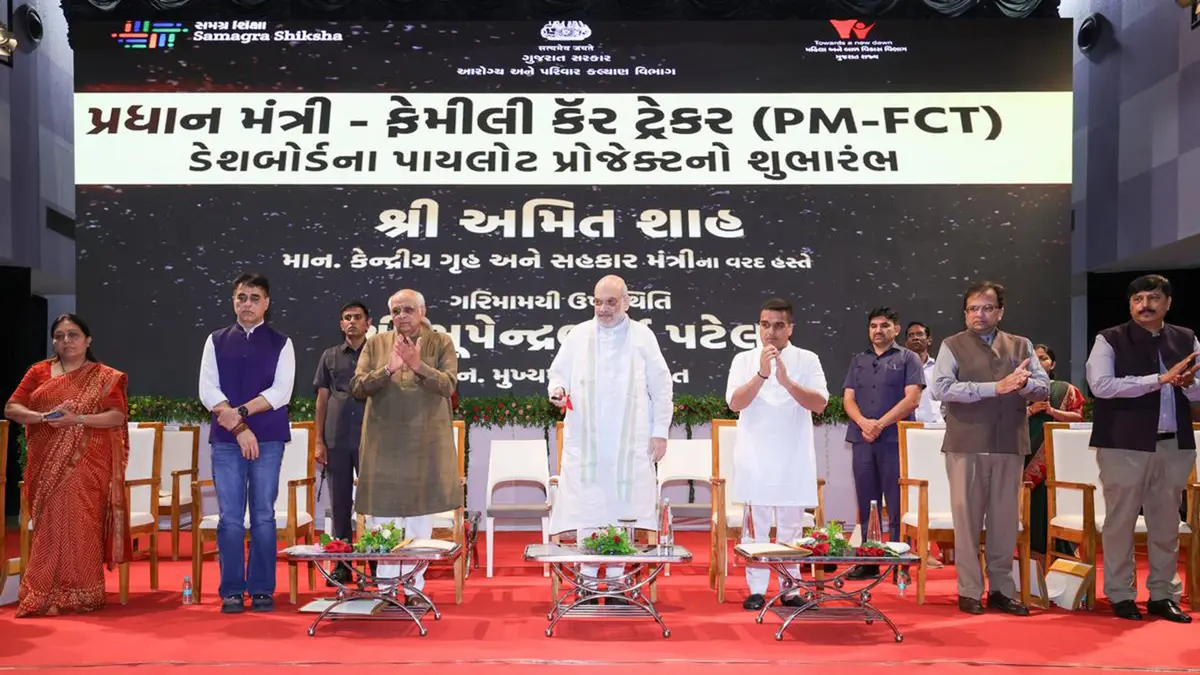
On 28 June 2026 the Union Home and Cooperation Minister launched the PM Family Care Tracker (PM‑FCT) pilot project in Gandhinagar, Gujarat. The digital platform aims to ensure that pregnant women, mothers and children receive all eligible health and welfare benefits through real‑time monitoring and timely intervention. It forms part of India’s drive to use technology to strengthen welfare delivery.
Background
India has implemented many schemes for maternal and child health, nutrition and education. Despite improvements, gaps persist because records are dispersed across ministries and some beneficiaries fall through the cracks. The PM‑FCT addresses this by integrating data from birth and death registration, health departments, nutrition programmes and education systems. It uses the Birth Registration Number as a unique identifier to track individuals from pregnancy through adolescence. Initially launched as a pilot in the Gandhinagar Lok Sabha constituency, the platform may be expanded statewide and nationally after evaluation.
How PM‑FCT works
- Data integration: The platform converges existing databases such as ICDS, Reproductive and Child Health (RCH), Poshan Tracker and school health records. It tracks beneficiaries from conception to 18 years of age.
- Health Passport: Each family receives a digital health passport recording antenatal care, vaccinations, nutrition, growth milestones, school enrolment and adolescent health services. Authorities can view dashboards to monitor progress.
- Automated alerts: If a child misses a polio vaccine or drops out of school, the system sends alerts to local officials and elected representatives. This prompts rapid follow‑up so that no eligible beneficiary is left out.
- Convergence across schemes: The platform links around 16 welfare schemes, including Janani Suraksha Yojana, PM Poshan, Mission Vatsalya, PM CARES for Children and the National Child Labour Project. Integrated dashboards help administrators identify high‑risk pregnancies and malnourished children and to plan interventions.
Benefits and significance
- Holistic monitoring: By following a child from pregnancy until adulthood, the system provides end‑to‑end data for health, nutrition and education. This makes service delivery proactive rather than reactive.
- Reduced gaps: Unified records reduce duplication and ensure that benefits reach the correct people. Automated alerts help prevent drop‑outs and missed vaccinations.
- Policy planning: Real‑time dashboards allow policymakers to identify regions with higher infant mortality, malnutrition or school dropout rates and to target resources accordingly.
- Pilot approach: Starting in Gandhinagar allows authorities to refine technology, address privacy issues and adapt the system before scaling up nationwide.
Conclusion
The PM Family Care Tracker combines multiple welfare databases to create a family‑centric monitoring system. By delivering timely alerts and integrating health, nutrition and education records, it aims to ensure that every eligible woman and child receives the benefits they deserve. If successful, the platform could become a model for technology‑driven welfare delivery across India.
Sources: TH