

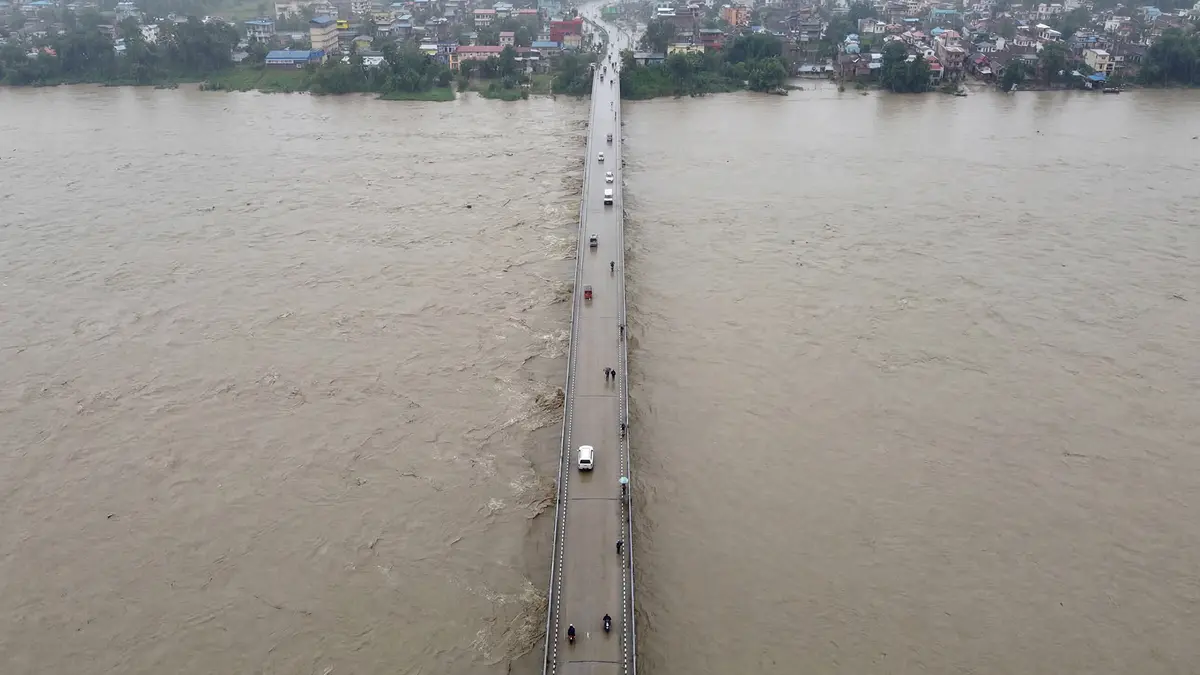
Why in news?
The National Green Tribunal (NGT) has directed the Uttar Pradesh government to restore the Suav – a major tributary of the Rapti – to its proper status as a “river” in official records. Officials had downgraded the Suav to a drain in revenue documents, threatening its legal protection and encouraging encroachment. The tribunal has asked authorities to correct gazette records and halt new construction in the floodplain to protect the river’s ecological role.
Background
The Rapti is the most important left‑bank tributary of the Ghaghra (also called Sarayu) River. Historically known as Iravati, it begins at about 3,050 m above sea level near Rukumkot in Nepal’s Mahabharat range. The river flows south‑east through rugged Himalayan valleys before entering the lowlands of eastern Uttar Pradesh, where it winds across the Tarai plains and joins the Ghaghra. Its catchment includes lofty mountains and undulating plains, giving the upper basin a temperate climate and the lower basin a subtropical one. Major tributaries include the Burhi Rapti and Rohini on the left bank and the Suav on the right.
The Suav tributary
- The Suav (also spelled Suwawan) originates in Balrampur district and flows roughly 120 km before meeting the Rapti near Rasoolabad. Historical gazetteers described it as a river of considerable size, contributing to flood control by filling wetlands, lakes and ponds along its course.
- Over decades, encroachments, land‑reclamation and mis‑classification reduced the Suav to a “nullah” (drain) in revenue records. Construction of a sewage treatment plant and community hall on its floodplain further threatened its course.
- In February 2026 the NGT directed district magistrates to correct the classification, publish the change in official gazettes and ensure that no new construction takes place in the demarcated floodplain until proper zoning is completed. Failure to comply could attract penalties under the NGT Act.
Significance of the Rapti basin
- The Rapti and its tributaries are vital for agriculture and fisheries in eastern Uttar Pradesh and western Nepal. Seasonal floods replenish soil fertility but also pose risks when floodplains are encroached upon.
- Correctly classifying tributaries such as the Suav ensures they receive legal protection against pollution and encroachment. Restoring natural floodplains helps mitigate monsoon floods and maintain wetlands and groundwater.
- The Rapti basin supports diverse wildlife and lies close to protected areas like the Dudhwa National Park. Preserving tributaries contributes to broader river‑basin conservation.
Conclusion
The NGT’s order underscores the importance of maintaining rivers’ ecological identity. Recognising the Suav as a river will aid flood management, protect wetlands and strengthen conservation. Sustainable river‑basin management requires accurate records, community participation and strict enforcement against encroachments.
Source: Down To Earth