
Why in News?
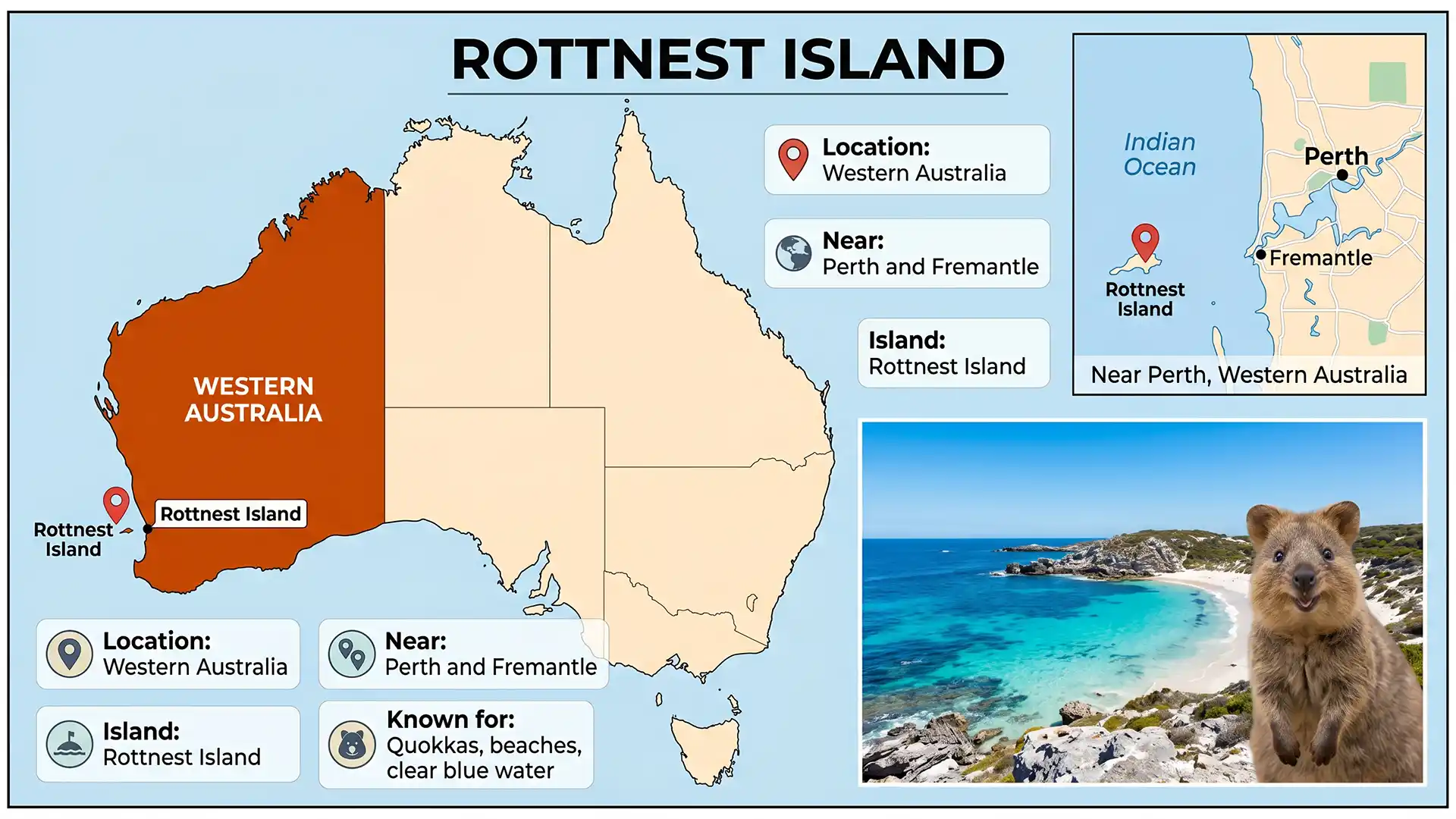
A 38‑year‑old man recently died in a suspected shark attack near Rottnest Island, a popular holiday spot off the coast of Western Australia. The incident has drawn attention to the island’s history, geography and ecological significance.
Background
Rottnest Island lies in the Indian Ocean, about 19 kilometres northwest of Fremantle at the mouth of the Swan River. Measuring roughly 11 km by 5 km, it is a low limestone plateau with sand dunes and saline lakes. Dutch explorers first sighted the island in the mid‑17th century. In 1696 the Dutch captain Willem de Vlamingh named it “Rottenest” (rat’s nest) because he mistook the native quokkas—small marsupials—for large rats. The name later evolved into Rottnest.
During the 19th century, the island served various purposes: a pilot station for ships entering Fremantle Harbour, a penal settlement for Aboriginal men and boys (1838–1850), and later a reformatory for juveniles (1882–1906). During the Second World War, it functioned as a coastal defence base. After 1950 it began to develop as a holiday destination, accessible by ferry and small aircraft from Perth.
Geography and Ecology
- Landform: The island is a fragment of coastal limestone separated from the mainland by a shallow channel. It features rolling sand dunes and a string of hypersaline lakes.
- Wildlife: Rottnest is renowned for its quokkas, a species of small wallaby. These marsupials are friendly toward visitors and are now protected. The island also hosts migratory birds, reptiles and a rich marine ecosystem.
- Human use: Today Rottnest is managed as a resort and conservation area. Motor vehicles are restricted; visitors explore the island by bicycle or shuttle bus. Tourism supports local economies while raising the challenge of balancing recreation with wildlife protection.
Significance
- The recent shark attack underscores the need for visitor awareness and safety measures when engaging in water activities around remote islands.
- Rottnest’s history as an Aboriginal prison reflects the colonial legacy of Australia and has prompted reconciliation initiatives, including memorials to those who died while incarcerated.
- The island’s success in conserving quokkas demonstrates effective management of endemic species in tourist destinations.
Conclusion
Rottnest Island’s mix of natural beauty, wildlife and complex history makes it an important case study in sustainable tourism. While tragic incidents like shark attacks may grab headlines, the broader narrative is one of conservation and cultural remembrance.
Source: ET

