

Why in news?
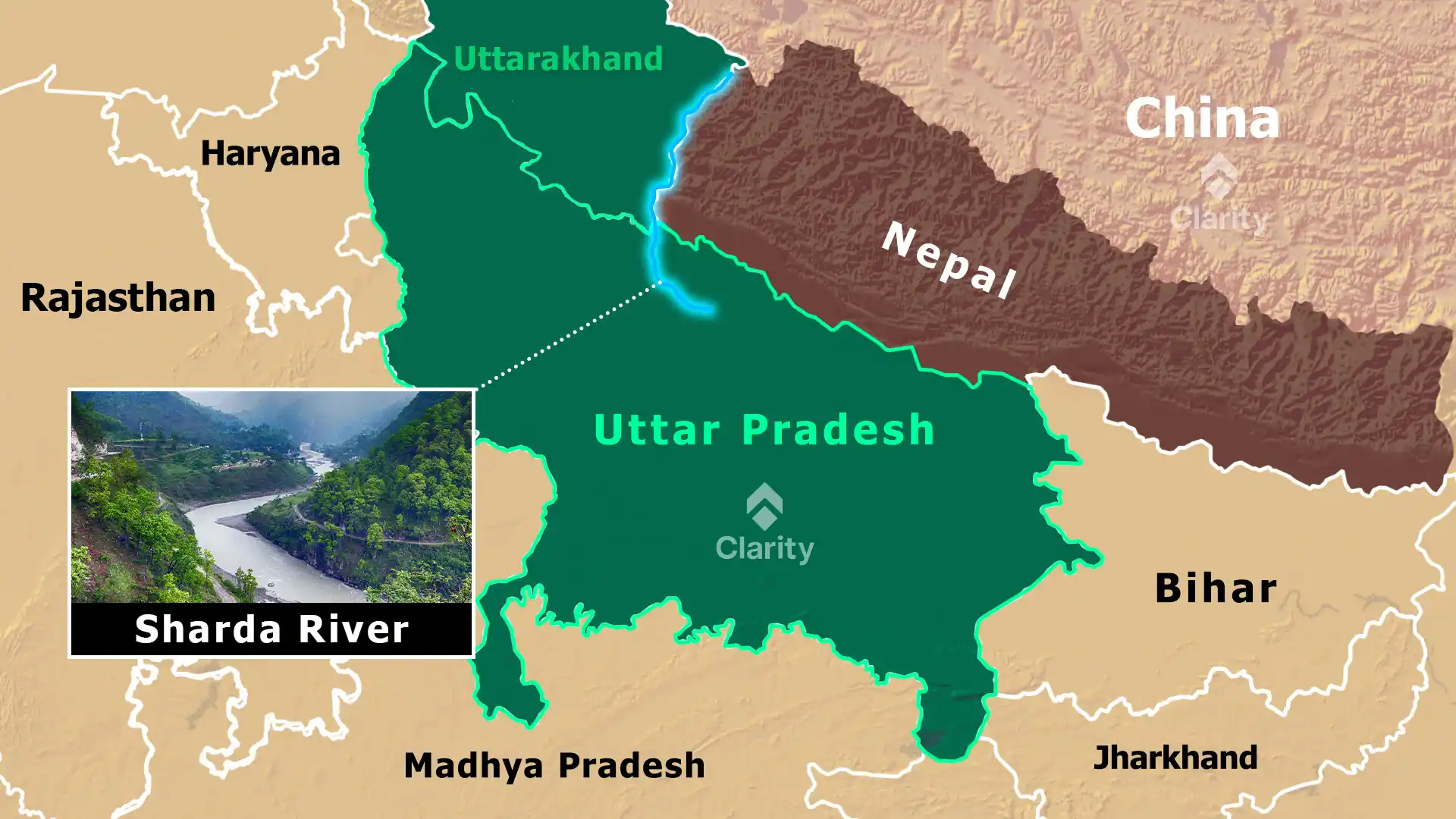
The Chief Minister of Uttarakhand recently laid the foundation stone of the Sharda River Corridor at Tanakpur in Champawat district. The project aims to transform the banks of the Sharda River into a cultural and ecological corridor that supports religious tourism, recreation and local employment. It will redevelop ghats, improve drainage and create spaces for walking, cycling and adventure activities.
Background
The Sharda, also called the Mahakali, is a major tributary of the Ghaghara River. It originates in the Himalayas near the Lipulekh Pass, forming the border between India and Nepal before entering the plains near Tanakpur. The river has long been revered as a goddess by local communities, and its waters are used for irrigation and hydro‑electric power. Over the years, unplanned development has degraded riverbanks and reduced access for pilgrims.
Key features of the corridor
- Large area: The proposed corridor stretches across nearly 200 square kilometres from Banbasa to Mata Rankochi. It covers urban areas, agricultural fields and forests, balancing tourism with conservation.
- Redeveloped ghats: A major component is the upgrade of Sharda Ghat at Tanakpur. Plans include stepped platforms for ritual bathing, shaded seating, clean drinking water and improved lighting.
- Ecological restoration: An ecological corridor along Kiroda Nala will be developed to filter pollutants and provide habitat for birds and aquatic life. Native trees and grasses will be planted to stabilise banks and reduce erosion.
- Infrastructure: A heliport, multi‑storey parking and a network of walkways and cycle tracks will enable visitors to access the riverfront without congesting narrow town streets. Drainage systems will be upgraded to prevent flooding during the monsoon.
- Cultural and adventure tourism: The master plan includes an open‑air theatre, spaces for festivals and art, and facilities for water sports. Emphasis is placed on showcasing local Kumaoni culture and generating employment for youth.
Expected benefits
- Boost to local economy: Improved infrastructure and tourism are expected to create jobs in hospitality, guiding and handicrafts. The project is estimated to attract investment of over ₹3,300 crore.
- Environmental protection: By restoring riverbanks and improving sewage management, the corridor will reduce pollution and enhance biodiversity along the Sharda.
- Revival of heritage: Restoration of historic temples and ghats will strengthen cultural ties and encourage pilgrimage, reinforcing the river’s religious significance.
Conclusion
The Sharda River Corridor is more than a beautification drive. It seeks to balance spirituality, recreation and ecology, making the riverbank accessible and sustainable for future generations. Careful implementation and community involvement will determine whether the project successfully revives the Sharda’s cultural and environmental heritage.
Source: TOI