Why in news?
India’s Defence Minister visited South Korea in May 2026 to strengthen strategic ties. The visit prompted interest in the geography and natural features of the Republic of Korea.
Background
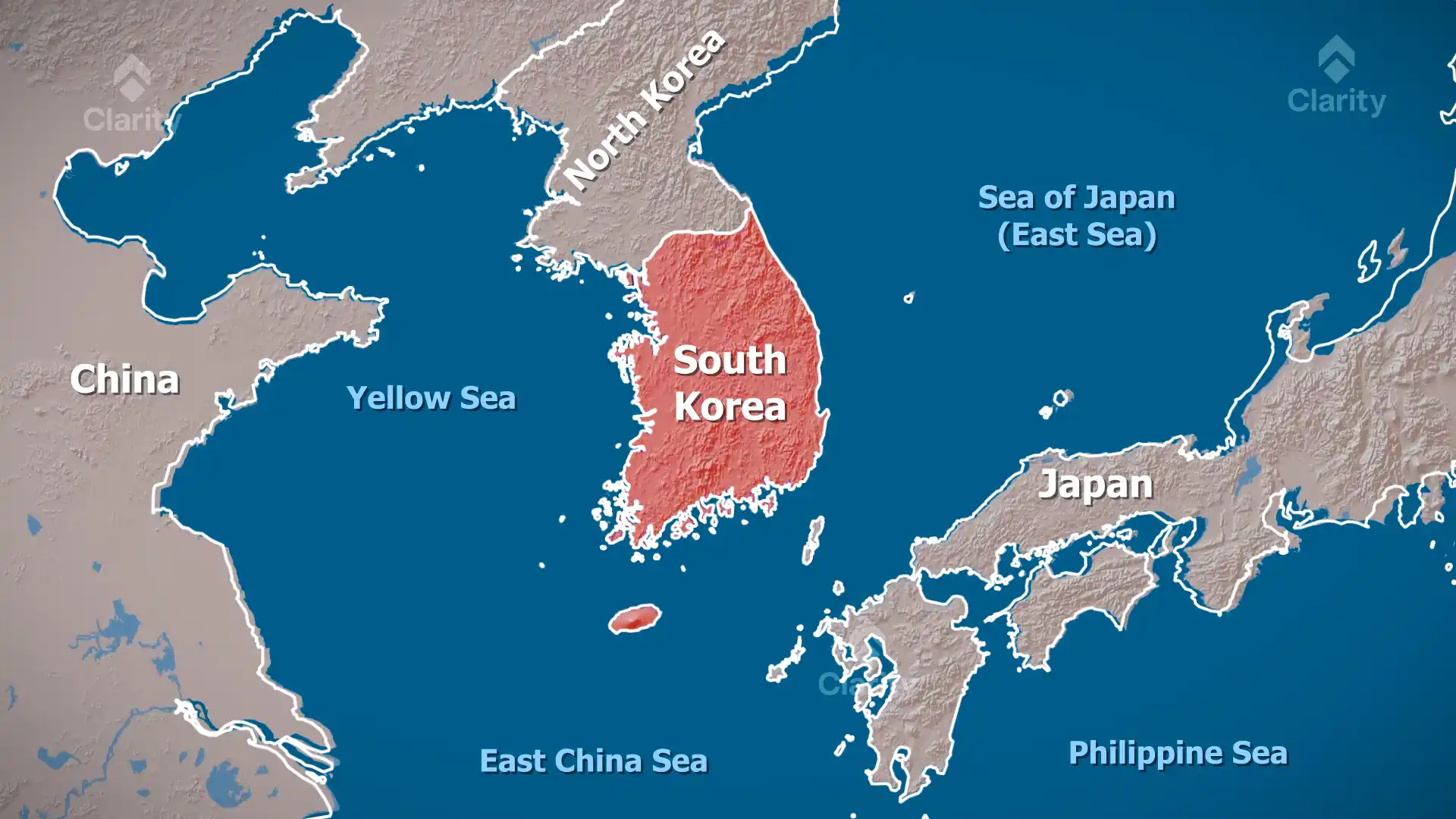
South Korea, officially the Republic of Korea (ROK), occupies the southern part of the Korean Peninsula in East Asia. The peninsula stretches about 750 miles (1,200 kilometres) into the western Pacific Ocean. The country shares its northern land border with North Korea along the Demilitarised Zone. Seoul, located on the Han River, is the capital and largest city. The official language is Korean, and the currency is the won.
Physical geography
- Mountains: Two primary mountain systems—the Taebaek and Sobaek ranges—run roughly north‑south along the peninsula. Over millions of years wind and rain have worn these peaks down, and most summits now rise below 1,000 metres. South Korea also has volcanic islands, notably Jeju and Ulleung.
- Rivers: The Han, Geum (Kum) and Nakdong rivers begin in the Taebaek Mountains and flow westward or southward to the Yellow Sea and East China Sea. The Nakdong, at about 523 kilometres long, is the country’s longest river. Extensive lowlands lie along the lower courses of these rivers.
- Coastline and islands: The eastern coastline is relatively straight, while the western and southern coasts are deeply indented, forming rias and hosting thousands of islands. Jeju Island off the south coast features Hallasan, South Korea’s highest peak.
- Climate: The peninsula experiences a continental climate with distinct seasons. Winters are cold and dry, with average January temperatures in Seoul around −5 °C, while summers are hot and humid, averaging about 25 °C in August. Most rainfall occurs during the June–August monsoon; typhoons sometimes bring heavy rains in late summer.
People and economy
- South Korea is densely populated, with over 51 million residents in an area of about 98,000 square kilometres. Confucian values emphasising respect and education strongly influence society.
- The country transformed itself from a war‑torn agrarian nation to a high‑tech industrial powerhouse within a generation. Major industries include electronics, shipbuilding, automobiles and information technology.
- Despite its developed economy, much of the interior remains forested, and national parks protect mountain landscapes and wildlife.
Conclusion
Understanding South Korea’s geography helps explain its strategic importance. Rugged mountains, fertile river valleys and a convoluted coastline have shaped its history, economy and relations with neighbours. The Defence Minister’s visit underlines the growing partnership between India and this dynamic East Asian nation.