

Why in news?
On 23 May 2026 a major fire and two explosions rocked a shipyard on Staten Island, New York. One person was killed and more than thirty firefighters were injured while tackling the blaze. The incident drew attention to the island and its long history as part of New York City.
Background
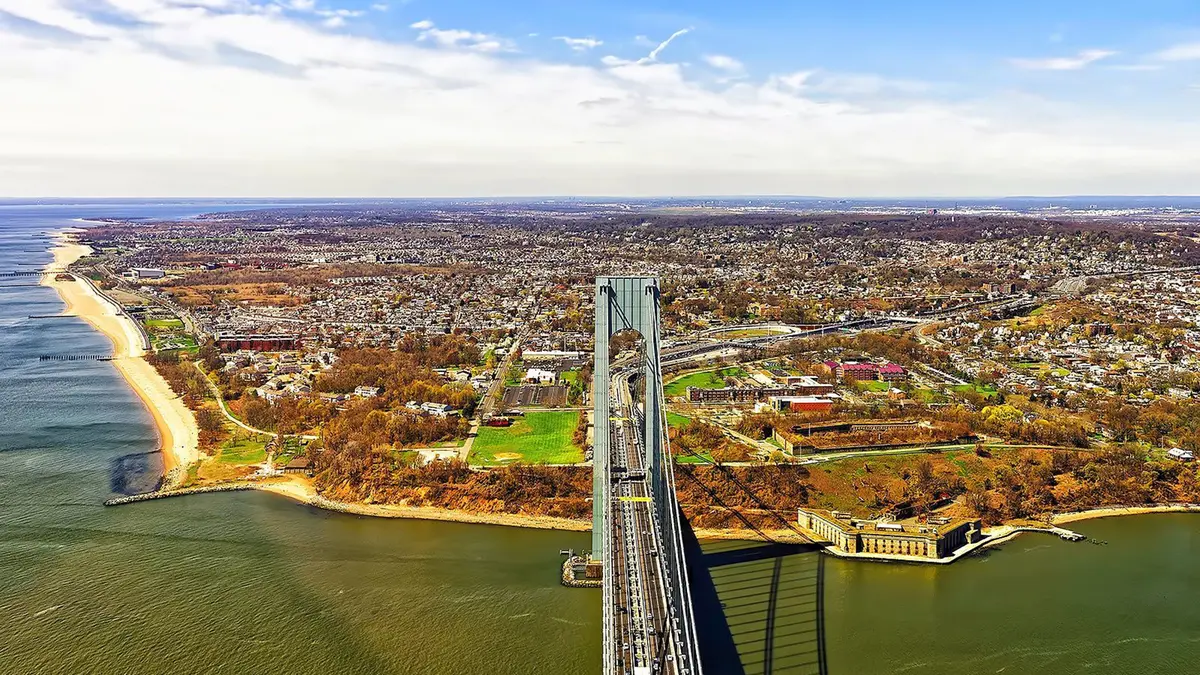
Staten Island is the southernmost of New York City’s five boroughs. Covering roughly 59 square miles (152 km²), it is separated from Manhattan by New York Bay and from New Jersey by the tidal waterways Kill Van Kull and Arthur Kill. The borough has extensive green space – around 12,300 acres – earning it the nickname “borough of parks.” About half a million people live here, making it the least populated borough but the third largest by area. It is connected to the rest of the city by the free Staten Island Ferry, the Verrazzano–Narrows Bridge to Brooklyn and three bridges to New Jersey.
Indigenous Unami Lenape people lived on the island for centuries before Europeans arrived. The Dutch explorer Henry Hudson sailed past the island in 1609 and Dutch settlers began exploiting its resources soon after. In 1661 a group of French Waldensian and Huguenot colonists established the first permanent European settlement at Old Town. Control passed to England in 1664, when the Dutch surrendered New Amsterdam and the rest of New Netherland; the Treaty of Breda (1667), ending the Second Anglo‑Dutch War, merely confirmed English possession. Known as Richmond County from 1683, the island joined the consolidated City of New York in 1898 and adopted its current name in 1975.
Recent explosion
The dockyard fire on 23 May was triggered by an initial blaze that trapped workers. About fifty minutes later a powerful explosion occurred, followed by another blast during the emergency response. Investigators are examining whether welding work, leaking fuel vapours or other factors caused the blasts. The incident highlights the hazards of industrial work and the dedication of firefighters who risk their lives to protect residents.
Key facts about Staten Island
- Geography: Largest borough by area after Queens and Brooklyn; dominated by parks such as Clove Lakes, High Rock and Conference House parks.
- Transport: No subway connection; residents commute via the Staten Island Ferry and bridges. The Staten Island Railway links the eastern shore communities.
- Historic sites: Historic Richmond Town preserves 300 years of architecture. Fort Wadsworth guards the Narrows and is one of the oldest U.S. military forts. Snug Harbor, once a home for retired sailors, is now a cultural centre.
- Demographics: Home to diverse Italian, Irish, African‑American and Asian communities. Median incomes are higher than the city average, and many residents commute to Manhattan for work.
Conclusion
The May 2026 dockyard explosion underscores the importance of industrial safety and the courage of first responders. Beyond news headlines, Staten Island remains a unique part of New York City – a suburban‑feeling borough rich in parks, history and resilience.