
Why in news?
High‑level talks between United States and Iranian officials were held in Switzerland recently to address differences over Iran’s nuclear programme and regional tensions. Switzerland’s neutral stance and diplomatic traditions make it a preferred venue for such delicate negotiations.
Background
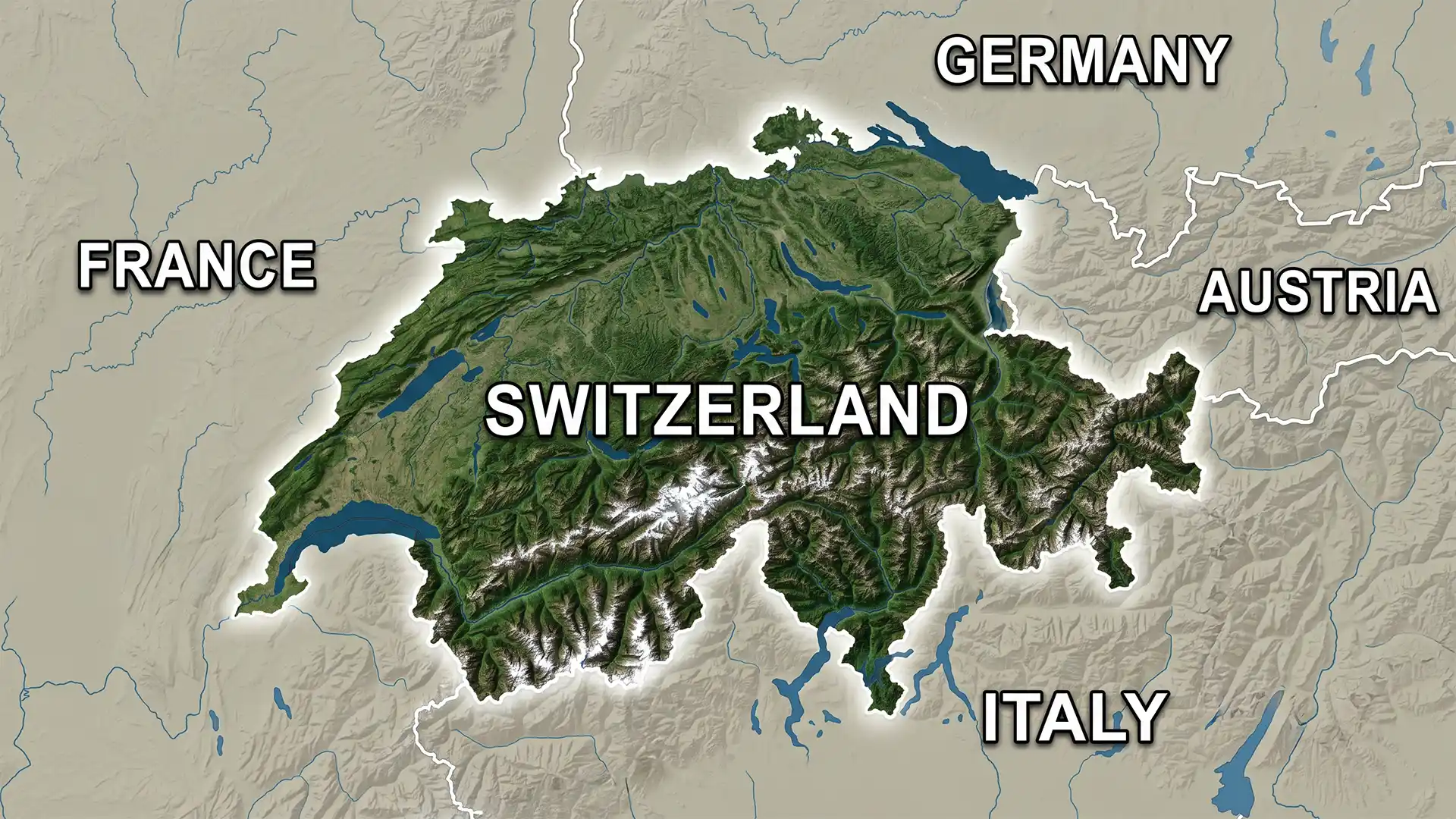
Switzerland is a landlocked country located at the crossroads of Western and Central Europe. It shares borders with Germany to the north, France to the west, Italy to the south and Austria and Liechtenstein to the east. The Swiss Confederation formed in 1291 as a union of cantons seeking independence from the Habsburgs. Over centuries it adopted a policy of neutrality, avoiding direct involvement in European wars. It is not a member of the European Union or NATO, although it participates in some EU programmes and cooperates with NATO on a case‑by‑case basis.
Geography and climate
- Mountain ranges: The Alps dominate the southern part of the country, while the Jura Mountains lie to the north. The Dufourspitze in the Pennine Alps is the highest peak at 4 634 metres.
- Lakes: Major lakes include Lake Geneva (shared with France) and Lake Neuchâtel. These water bodies moderate the climate and support tourism and hydropower.
- Climate influences: Switzerland’s weather is shaped by the North Atlantic Drift, cold continental air from the north, Mediterranean influences from the south and local alpine conditions. This diversity creates microclimates across the country.
- Official languages: German, French, Italian and Romansh reflect its multicultural heritage. The capital city is Bern; Zurich, Geneva and Basel are important economic centres.
Conclusion
Switzerland’s neutrality, multilingual society and strategic location make it a hub for diplomacy and global institutions. By hosting talks between the US and Iran, it continues its tradition of facilitating dialogue in times of international tension.