

Why in news?
Botanists from Manipur University and Mizoram University have described Tetrataenium manipurense, a new species in the plant family Apiaceae. Their paper appeared in Phytotaxa on 25 September. The herb is already known in Manipuri food traditions, according to Northeast Now's reporting, and is sold in local markets. The scientific development is therefore its recognition as a distinct species, not the first human encounter with an unknown plant. The researchers combined visible anatomical differences with genetic comparisons to distinguish it from related species. This gives a locally familiar resource a more precise scientific identity for future study, documentation and conservation.
Local familiarity and scientific classification
The herb is known locally as Singjang-kumol or Manshang-nakuppi. Northeast Now reports that communities use its shoots, flowers and basal leaves in dishes including Eromba, Singju, Kangshu and Uti. Its circulation through kitchens and markets shows why a scientific description need not begin with a plant found in an inaccessible wilderness.
Local names help people recognise and use plants within particular communities. Scientific naming serves a different purpose: it connects observations to a defined species that researchers elsewhere can examine. One does not invalidate the other. In this case, the new description links an existing body of local knowledge with a formal taxonomic account.
What the botanists compared
Taxonomy is the study of identifying, naming and classifying organisms. The paper places the plant in Tetrataenium, a genus within Apiaceae. Its closest morphological comparisons include T. manilalianum and T. shrirangii. The authors distinguish it through a combination of vegetative and reproductive features rather than its location alone.
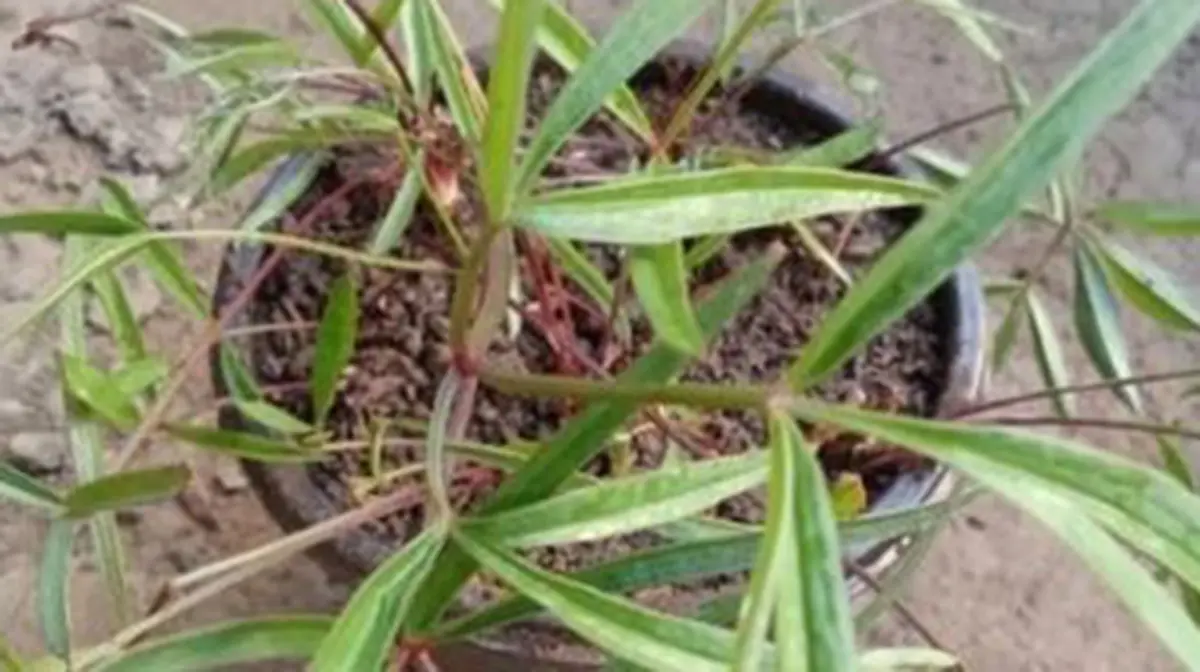
The description identifies a long cylindrical rootstock, narrow leaflets with smooth margins and distinctive fruit features. The rootstock can reach forty centimetres in the studied material. The flowering stalks are reported as ten to twenty centimetres long. These measurements contribute to a diagnosis; no single measurement should be treated as a safe public identification rule for collecting wild food.
Why genetic evidence adds another comparison
The team also compared selected regions of deoxyribonucleic acid, or DNA, the molecule carrying genetic information. They examined two barcode regions, labelled ITS2 and matK, and used them to investigate relationships with other plants. These labels identify genetic regions, not newly invented chemical ingredients or modifications made to the vegetable.
DNA barcoding compares selected genetic sequences with reference material. As the Royal Botanic Gardens, Kew explains, it can help identify a specimen when visible features are incomplete or ambiguous. It complements the examination of plant form rather than making that examination unnecessary. The strength comes from connecting independent kinds of evidence to the same identification.
In this study, the genetic analysis supported the plant's placement within Tetrataenium and its separation from related species. That is different from demonstrating a nutritional advantage, medicinal effect or new agricultural yield. A taxonomic paper answers which organism is being studied. Those other questions would require their own evidence.
Making a description useful beyond the first paper
Preserved plant collections provide reference material for checking names and comparing specimens. A herbarium stores catalogued plants or plant parts alongside information about their collection. Such records can preserve details of appearance, location and flowering or fruiting. They allow later researchers to revisit an identification instead of relying only on a name or photograph.
For an edible plant, a clearer identity can also help distinguish reports about the same species from reports about similar plants. Future work on its distribution or use can then build on a common reference. This is a reason to improve documentation, not a recommendation that readers experiment with unfamiliar plants based on a news description.
What the provisional conservation assessment means
The authors provisionally assess the species as Least Concern using International Union for Conservation of Nature criteria. That wording identifies the researchers' assessment based on available information. It should not be changed into a claim that a separate global Red List assessment has already been published. Scientific naming and formal conservation assessment are related but distinct activities.
Least Concern does not mean that monitoring is unnecessary or that every harvesting practice is sustainable. Conservation depends on population trends, range, habitat and pressures over time. The plant's established use makes those questions worth documenting carefully. A familiar market presence can be an important research starting point, but it is not a complete population survey.
Conclusion
Tetrataenium manipurense illustrates how botanical research can clarify the identity of a resource already embedded in everyday life. The combination of morphology and genetic comparison supports its recognition as a distinct species. Its next scientific value lies in better-linked information about distribution, use and conservation. The discovery should strengthen, rather than erase, recognition of the communities that already know it.