
Why in news?
Thailand frequently features in current affairs due to its growing engagement with India and the wider world. Recent events include high‑level visits, trade discussions and regional cooperation under ASEAN and BIMSTEC. Aspirants should know key facts about the country and its ties with India.
Background
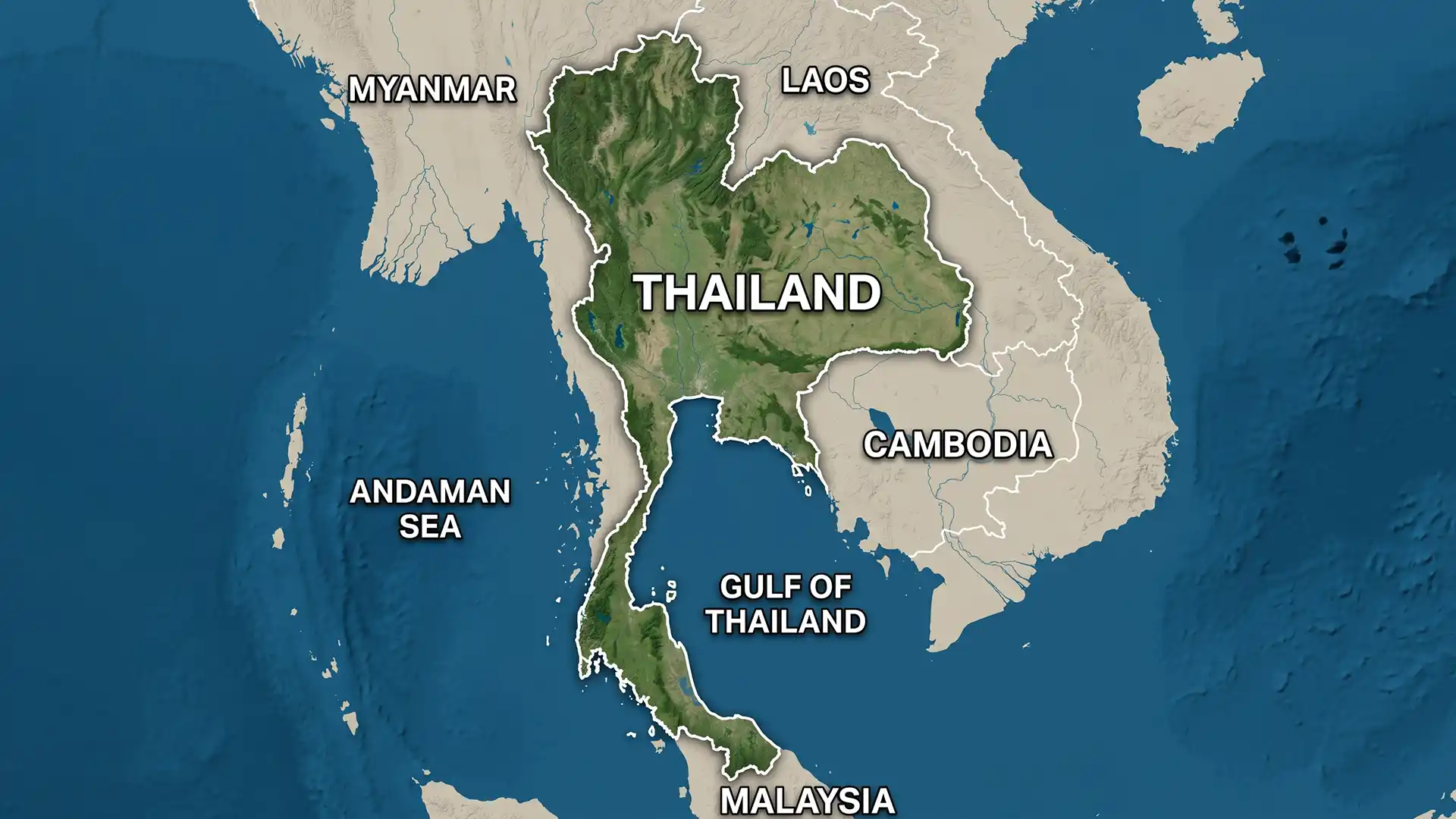
The Kingdom of Thailand is a constitutional monarchy in Southeast Asia. It occupies about 514,000 square kilometres, making it slightly larger than Spain. The country borders Myanmar to the west, Laos to the north and east, Cambodia to the southeast and Malaysia to the south. The Andaman Sea lies to the southwest and the Gulf of Thailand to the south. Bangkok is the capital and largest city. Thailand’s terrain includes a central alluvial plain watered by the Chao Phraya River, the rolling Khorat Plateau in the northeast and forested mountains in the north and along the Malay Peninsula. The climate is tropical with a southwest monsoon from May to September and a dry northeast monsoon from November to March.
Key facts for prelims
- Government: Thailand is a constitutional monarchy. The head of state is King Maha Vajiralongkorn and the head of government is a prime minister.
- Population: Around 70 million people live in Thailand. Buddhism is the dominant religion, practised by over 90 percent of the population.
- Economy: Thailand’s economy relies on manufacturing (electronics, automobiles), tourism, agriculture (rice, rubber and fruit) and natural resources like tin, natural gas and timber.
- Currency and language: The official currency is the Thai baht, and the official language is Thai.
- Major islands and landmarks: Important islands include Phuket and Ko Samui. The country is known for historic sites at Ayutthaya and Sukhothai and beach resorts like Pattaya.
- India–Thailand relations: Both countries are members of BIMSTEC and have a maritime boundary in the Andaman Sea. They conduct joint military exercises such as “Maitree” and “SITMEX”, collaborate on the India–Myanmar–Thailand Trilateral Highway and work together on cultural and tourism exchanges.
- Strategic significance: Thailand acts as a land bridge linking the Indian Ocean and South China Sea and plays a central role in ASEAN’s connectivity plans.
Conclusion
A sound understanding of Thailand’s geography, economy and its partnership with India helps candidates answer questions in the prelims. The country’s strategic location and shared cultural heritage make it an important neighbour for India. Ongoing cooperation through trade, defence and connectivity projects will deepen ties in the years ahead.