

Why in news?
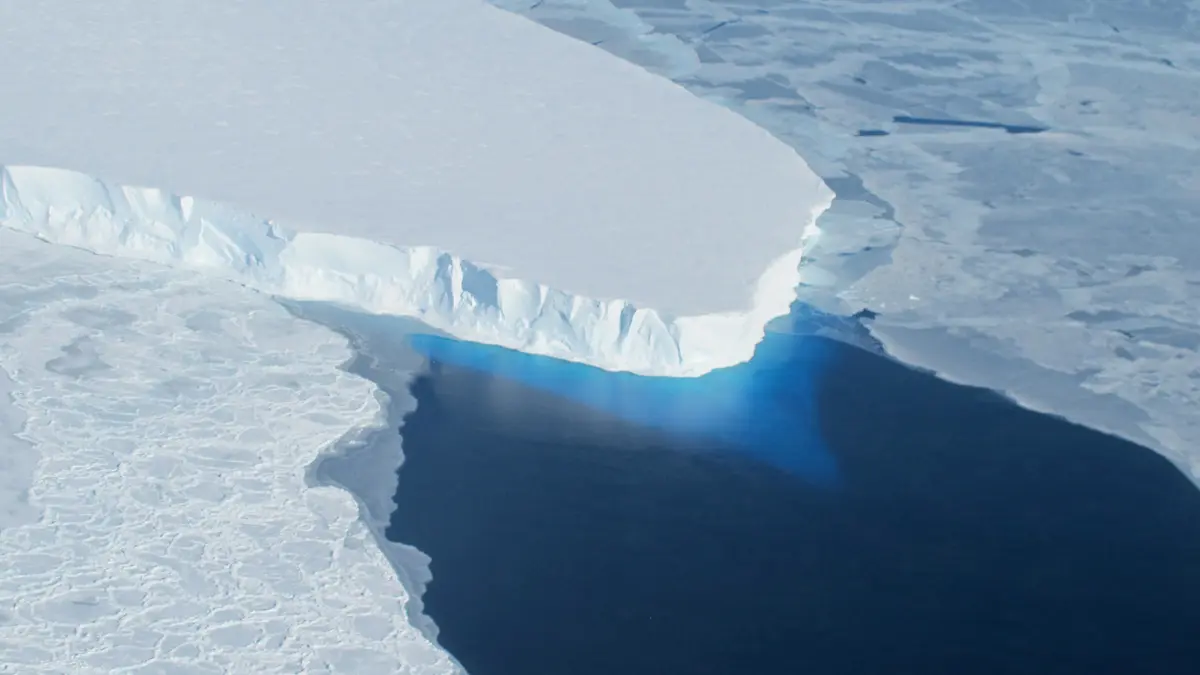
Researchers have warned that Thwaites Glacier in West Antarctica is melting at an unprecedented rate due to warming ocean waters. Nicknamed the “Doomsday Glacier,” its collapse could destabilise the entire West Antarctic Ice Sheet.
Background
Thwaites is a wide, fast‑flowing glacier that drains a large part of the West Antarctic Ice Sheet into the Amundsen Sea. Roughly the size of Florida or Great Britain, it already contributes about 4 % of annual global sea‑level rise. Its grounding line—the point where the glacier lifts off the bedrock and begins to float—has been retreating rapidly as warm seawater melts the ice from below.
Why it matters
- Buttress effect: Thwaites acts like a dam holding back neighbouring glaciers. If it collapses, other glaciers could flow more quickly into the ocean, raising sea levels by up to 65 cm over the coming centuries.
- Global impacts: Higher sea levels threaten low‑lying islands, deltaic cities and coastal infrastructure worldwide. They also increase erosion and the risk of saltwater intrusion into freshwater aquifers.
- Climate feedback: As more ice enters the ocean, it reduces the reflectivity (albedo) of Earth’s surface, causing additional warming.
Proposed responses
- Scientific monitoring: International collaborations such as the International Thwaites Glacier Collaboration are drilling through the ice and deploying underwater robots to understand how ocean currents are eroding the glacier’s base.
- Geo‑engineering proposals: Some scientists have suggested building undersea barriers to reduce warm water intrusion. Others emphasise that drastic reductions in greenhouse‑gas emissions remain the most effective way to slow ice loss.
- Adaptation planning: Coastal communities are investing in flood defences, raising infrastructure and planning managed retreats to cope with future sea‑level rise.
Conclusion
The accelerating melt of Thwaites Glacier is a stark warning about the far‑reaching consequences of climate change. It underscores the need for both immediate emissions reductions and long‑term adaptation measures to protect vulnerable populations.
Source: NDTV