

Why in news?
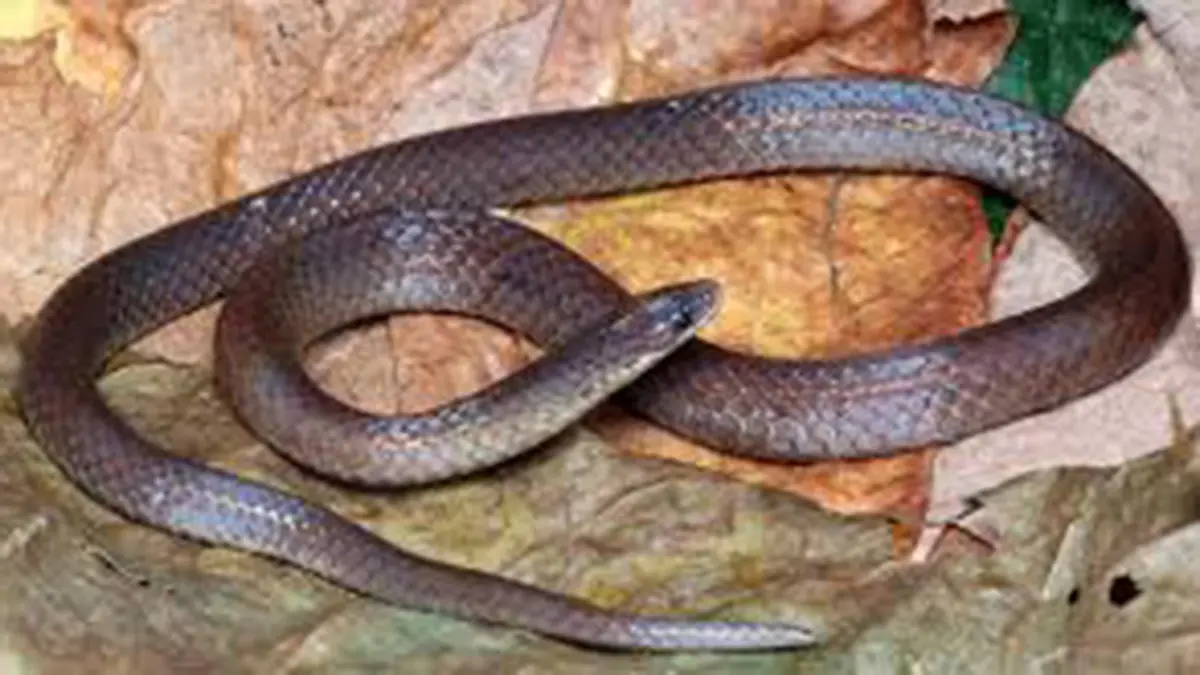
Researchers described a new species of fossorial snake named Trachischium lalremsangai in May 2026. The holotype was collected in Murlen National Park in Mizoram, and another specimen was discovered in the collection of the California Academy of Sciences. The species is named in honour of Prof. H.T. Lalremsanga, a herpetologist who has mentored many researchers in northeast India.
Background
The genus Trachischium, commonly called slender worm snakes or lace snakes, consists of small, burrowing reptiles found in the eastern Himalayas. They live under leaf litter and are seldom seen. Until now there were ten recognised species; the new species increases our knowledge of this elusive group.
Distinctive features
- Appearance: T. lalremsangai has a brown dorsum with iridescent sheen and a white‑speckled underside. It lacks prominent stripes, which helps it blend with moist forest soil.
- Scale arrangement: The snake has 13 rows of smooth dorsal scales at mid‑body, two post‑ocular scales, one anterior temporal scale and two posterior temporals. These features distinguish it from closely related species such as T. reticulata.
- Size: The holotype measures about 35 centimetres in total length and has a narrow head adapted for burrowing.
- DNA analysis: Genetic sequencing confirmed that the specimens represent a distinct species within the Trachischium lineage.
Habitat and conservation
- The species was found in temperate evergreen forest near the India–Myanmar border at around 1,900 metres altitude. Its fossorial lifestyle suggests it relies on moist soil and abundant leaf litter.
- Scientists note that the area where the holotype was collected faces habitat fragmentation due to human activities. Protecting forest floor microhabitats will be vital for the snake’s survival.
- Because burrowing snakes are rarely encountered, further surveys in the northeast Himalayas and adjacent parts of Myanmar may reveal additional undiscovered species.
Conclusion
The discovery of Trachischium lalremsangai underscores the biodiversity richness of Mizoram’s high‑elevation forests. Naming the species after Prof. Lalremsanga honours his contributions to herpetology and highlights the importance of local expertise in uncovering new wildlife.
Sources: HUB